CST428 · Blockchain Technologies · ← all papers
Answer Key - CST428 Blockchain Technologies
Every answer keyed to its KTU mark distribution. Click any question to expand — search is instant.
Answer Key - CST428 Blockchain Technologies
Examination: September 2025
Course Code: CST428
Course Name: Blockchain Technologies
Total Marks: 100
Duration: 3 Hours
Modules Covered: All (1-5)
QP Code: 0400CST428042503
PART A
Answer all questions, each carries 3 marks
Question 1: What is the significance of "Merkle root" stored in the block header? (3 marks)
The Merkle root is a cryptographic hash that represents a summary of all transactions in a block, stored in the block header. A Merkle Tree is a collection of hashes reduced to a single hash - each leaf node represents a transaction hash, pairs are concatenated and hashed upward until a single root hash remains.
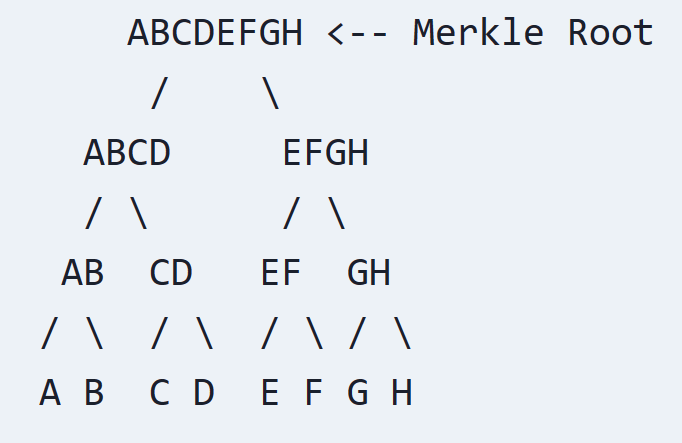
Significance:
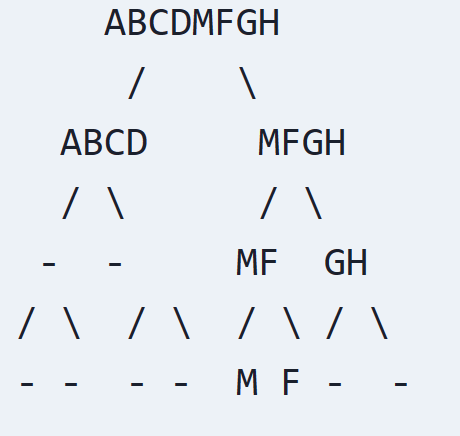
- Integrity Verification: The Merkle root allows efficient verification that all transactions in the block are valid and unmodified without downloading the entire block. If any transaction is altered (e.g., replacing transaction E with M), recalculating the root yields a different hash, instantly revealing tampering.
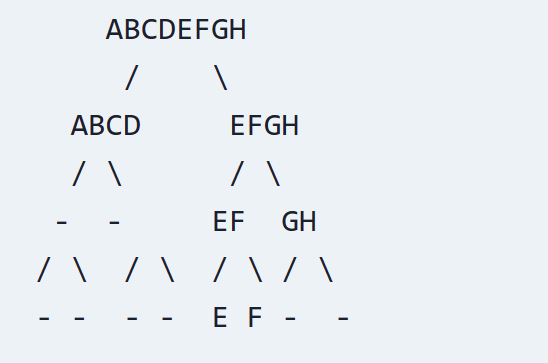
- Efficient Transaction Verification (Merkle Proof): Using Merkle proofs, users can verify if a specific transaction is included in a block by checking only a small number of hashes (logarithmic complexity O(log n)) instead of all transactions. For example, to prove that transaction E belongs in a tree with 8 leaves, we only need hashes F, GH, and ABCD - just 3 hashes instead of 7.
-
Block Linking: The Merkle root in the block header ensures that any change to any transaction in the block will change the Merkle root, which in turn changes the block hash, breaking the blockchain chain and making tampering evident.
-
Space Efficiency: Light clients (SPV - Simplified Payment Verification) can verify transactions by downloading only block headers (which contain the Merkle root) rather than full blocks, saving storage space. Merkle trees are commonly used in peer-to-peer networks where efficient proofs of this nature help increase the scalability of the network.
Question 2: List out the desirable properties for a cryptographic hash function. (3 marks)

A cryptographic hash function must possess the following essential properties:
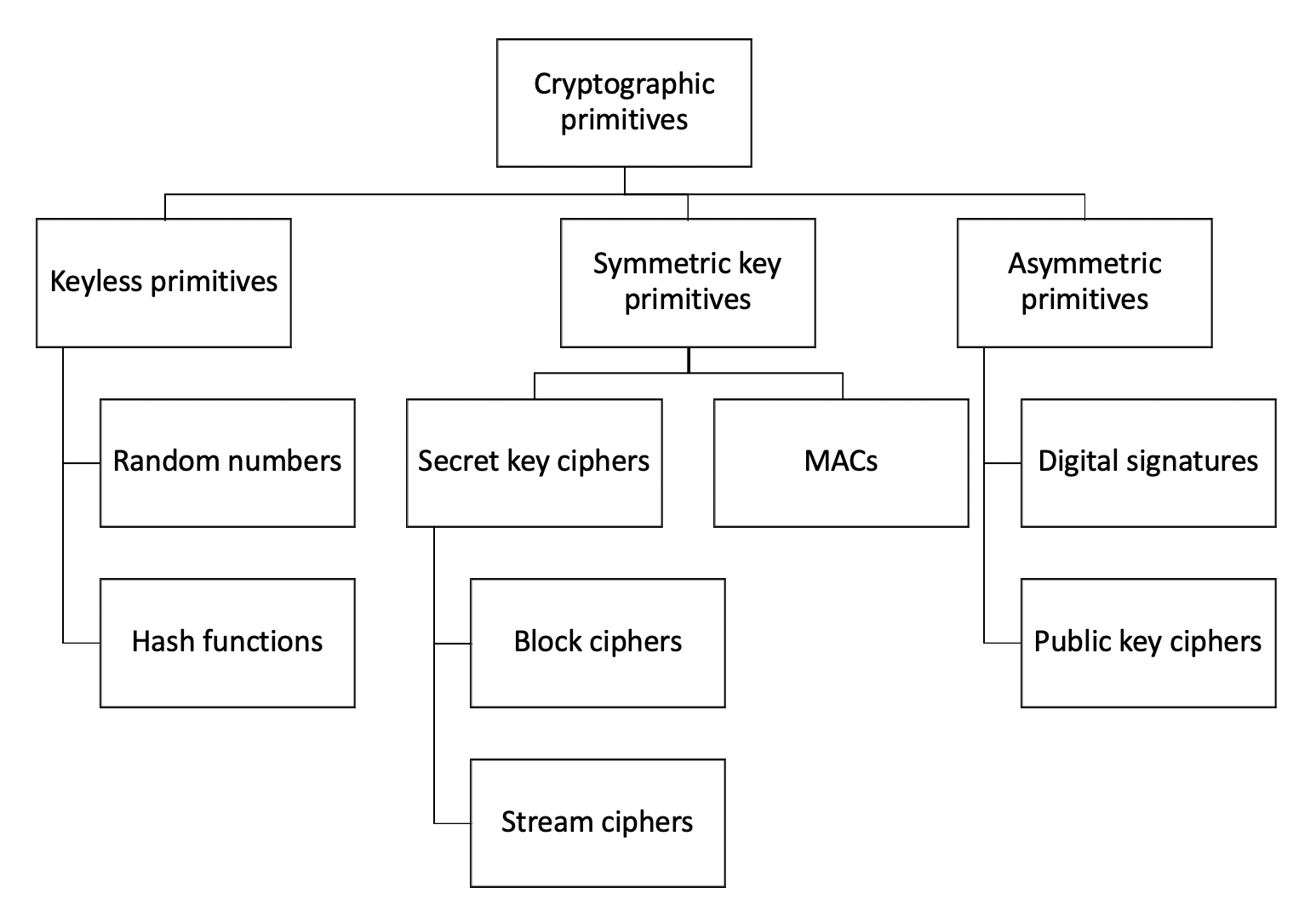
Cryptography is divided into three categories: Keyless primitives (random numbers, hash functions), Symmetric key primitives, and Asymmetric key primitives. Hash functions fall under keyless primitives.
Key Properties:
-
Deterministic: The same input always produces the same hash output.
-
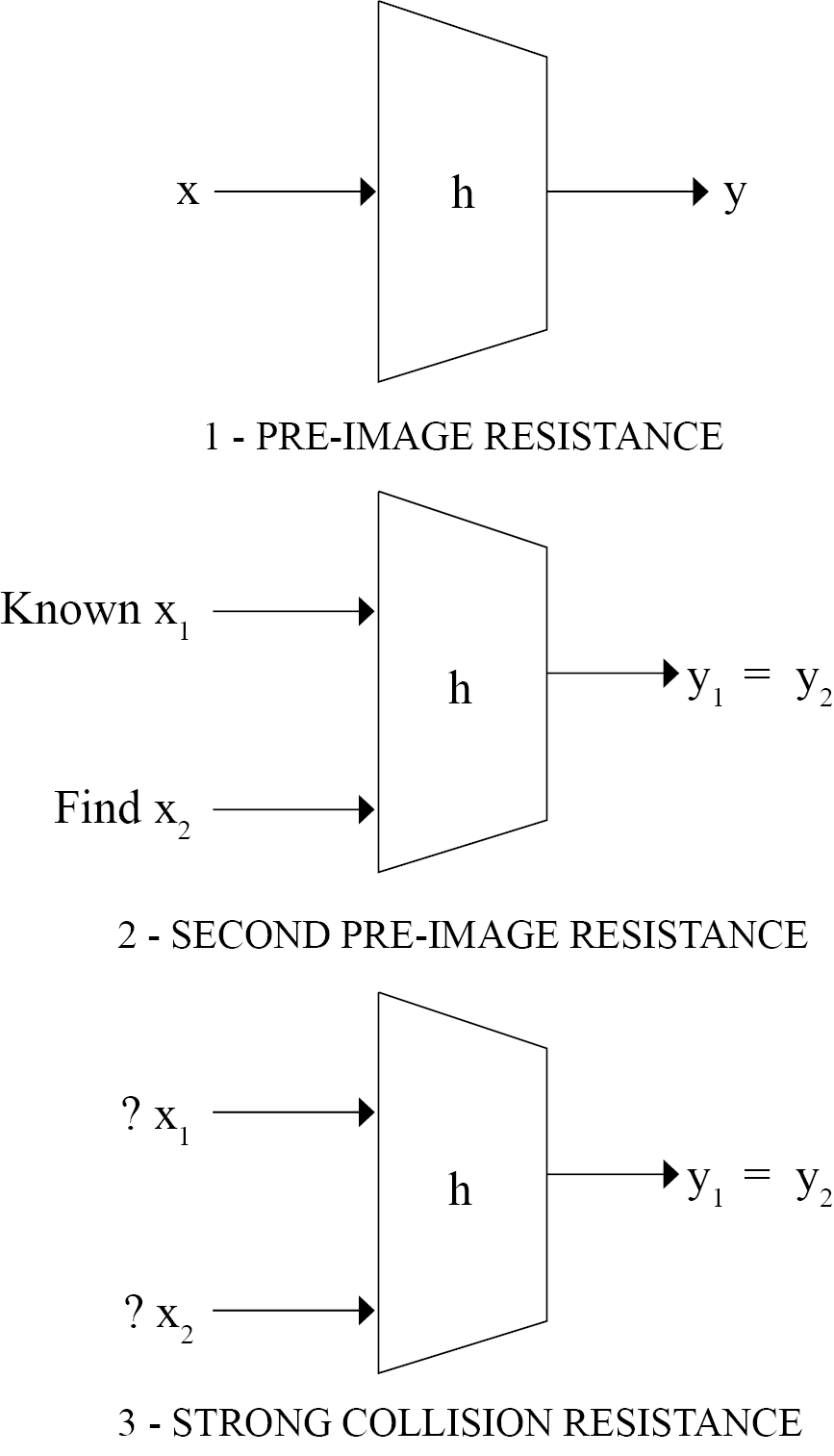
Pre-image Resistance (One-way): Given a hash value h, it should be computationally infeasible to find any input x such that H(x) = h. This ensures the function cannot be reversed.
-
Second Pre-image Resistance (Weak Collision Resistance): Given an input x1, it should be computationally infeasible to find a different input x2 such that H(x1) = H(x2).
-
Collision Resistance (Strong Collision Resistance): It should be computationally infeasible to find any two different inputs x1 and x2 such that H(x1) = H(x2).
-
Avalanche Effect: A small change in input (even one bit) should produce a significantly different hash output (approximately 50% of bits should change). The Avalanche effect refers to the propagation of small changes in the input of a cryptographic function to significantly affect the output - it is a desirable property ensuring that even small modifications to the input result in entirely different outputs. Two construction approaches exist:
- Merkle-Damgård Construction (used in SHA-256): provides a weaker avalanche effect
- Sponge and Squeeze Construction (used in SHA-3/Keccak): provides a stronger avalanche effect - data is absorbed into a sponge, transformed through XOR with a permutation state, and then squeezed out to produce the output hash
-
Fast Computation: The hash function should be efficient to compute for any input - hash functions compress arbitrary messages into fixed-length digests and are designed to be easy to compute.
Question 3: Depict the generic structure of a block in blockchain. (3 marks)
A blockchain block has a generic structure consisting of a block header and a block body (as illustrated in the textbook, Mastering Blockchain Ch.1).
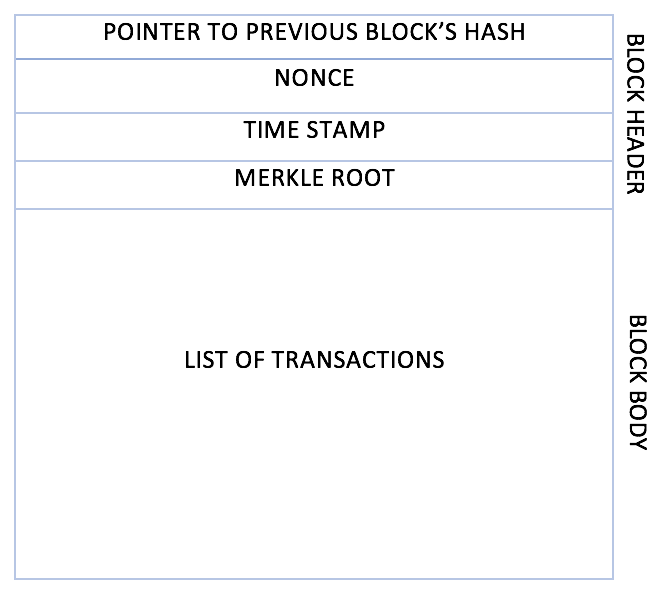
Generic Block Structure:
┌─────────────────────────────────────────┐
│           BLOCK HEADER                  │
├─────────────────────────────────────────┤
│  • Block Version                        │
│  • Previous Block Hash                  │
│  • Merkle Root (Transaction Hash Tree)  │
│  • Timestamp                            │
│  • Difficulty Target / Nonce            │
│  • Block Height / Block Number          │
└─────────────────────────────────────────┘
┌─────────────────────────────────────────┐
│           BLOCK BODY                    │
├─────────────────────────────────────────┤
│  • Transaction Counter                  │
│  • Transaction List:                    │
│    - Transaction 1                      │
│    - Transaction 2                      │
│    - Transaction 3                      │
│    - ...                                │
│    - Transaction N                      │
└─────────────────────────────────────────┘
The blockchain is a chain of blocks starting from the Genesis block (Block 0), where each subsequent block references the previous block's hash, forming an immutable chain.
Generic Elements of a Blockchain (per slides):
Addresses, Accounts, Transactions, Blocks, Peer-to-peer network, Scripting/programming language, Virtual machine, State machine, Nodes, Smart contracts.
Key Components:
- Previous Block Hash: Links the current block to the previous block, creating the chain
- Merkle Root: Hash of all transactions in the block
- Timestamp: When the block was created
- Nonce/Difficulty: Used in mining for Proof of Work consensus
- Transactions: The actual data/transactions stored in the block
How a Blockchain Accumulates Blocks (per slides):
- User X transacts with User Y (smart contract or transfer of value)
- Transaction broadcast to the network
- Find new block (mining)
- New block found (mined)
- Add new block to the blockchain via consensus algorithm
Question 4: Describe how full ecosystem decentralization is possible in blockchain. (3 marks)
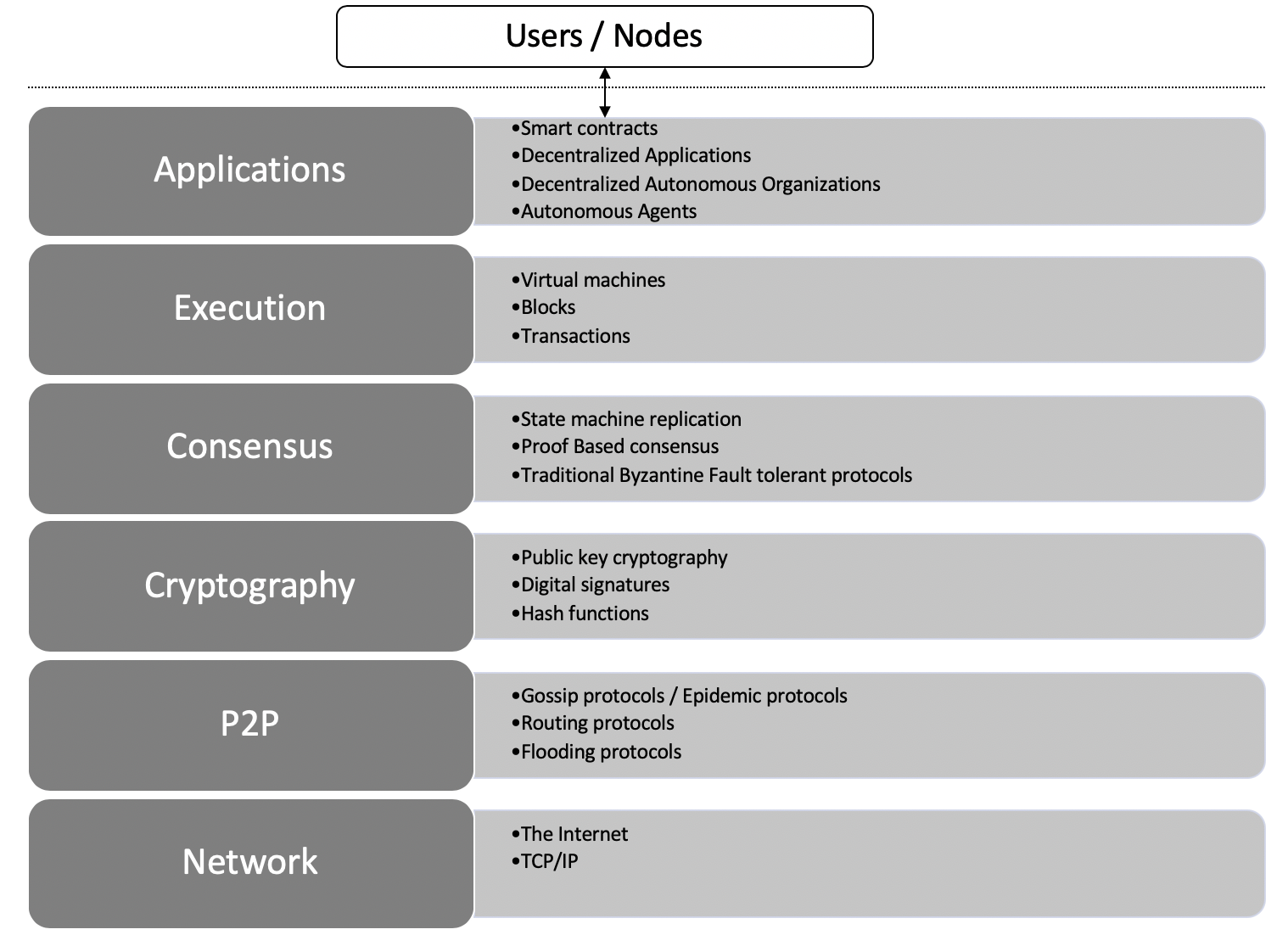
Full ecosystem decentralization in blockchain refers to distributing control across all layers of the blockchain system rather than just the consensus layer. According to the textbook (Mastering Blockchain, Ch. 2), this model illustrates how a full decentralized ecosystem works across four key pillars:
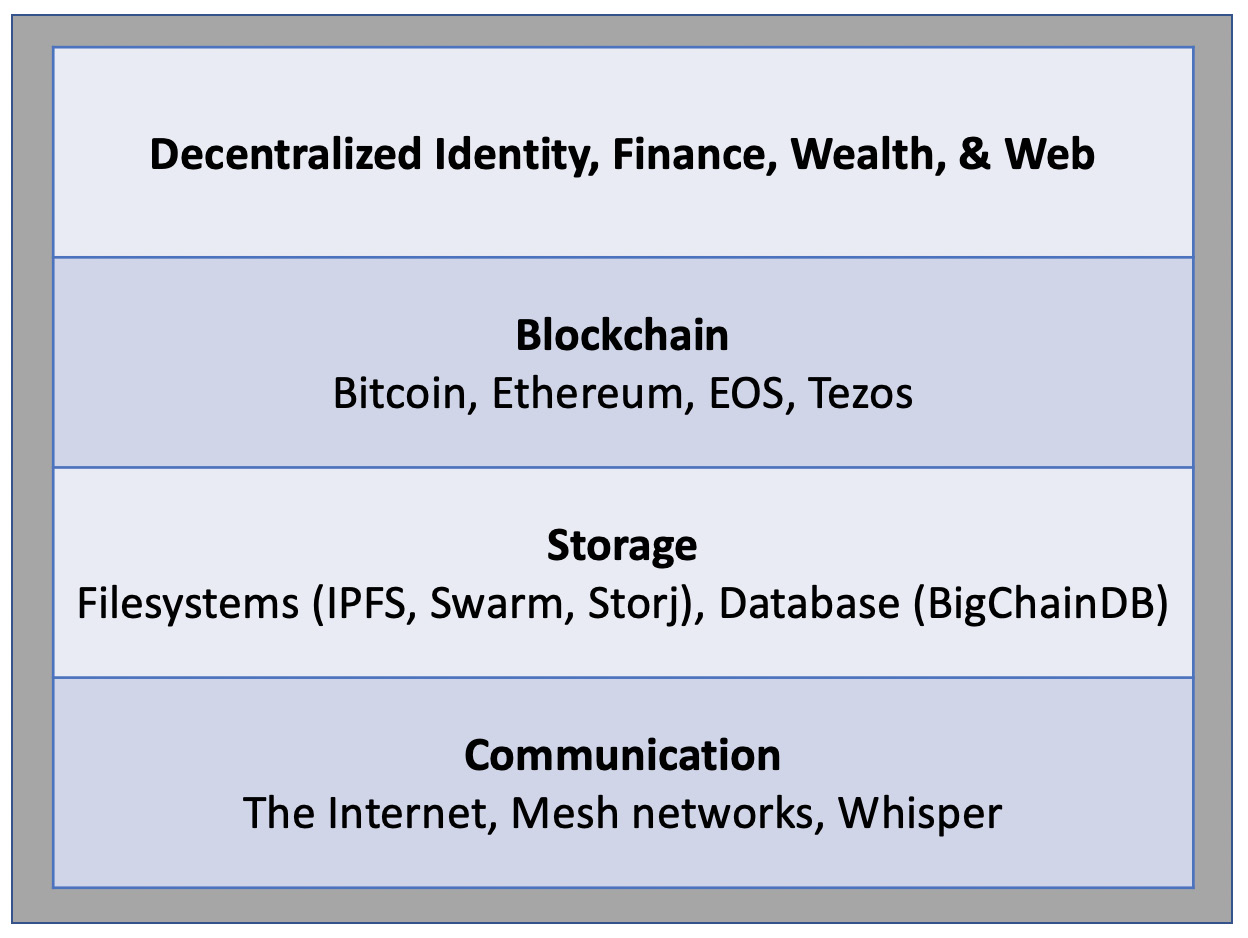
The Four Pillars of Full Ecosystem Decentralization:
- Decentralized Communication:
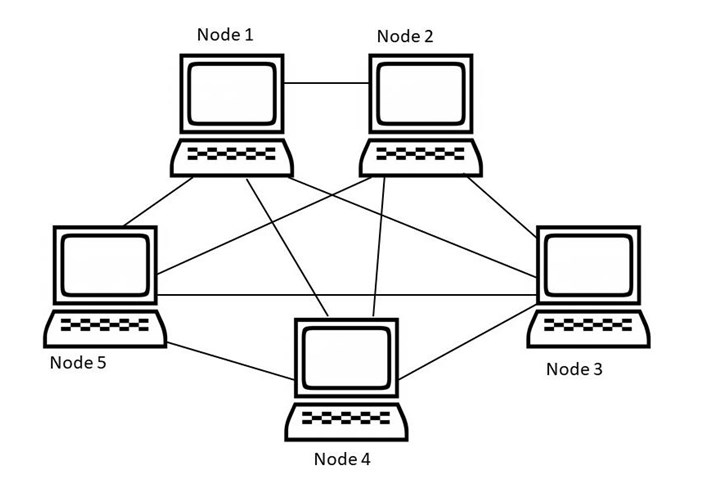
- Mesh Networks: Nodes connect directly to each other, non-hierarchically and dynamically, using P2P principles where each node acts as both client and server. No single point through which all communications must pass.
- Whisper Protocol (Ethereum): A decentralized communication protocol for DApps enabling secure, anonymous messaging without central servers, using encryption for privacy.
- Mesh networks can extend internet access to underserved areas where traditional ISP infrastructure is unfeasible.
-
Decentralized Storage:
- Distributed file systems (IPFS, Swarm) ensure no central storage authority
- Data replicated across nodes for fault tolerance
-
Decentralized Computing Power:
- Consensus Mechanism: Decision-making distributed across validators/miners (PoW, PoS)
- No central server; peer-to-peer network distributes computation
-
Decentralized Identity and Wealth:
- Self-sovereign identity systems
- Token-based economic participation distributed among network members
- DAOs enable decentralized governance where decisions are made collectively
Methods of Decentralization:
- Disintermediation: Removing intermediaries from transactions to create direct connections between parties (e.g., sending money directly without banks)
- Contest-driven Decentralization: Creating competition among service providers via smart contracts to prevent monopolies
Result: The entire ecosystem operates without central control, ensuring resilience, censorship resistance, and true peer-to-peer operation.
Question 5: Explain the terms Genesis block and coinbase transaction. (3 marks)
Genesis Block:
The Genesis Block is the very first block (Block 0) in a blockchain, serving as the foundation of the entire chain.
Characteristics:
- Has no previous block hash (or references a null/zero hash)
- Hardcoded into the blockchain protocol
- Cannot be changed without recreating the entire blockchain
- In Bitcoin, created on January 3, 2009, by Satoshi Nakamoto
- Contains a special message (e.g., Bitcoin's genesis block contains: "The Times 03/Jan/2009 Chancellor on brink of second bailout for banks")
Coinbase Transaction:
A Coinbase Transaction is the first transaction in every block that creates new cryptocurrency as a reward for the miner who successfully mines the block.
Characteristics:
- Has no inputs (creates coins from nothing)
- Rewards the miner with newly minted coins (block reward)
- Includes transaction fees collected from all transactions in the block
- In Bitcoin, the block reward started at 50 BTC and halves approximately every 4 years
- Contains arbitrary data field that miners can use to include messages
- Must mature (100 blocks in Bitcoin) before the reward can be spent
Example: In Bitcoin, if the current block reward is 6.25 BTC and transaction fees total 0.5 BTC, the coinbase transaction creates 6.75 BTC for the miner.
Question 6: What is "hash rate" in Bitcoin? How does it vary with respect to time? (3 marks)
Hash Rate:
Hash rate is the measure of computational power being used in Bitcoin mining, representing the number of hash calculations performed per second by miners attempting to find a valid block hash.
Definition & Units:
- Measured in hashes per second (H/s)
- Common units: KH/s (kilo), MH/s (mega), GH/s (giga), TH/s (tera), PH/s (peta), EH/s (exa)
- Indicates the total mining power of the entire Bitcoin network
How Hash Rate Varies with Time:
-
Generally Increasing Trend: Bitcoin's network hash rate has shown exponential growth since 2009 due to:
- More miners joining the network
- Development of specialized mining hardware (CPUs → GPUs → FPGAs → ASICs)
- Increased efficiency of mining equipment
-
Short-term Fluctuations: Hash rate can vary due to:
- Mining profitability changes (Bitcoin price fluctuations)
- Mining difficulty adjustments (every 2016 blocks, ~2 weeks)
- Seasonal factors (electricity costs, weather affecting cooling)
- Regulatory changes affecting mining operations
- Entry/exit of large mining farms
-
Difficulty Adjustment Mechanism: Bitcoin adjusts mining difficulty every 2016 blocks to maintain an average block time of 10 minutes, regardless of hash rate changes.
Significance: Higher hash rate means greater network security and more resistance to 51% attacks.
Question 7: What is a Decentralized Autonomous Organization (DAO)? (3 marks)
A Decentralized Autonomous Organization (DAO) is an organization that operates through smart contracts on a blockchain, with rules and decision-making encoded in code rather than controlled by a central authority.
DAOs are part of a broader taxonomy of decentralized entities as described in the textbook (Mastering Blockchain, Ch. 2):
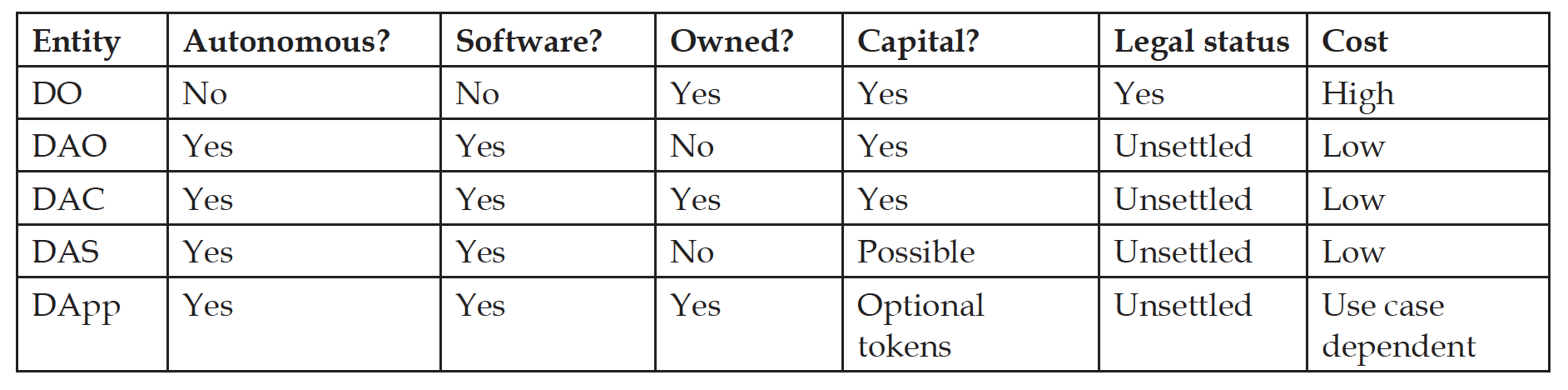
| Entity | Description |
|---|---|
| DO (Decentralized Organization) | Organization with decentralized structure but human decision-making |
| DAO (Decentralized Autonomous Organization) | Fully autonomous, governed by smart contracts and token-holder voting |
| DAC (Decentralized Autonomous Corporation) | DAO variant focused on generating profit/dividends for token holders |
| DAS (Decentralized Autonomous Society) | Broader concept encompassing decentralized governance at societal level |
| DApp | Decentralized Application running on blockchain infrastructure |
Key Characteristics:
-
Decentralized Governance: No central leadership; decisions made collectively by token holders through voting mechanisms.
-
Autonomous Operation: Smart contracts automatically execute decisions and rules without human intervention once deployed.
-
Transparent Rules: All rules, transactions, and decisions are recorded on the blockchain and visible to all members.
-
Token-Based Membership: Ownership and voting rights typically represented by tokens; voting power often proportional to token holdings.
How DAOs Work:
- Members propose changes or actions
- Token holders vote on proposals
- Smart contracts automatically execute approved proposals
- Treasury and funds managed collectively through smart contracts
Requirements of a DApp (which underpin DAOs):
- Fully open source
- Operations must be cryptographically secured
- Stored on a public ledger
- Tokens generated under a consensus mechanism
DApp Types:
- Type 1: Run on their own dedicated blockchain (e.g., Bitcoin)
- Type 2: Use an existing public blockchain (e.g., ERC-20 tokens on Ethereum)
- Type 3: Use the protocols of Type 2 DApps
Examples:
- Investment DAOs (pooling funds for collective investment decisions)
- Protocol DAOs (governing DeFi protocols like MakerDAO, Uniswap)
- Social DAOs (community-driven organizations)
Benefits: Eliminates corruption, ensures transparency, enables global collaboration, and removes single points of failure.
Question 8: Give any two use cases where blockchain and AI can be combined. (3 marks)
Blockchain and Artificial Intelligence (AI) can be synergistically combined in various applications. Here are two significant use cases:
Use Case 1: Decentralized AI Model Training and Data Marketplace
Application:
- Blockchain provides a decentralized marketplace where data owners can securely share training data with AI developers
- Smart contracts ensure fair compensation for data providers
- AI models can be trained on distributed datasets without compromising privacy
Benefits:
- Data Provenance: Blockchain tracks data origin and quality
- Privacy: Federated learning allows AI training without exposing raw data
- Fair Compensation: Automated payments via smart contracts for data contributions
- Trust: Immutable records of data usage and model versions
Example: Healthcare organizations can contribute medical data for AI training while maintaining patient privacy and receiving compensation through blockchain-based tokens.
Use Case 2: AI-Powered Smart Contract Auditing and Fraud Detection
Application:
- AI algorithms analyze blockchain transactions and smart contract code to detect anomalies, fraud, and security vulnerabilities
- Machine learning models identify patterns in blockchain data for risk assessment
- AI enhances blockchain security by predicting potential attacks
Benefits:
- Automated Security: AI continuously monitors for suspicious activities
- Smart Contract Verification: AI detects vulnerabilities and bugs in contract code
- Fraud Prevention: Real-time detection of fraudulent transactions
- Predictive Analytics: AI forecasts network threats and congestion
Example: AI systems can analyze Ethereum smart contracts before deployment to identify potential vulnerabilities (e.g., reentrancy attacks) and blockchain transaction patterns to detect money laundering activities.
Question 9: Distinguish between 'mainnet', 'testnet' and 'privatenet' in Ethereum blockchain. (3 marks)
Ethereum blockchain networks can be categorized into three types based on their purpose and accessibility:
| Feature | Mainnet | Testnet | Privatenet |
|---|---|---|---|
| Purpose | Production network for real transactions | Testing environment for developers | Private development/enterprise use |
| Real Value | Uses real ETH with actual monetary value | Uses test ETH with no real value | May use custom tokens with no external value |
| Accessibility | Public, anyone can join | Public, anyone can join | Private, restricted access |
| Use Case | Real DApps, live smart contracts, actual transactions | Testing smart contracts before mainnet deployment | Enterprise applications, private consortiums |
| Examples | Ethereum Mainnet (Chain ID: 1) | Sepolia, Goerli, Rinkeby | Hyperledger Besu, Quorum, private Geth instances |
| Cost | Real gas fees in ETH | Free test ETH from faucets | Configurable, often minimal or free |
| Security | High, full network consensus | Moderate, similar to mainnet | Controlled by network administrators |
Key Distinctions:
- Mainnet: Production environment where real assets are at stake
- Testnet: Sandbox for developers to experiment without financial risk; mimics mainnet behavior
- Privatenet: Isolated network for specific organizations; full control over consensus, permissions, and participants
Developer Workflow: Typically develop on privatenet → test on testnet → deploy to mainnet.
Question 10: Jordan has to pay Taylor 1 ETH. An ETH transfer requires 21,000 units of gas. The base fee is 10 gwei and Jordan also includes a tip of 2 gwei. What will be the gas fee for this transaction? How much ETH will be deducted from Jordan's account? (3 marks)
Given:
- Amount to transfer: 1 ETH
- Gas units required: 21,000
- Base fee: 10 gwei
- Priority fee (tip): 2 gwei
Step 1: Calculate Total Gas Price
Total Gas Price = Base Fee + Priority Fee (Tip)
Total Gas Price = 10 gwei + 2 gwei = 12 gwei
Step 2: Calculate Transaction Fee (Gas Fee)
Transaction Fee = Gas Units × Total Gas Price
Transaction Fee = 21,000 × 12 gwei
Transaction Fee = 252,000 gwei
Convert to ETH:
- 1 ETH = 109 gwei (1 billion gwei)
- Transaction Fee = 252,000 / 1,000,000,000 ETH
- Transaction Fee = 0.000252 ETH
Step 3: Calculate Total Amount Deducted
Total Deducted = Transfer Amount + Transaction Fee
Total Deducted = 1 ETH + 0.000252 ETH
Total Deducted = 1.000252 ETH
Answer:
- Gas Fee: 252,000 gwei or 0.000252 ETH
- Total ETH Deducted from Jordan's Account: 1.000252 ETH
Breakdown:
- Taylor receives: 1 ETH
- Network fee (burned + tip): 0.000252 ETH
- Jordan pays: 1.000252 ETH total
PART B
Answer any one full question from each module, each carries 14 marks
Module I - Fundamentals of Cryptography — #### Question 11
Question 11
(a) Explain the RSA key generation algorithm. Also show how RSA generates public and private keys from the values P = 17 and Q = 11. (7 marks)
RSA Key Generation Algorithm:
RSA (Rivest-Shamir-Adleman) is an asymmetric cryptographic algorithm developed in 1977 by Ron Rivest, Adi Shamir, and Leonard Adelman. It uses a pair of keys: a public key for encryption and a private key for decryption.
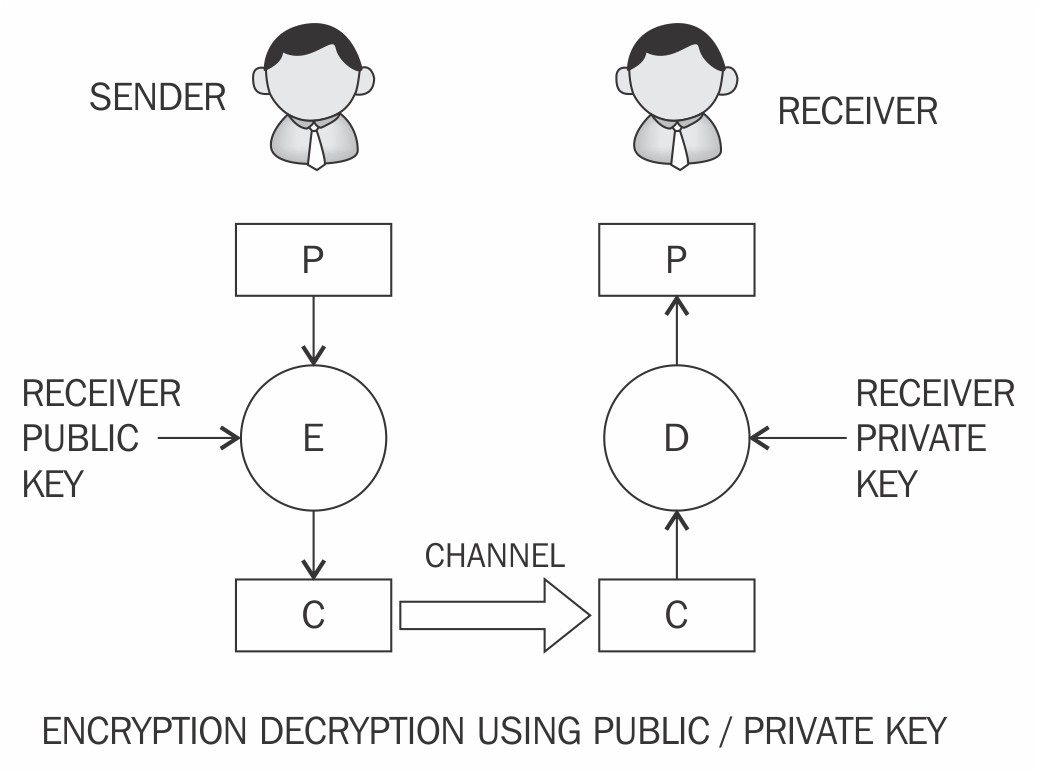
Algorithm Steps:
- Modulus Generation: Choose two distinct large prime numbers p and q. Compute n = p × q (modulus for both keys).
- Generate the co-prime: Calculate Euler's totient function φ(n) = (p-1) × (q-1).
- Generate the public key: Choose an integer e such that 1 < e < φ(n) and gcd(e, φ(n)) = 1 (e is coprime to φ(n)). Commonly used values: 3, 17, 65537.
- Generate the private key: Compute d, the modular multiplicative inverse of e modulo φ(n), such that e × d ≡ 1 (mod φ(n)). Use the Extended Euclidean Algorithm.
- Form keys:
- Public Key: (n, e)
- Private Key: (n, d)
Encryption: C = M^e mod n (using receiver's public key)
Decryption: M = C^d mod n (using receiver's private key)
Security of RSA: RSA's security relies on the difficulty of the Integer Factorization Problem - attacking N to compute d requires factoring N into primes p and q, which is computationally infeasible for large values of N. RSA key size is its strength (larger key = higher security), but RSA operations like "power" and "mod" are more time-consuming compared to AES. In practice, RSA and AES are used together in hybrid cryptosystems - RSA handles secure key exchange, AES handles efficient bulk data encryption.
Numerical Example with P = 17 and Q = 11:
Given:
- p = 17
- q = 11
Step 1: Compute n
n = p × q = 17 × 11 = 187
Step 2: Compute φ(n)
φ(n) = (p - 1) × (q - 1)
φ(n) = (17 - 1) × (11 - 1)
φ(n) = 16 × 10 = 160
Step 3: Choose e (public exponent)
We need to choose e such that gcd(e, 160) = 1
Let's choose e = 7
Verify: gcd(7, 160) = 1 ✓ (7 is coprime to 160)
Step 4: Compute d (private exponent)
We need to find d such that: d × e ≡ 1 (mod φ(n))
d × 7 ≡ 1 (mod 160)
Using Extended Euclidean Algorithm:
160 = 22 × 7 + 6
7 = 1 × 6 + 1
6 = 6 × 1 + 0
Back substitution:
1 = 7 - 1 × 6
1 = 7 - 1 × (160 - 22 × 7)
1 = 7 - 160 + 22 × 7
1 = 23 × 7 - 160
Therefore: d = 23
Verification: (23 × 7) mod 160 = 161 mod 160 = 1 ✓
Generated Keys:
-
Public Key: (e, n) = (7, 187)
- Used for encryption
- Can be shared publicly
-
Private Key: (d, n) = (23, 187)
- Used for decryption
- Must be kept secret
Encryption: C = M^e mod n = M^7 mod 187
Decryption: M = C^d mod n = C^23 mod 187
(b) Illustrate the digital signature generation and verification process. (7 marks)
Digital Signature:
A digital signature is a cryptographic mechanism that provides authentication, integrity, and non-repudiation for digital messages or documents. It uses asymmetric cryptography where the sender signs with their private key and the receiver verifies with the sender's public key.
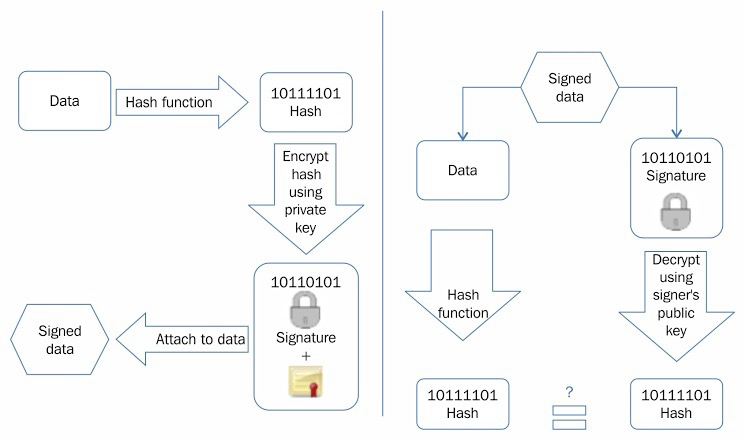
How Blockchain Transaction Signing Works (per slides):
- Key Pair Generation: Users generate a public and private key pair (similar to RSA or using ECC/ECDSA).
- Transaction Creation: User specifies recipient's address and amount.
- Signing: Transaction is signed with sender's private key. The signature + public key are included in the transaction data.
- Verification: Nodes verify the signature using the public key. This public key must correspond to the blockchain address from which funds are being sent.
Note: Blockchain signing typically uses Elliptic Curve Cryptography (ECC), such as ECDSA (Elliptic Curve Digital Signature Algorithm), for its efficiency and security with shorter key lengths compared to RSA.
Digital Signature Process:
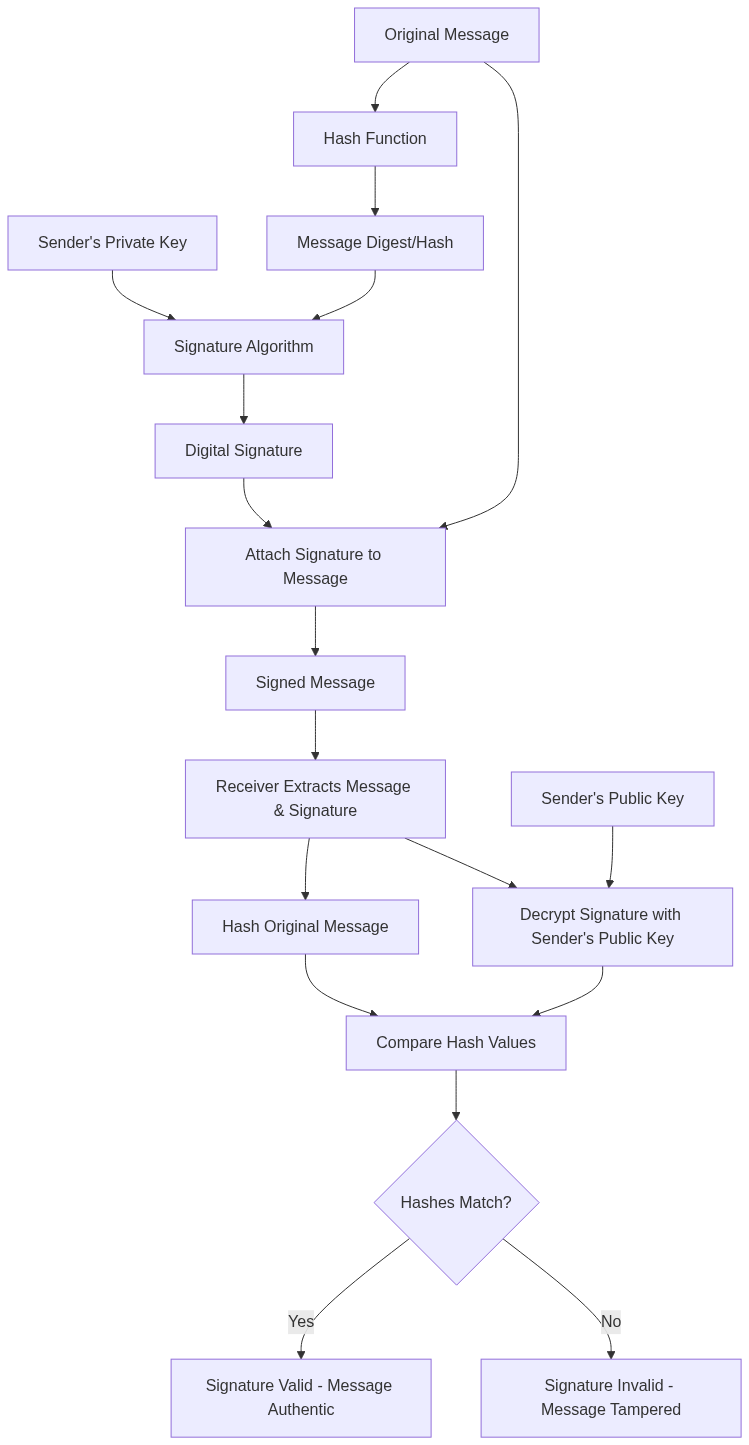
Digital Signature Generation Process:
Step 1: Create Message Digest
- Sender creates a message M
- Apply cryptographic hash function to message: H(M)
- This produces a fixed-size message digest (e.g., SHA-256 produces 256 bits)
Step 2: Sign the Digest
- Sender encrypts the message digest using their private key
- Signature = Encrypt(H(M), Private Key_sender)
- This creates the digital signature
Step 3: Transmit
- Send both the original message M and the signature to the receiver
- Message package: {M, Signature}
Digital Signature Verification Process:
Step 4: Receive Signed Message
- Receiver obtains the message M and the signature
Step 5: Decrypt Signature
- Receiver decrypts the signature using sender's public key
- Decrypted Digest = Decrypt(Signature, Public Key_sender)
Step 6: Compute Fresh Hash
- Receiver independently computes hash of received message
- Fresh Digest = H(M)
Step 7: Compare Digests
- Compare Decrypted Digest with Fresh Digest
- If Decrypted Digest == Fresh Digest → Signature is VALID
- If Decrypted Digest ≠ Fresh Digest → Signature is INVALID
Example with RSA Digital Signature:
Scenario: Alice wants to send a signed message to Bob
Alice's Keys:
- Private Key: (d, n) = (23, 187)
- Public Key: (e, n) = (7, 187)
Signing Process:
- Message: M = "TRANSFER 100 BTC"
- Hash: h = H(M) = 65 (example hash value)
- Sign: Signature = h^d mod n = 65^23 mod 187 = 120
- Send: {M, Signature = 120}
Verification Process (Bob):
- Receive: Message M and Signature = 120
- Decrypt Signature: h' = 120^e mod n = 120^7 mod 187 = 65
- Compute Hash: h = H(M) = 65
- Compare: h' (65) == h (65) ✓
- Result: Signature is VALID, message is authentic
Security Properties:
- Authentication: Proves the message came from the claimed sender
- Integrity: Ensures message hasn't been altered
- Non-repudiation: Sender cannot deny sending the message
- Unforgeable: Only the private key holder can create valid signatures
Applications in Blockchain:
- Transaction signing in Bitcoin/Ethereum
- Block validation
- Smart contract deployment
- Wallet authentication
Question 12
(a) Explain with a neat block diagram, the steps involved in AES algorithm. (7 marks)
AES (Advanced Encryption Standard):
AES is a symmetric block cipher that encrypts data in fixed-size blocks of 128 bits using keys of 128, 192, or 256 bits. It is the most widely used encryption algorithm today, adopted as a standard by NIST in 2001.
Blockchain Usage: In Bitcoin wallets, AES-256 in CBC mode is used to encrypt private keys. In Ethereum wallets, AES-128-CTR is used to store private keys.
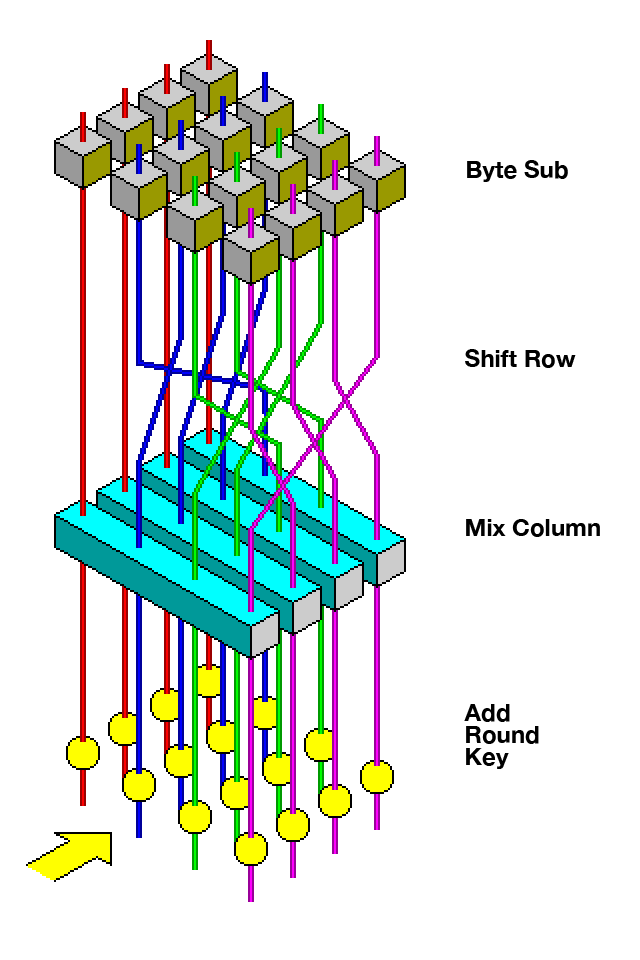
AES Algorithm Overview:
Key Parameters (per slides):
- Block Size: 128 bits (16 bytes) - fixed; input data is divided into blocks of 128 bits, each processed as a 4×4 matrix of bytes (the state matrix)
- Key Sizes and Rounds:
- Key size 128 bits → 10 rounds
- Key size 192 bits → 12 rounds
- Key size 256 bits → 14 rounds
Key Generation (per slides):
- The same master key encrypts all blocks of plaintext
- Each round generates a new subkey (4×4 matrix of bytes) via the key schedule algorithm
- The subkeys are derived from the master key by expanding it into a larger set
- Total subkeys required: 11 (for AES-128)
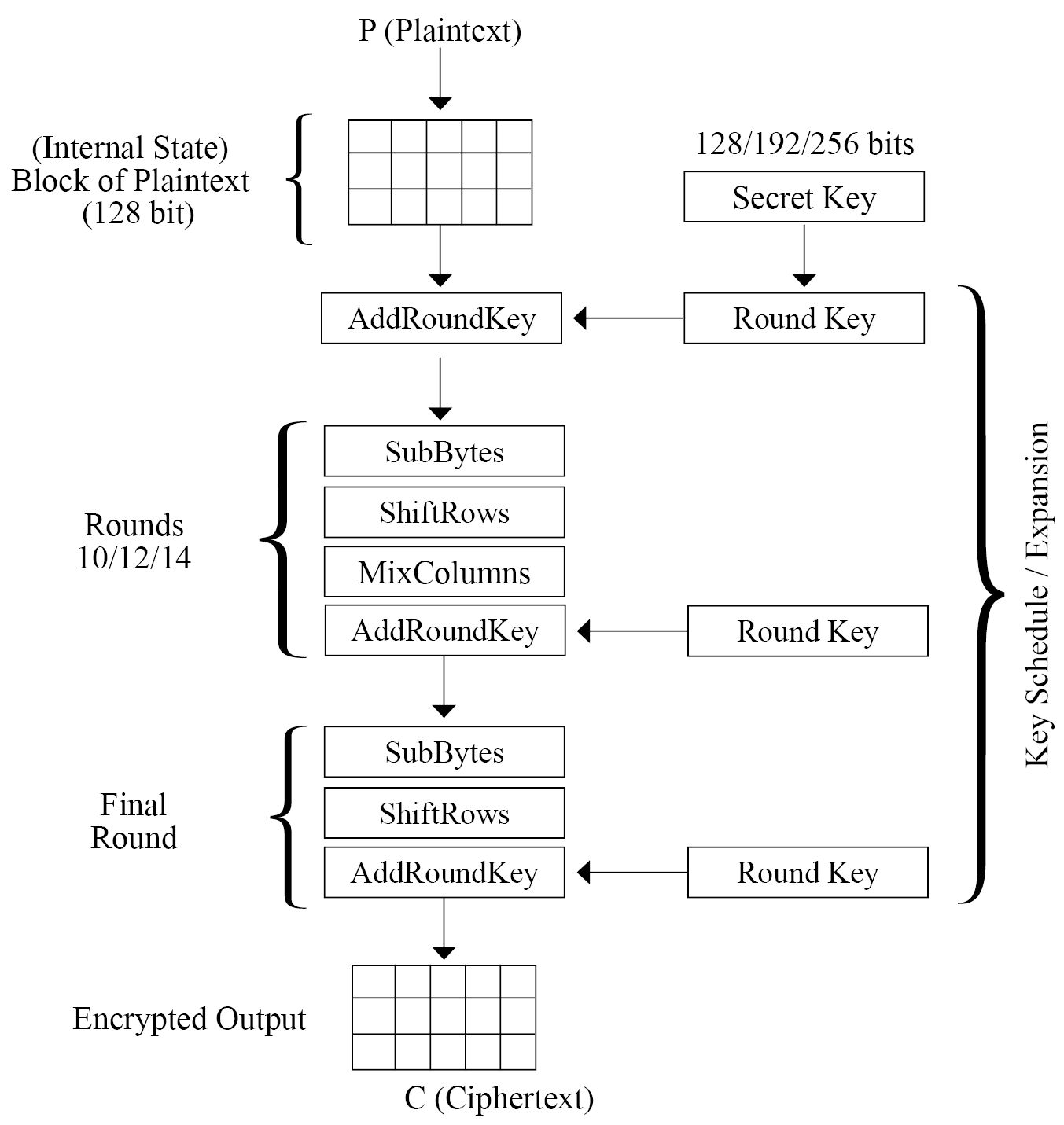
AES Encryption Process:
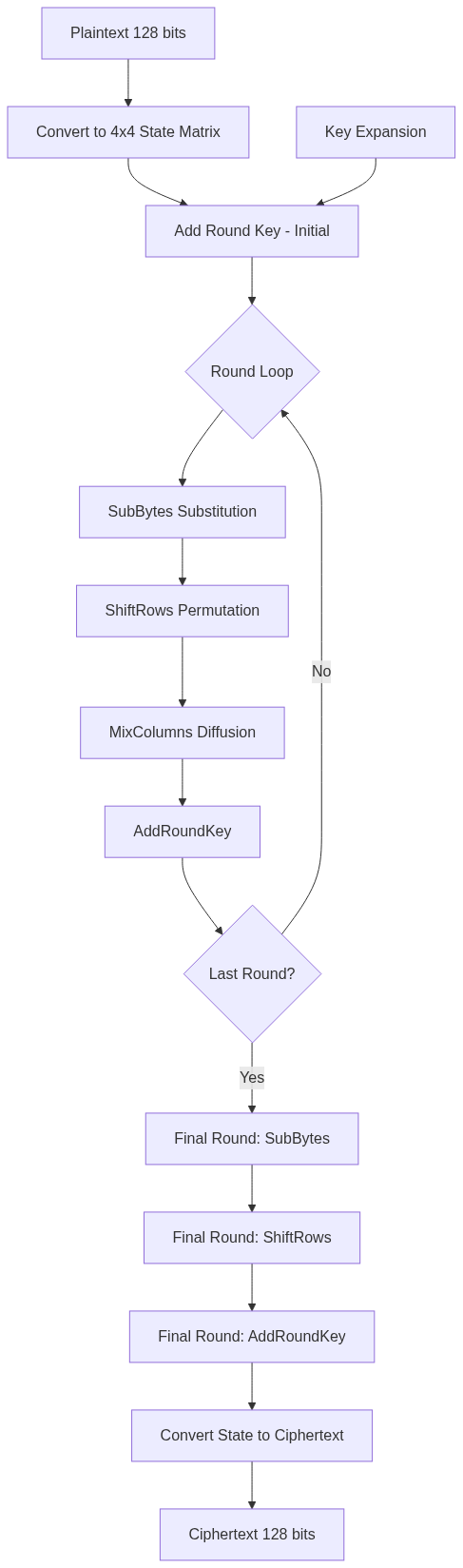
AES Encryption Steps (Detailed):
Step 0: Key Expansion
- Generate round keys from the original cipher key
- For AES-128: Generate 11 round keys (128 bits each) from original 128-bit key
- Uses Rijndael key schedule algorithm
Step 1: Initial Round (Before Main Rounds)
AddRoundKey:
- XOR the state matrix with the first round key
- State ⊕ RoundKey[0]
Step 2: Main Rounds (Repeat 9, 11, or 13 times depending on key size)
For each round, perform four transformations:
a) SubBytes (Substitution):
- Non-linear substitution step where a lookup table (S-box) is used to replace all bytes of the state array
- S-box is a linear array of 256 entries
- Provides confusion (obscures relationship between plaintext and ciphertext)
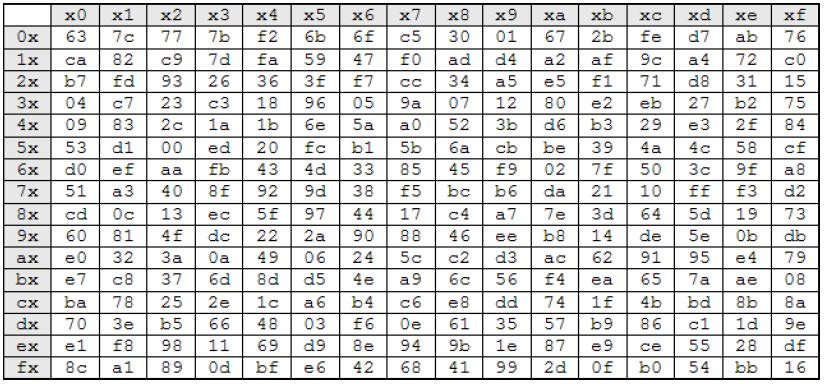
Example S-box mappings (per slides):
Input → Output
0x00 → 0x63
0x01 → 0x7c
0x02 → 0x77
0x03 → 0x7b
b) ShiftRows (Permutation):
- Transposition step for diffusion
- Rows of the state matrix are cyclically shifted left
- The number of positions each row is shifted is determined by its row number (state matrix indexed starting from 0)
- Row 0: No shift
- Row 1: Shift 1 byte left
- Row 2: Shift 2 bytes left
- Row 3: Shift 3 bytes left
Initial state matrix (per slides):
s0  s1  s2  s3    {Row 0}
s4  s5  s6  s7    {Row 1}
s8  s9  s10 s11   {Row 2}
s12 s13 s14 s15   {Row 3}

After ShiftRows:
s0  s1  s2  s3
s5  s6  s7  s4
s10 s11 s8  s9
s15 s12 s13 s14
c) MixColumns (Diffusion):
- All bytes are mixed in a linear fashion (linear transformation), column-wise
- Performed by multiplying each column of the state matrix by a fixed 4×4 Mix Columns matrix
- Provides diffusion (spreads influence of each bit)
{MIX COLUMNS MATRIX} 4×4  ×  {STATE MATRIX} 4×4

Mix Columns Matrix:
[02 03 01 01]
[01 02 03 01]
[01 01 02 03]
[03 01 01 02]
- Note: Skipped in the final round
d) AddRoundKey:
- The state array is XORed with a subkey derived from the master key
- State ⊕ RoundKey[i]
- This completes one round of AES
Step 3: Final Round (10th round for AES-128)
- SubBytes
- ShiftRows
- AddRoundKey (with final round key)
- Note: In the final round, the MixColumns step is removed and only AddRoundKey is performed
Step 4: Output Ciphertext
- Convert the final state matrix back to 128-bit ciphertext
AES State Matrix Representation:
Plaintext (128 bits) arranged in 4×4 byte matrix:
[b0  b4  b8  b12]
[b1  b5  b9  b13]
[b2  b6  b10 b14]
[b3  b7  b11 b15]
AES Decryption:
Decryption is the reverse process using inverse transformations:
- InvSubBytes (using inverse S-box)
- InvShiftRows (shift right instead of left)
- InvMixColumns (using inverse matrix)
- AddRoundKey (same operation, XOR is its own inverse)
Security Features:
- Resistant to known cryptanalytic attacks
- No practical attacks faster than brute force
- Fast in both hardware and software
- Used in SSL/TLS, VPNs, file encryption, blockchain
(b) Demonstrate the design of SHA-256 cryptographic hash function and its applications. (7 marks)
SHA-256 (Secure Hash Algorithm 256-bit):
SHA-256 is a cryptographic hash function from the SHA-2 family, designed by the NSA and published by NIST in 2001. It produces a 256-bit (32-byte) hash value from input of any size. SHA-256 is used in Bitcoin's Proof of Work mechanism.
SHA-256 uses the Merkle-Damgård Construction (which provides a weaker avalanche effect compared to SHA-3's Sponge construction).
As shown in the diagram, SHA-256 takes the input message and divides it into equal blocks of 512 bits. Initial values (initialization vector) composed of eight 32-bit words (256 bits) are fed into the compression function with the first message block. Subsequent blocks are fed into the compression function until all blocks are processed, and finally the output hash is produced.
Input/Output Specifications:
- Input: Message of any length (up to 2^64 - 1 bits)
- Output: 256-bit hash value (64 hexadecimal characters)
- Block Size: 512 bits (64 bytes)
- Word Size: 32 bits
SHA-256 Algorithm Steps:
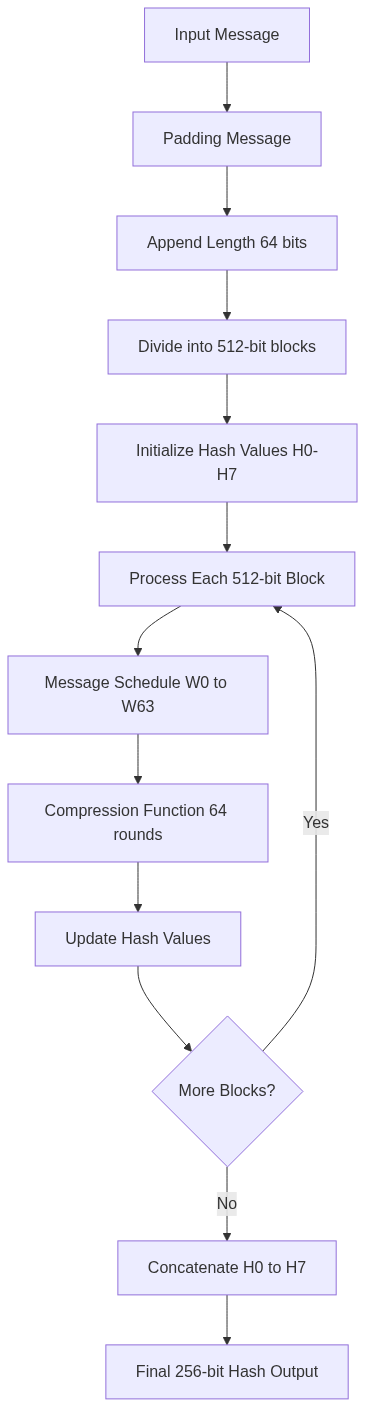
Step 1: Message Padding
- Append bit '1' to the message
- Append zeros until message length ≡ 448 (mod 512)
- Ensures that after adding 64-bit length, total is multiple of 512 bits
Example:
Original message: "abc" = 24 bits
After padding: 24 + 1 + 423 zeros = 448 bits
Step 2: Append Length
- Append original message length as 64-bit big-endian integer
- Total message now multiple of 512 bits
Step 3: Initialize Hash Values (H0 to H7)
Eight 32-bit hash values initialized with first 32 bits of fractional parts of square roots of first 8 primes:
H0 = 0x6a09e667
H1 = 0xbb67ae85
H2 = 0x3c6ef372
H3 = 0xa54ff53a
H4 = 0x510e527f
H5 = 0x9b05688c
H6 = 0x1f83d9ab
H7 = 0x5be0cd19
Step 4: Process Each 512-bit Message Block
For each 512-bit block:
4a) Message Schedule (Prepare 64 words W[0] to W[63]):
- First 16 words (W[0] to W[15]): Directly from the 512-bit message block
- Remaining 48 words (W[16] to W[63]): Generated using:
W[t] = σ1(W[t-2]) + W[t-7] + σ0(W[t-15]) + W[t-16]

where:
σ0(x) = ROTR^7(x) ⊕ ROTR^18(x) ⊕ SHR^3(x)
σ1(x) = ROTR^17(x) ⊕ ROTR^19(x) ⊕ SHR^10(x)
4b) Initialize Working Variables:
a = H0, b = H1, c = H2, d = H3
e = H4, f = H5, g = H6, h = H7
4c) Compression Function (64 Rounds):
For t = 0 to 63:
T1 = h + Σ1(e) + Ch(e,f,g) + K[t] + W[t]
T2 = Σ0(a) + Maj(a,b,c)

h = g
g = f
f = e
e = d + T1
d = c
c = b
b = a
a = T1 + T2
Logical Functions:
Ch(x,y,z) = (x ∧ y) ⊕ (¬x ∧ z)    // Choose
Maj(x,y,z) = (x ∧ y) ⊕ (x ∧ z) ⊕ (y ∧ z)    // Majority

Σ0(x) = ROTR^2(x) ⊕ ROTR^13(x) ⊕ ROTR^22(x)
Σ1(x) = ROTR^6(x) ⊕ ROTR^11(x) ⊕ ROTR^25(x)
Constants K[t]: 64 constants representing first 32 bits of fractional parts of cube roots of first 64 primes
4d) Update Hash Values:
H0 = H0 + a
H1 = H1 + b
H2 = H2 + c
H3 = H3 + d
H4 = H4 + e
H5 = H5 + f
H6 = H6 + g
H7 = H7 + h
Step 5: Produce Final Hash
Hash = H0 || H1 || H2 || H3 || H4 || H5 || H6 || H7
(Concatenation of eight 32-bit values = 256 bits)
Example:
Input: "abc"
Output: ba7816bf8f01cfea414140de5dae2223b00361a396177a9cb410ff61f20015ad
Applications of SHA-256:
-
Bitcoin and Blockchain:
- Mining: Proof-of-Work consensus (finding hash below target difficulty)
- Block hashing: Each block header is hashed with SHA-256 (applied twice)
- Transaction IDs: Unique identifier for transactions
- Merkle tree construction: Building transaction Merkle trees
-
Digital Signatures:
- Message digest creation before signing with RSA/ECDSA
- Ensures integrity of signed documents
-
Password Storage:
- Hashing passwords before storage (with salt)
- One-way function prevents password recovery from hash
-
Data Integrity Verification:
- File integrity checking (checksums)
- Software distribution verification
- Digital forensics
-
SSL/TLS Certificates:
- Certificate fingerprinting
- Secure web communications
-
Cryptocurrency Addresses:
- Bitcoin address generation (along with RIPEMD-160)
- Ethereum uses Keccak-256, but SHA-256 used in some crypto operations
-
Merkle Trees:
- Efficient verification of data integrity in distributed systems
- Used in Git, BitTorrent, blockchain
Security Properties:
- Pre-image resistance: Cannot find input from hash
- Collision resistance: Computationally infeasible to find two inputs with same hash
- Avalanche effect: Small input change causes significant hash change
- Deterministic: Same input always produces same hash
Module II - Fundamentals of Blockchain Technology — #### Question 13
Question 13
(a) Explain different types of blockchain based on technical and business usage perspective. (7 marks)
Blockchains can be categorized into different types based on access control, participation, and intended use. The textbook (Mastering Blockchain, Ch. 1) provides a comprehensive taxonomy:
Types of Blockchains (per slides):
- Distributed Ledgers (e.g., R3 Corda)
- Public Blockchains (e.g., Bitcoin, Ethereum)
- Private Blockchains (e.g., Kadena, Quorum)
- Semi-Private Blockchains
- Sidechains and Pegged Sidechains (e.g., Rootstock/RSK, Liquid)
- Permissioned Ledgers
- Tokenized Blockchains (e.g., Bitcoin)
- Tokenless Blockchains (e.g., Hyperledger Fabric)
Key Distinction: All blockchains are distributed ledgers, but not all distributed ledgers are blockchains (e.g., R3 Corda is a distributed ledger focused on financial services without blocks of transactions).
1. Public Blockchain (Permissionless)
Technical Characteristics:
- Open access: Anyone can join, read, write, and participate
- Fully decentralized: No central authority
- Transparent: All transactions publicly visible
- Consensus: PoW, PoS, or other decentralized mechanisms
- High security through cryptography and consensus
Business Use Cases:
- Cryptocurrency networks (Bitcoin, Ethereum)
- Public record keeping
- Crowdfunding platforms
- Decentralized applications (DApps)
- Public voting systems
Advantages:
- Complete transparency and trust through decentralization
- Censorship-resistant
- No single point of failure
Disadvantages:
- Slow transaction speed
- High energy consumption (especially PoW)
- Limited scalability
- No privacy for sensitive business data
Examples: Bitcoin, Ethereum, Litecoin
Per slides: Public blockchains are open, decentralized blockchains accessible to anyone. No central authority - anyone can participate in the consensus process.
2. Private Blockchain (Permissioned)
Technical Characteristics:
- Restricted access: Only invited/authorized participants
- Controlled by single organization or consortium
- Selective transparency: Data visible only to permitted participants
- Consensus: Simplified mechanisms (may not need PoW/PoS)
- Centralized or semi-centralized control
Business Use Cases:
- Internal organizational processes
- Supply chain management within company
- Internal auditing and compliance
- Asset management
- Private record keeping
Advantages:
- High transaction speed
- Energy efficient
- Better privacy and confidentiality
- Scalable for specific use cases
- Regulatory compliance easier
Disadvantages:
- Less trustless (requires trusting the controlling entity)
- Partially centralized
- Limited decentralization benefits
- Potential for censorship
Examples: Hyperledger Fabric (in private mode), R3 Corda, Quorum (private mode)
Per slides: Private blockchains are accessible only to a selected group of individuals or organizations. Shared among trusted participants. Examples: Kadena and Quorum.
3. Consortium/Federated Blockchain (Hybrid)
Technical Characteristics:
- Semi-decentralized: Controlled by a group of organizations
- Pre-selected nodes: Only authorized nodes validate transactions
- Restricted read/write access: May be public or restricted
- Consensus: Decided by consortium members (PBFT, voting-based)
- Balanced approach between public and private
Business Use Cases:
- Banking and financial consortiums
- Cross-organizational supply chains
- Healthcare data sharing among hospitals
- Research collaborations
- Industry-specific networks (trade finance, shipping)
Advantages:
- Better scalability than public blockchains
- More decentralized than private blockchains
- Faster transaction processing
- Shared control reduces single point of failure
- Cost-effective for participating organizations
Disadvantages:
- Less transparent than public blockchains
- Coordination overhead among consortium members
- Potential conflicts of interest
- Setup complexity
Examples: R3 (Banking consortium), Energy Web Chain, IBM Food Trust
4. Hybrid Blockchain
Technical Characteristics:
- Combination of public and private elements
- Flexible access control: Some data public, some private
- Customizable permissions
- Controlled transparency: Organizations choose what to make public
- Dual-layer architecture
Business Use Cases:
- Real estate transactions (public ownership, private details)
- Healthcare (public health data, private patient records)
- Retail (public product tracking, private supplier information)
- Government services (public records, private citizen data)
Advantages:
- Flexibility: Best of both worlds
- Controlled data disclosure
- Better scalability than pure public blockchains
- Privacy for sensitive data with public verifiability
Disadvantages:
- Implementation complexity
- Requires careful design
- Maintenance overhead
Examples: Dragonchain, XinFin
5. Additional Types from Textbook:
Semi-Private Blockchain:
- A combination of private and public blockchain components (hybrid model)
- Private part shared among known participants, public part open to anyone
- Use Cases: Scenarios where some information should remain internal while other parts are publicly accessible
Sidechains and Pegged Sidechains:
- Independent blockchains linked to a main chain to offload computational load and enable additional functionality
- Two-way peg mechanism allows assets to be transferred between the main chain and the sidechain
- Examples: Rootstock (RSK) brings smart contract functionality to Bitcoin; Liquid enables faster, more confidential transactions
Permissioned Ledgers:
- Blockchains with regulated access control and known participants
- Central authority selects validators; an access control layer acts as a gatekeeper verifying user identities
- Public blockchains can become permissioned with the introduction of an access control layer
Tokenized vs. Tokenless Blockchains:
- Tokenized: Generate cryptocurrency as part of consensus process (e.g., Bitcoin)
- Tokenless: Do not generate cryptocurrency (e.g., Hyperledger Fabric, designed for enterprise applications)
Comparison Table:
| Feature | Public | Private | Consortium | Hybrid |
|---|---|---|---|---|
| Access | Open to all | Restricted | Selected group | Mixed |
| Decentralization | Fully decentralized | Centralized | Semi-decentralized | Mixed |
| Speed | Slow | Fast | Moderate-Fast | Moderate |
| Transparency | Full | Limited | Selective | Customizable |
| Security | Very High | Moderate | High | High |
| Energy Use | High (PoW) | Low | Low-Moderate | Moderate |
| Typical Users | General public | Single organization | Industry groups | Mixed entities |
Selection Criteria for Businesses:
- Choose Public: When maximum transparency, trustlessness, and censorship resistance are needed
- Choose Private: When privacy, control, and efficiency within an organization are priorities
- Choose Consortium: When multiple organizations need to collaborate with shared governance
- Choose Hybrid: When both transparency and privacy are required for different data types
(b) Explain how a blockchain accumulates blocks, starting from transaction initiation. (7 marks)
The process of accumulating blocks in a blockchain involves several steps from transaction creation to block addition. Here's a detailed explanation:
Blockchain Block Accumulation Process:
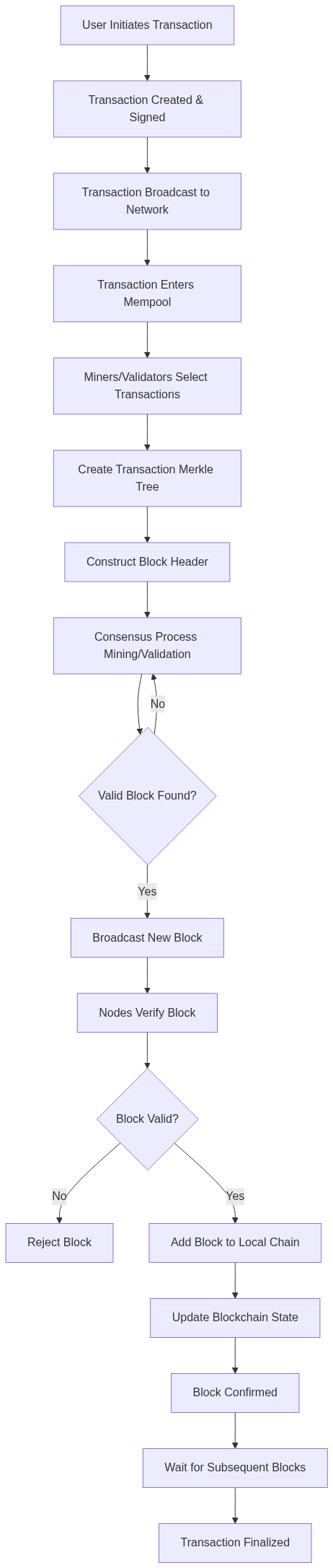
Detailed Step-by-Step Process:
Phase 1: Transaction Initiation
Step 1: Transaction Creation
- User creates a transaction using wallet software
- Transaction includes:
- Sender's address
- Receiver's address
- Amount/data to transfer
- Transaction fee
- Timestamp
Step 2: Transaction Signing
- User signs transaction with their private key using digital signature (ECDSA in Bitcoin/Ethereum)
- This proves ownership and authorizes the transaction
- Signature ensures transaction cannot be modified
Step 3: Transaction Broadcast
- Signed transaction is broadcast to the peer-to-peer network
- Each node receives and validates the transaction
- Nodes check:
- Valid signature
- Sufficient balance
- Correct format
- No double-spending
Phase 2: Transaction Pool (Mempool)
Step 4: Mempool Collection
- Valid transactions enter the mempool (memory pool)
- Mempool is temporary storage for unconfirmed transactions
- Each node maintains its own mempool
- Transactions wait here until included in a block
- Miners/validators select transactions from mempool based on:
- Transaction fees (higher fees = higher priority)
- Transaction size
- Age of transaction
Phase 3: Block Construction
Step 5: Transaction Selection
- Miners/validators select a set of transactions from mempool
- Goal: Maximize transaction fees while staying within block size limit
- Typical strategies:
- Fee-based prioritization
- Optimal packing algorithms
Step 6: Build Merkle Tree
- Selected transactions are organized into a Merkle tree
- Merkle tree root calculated through pairwise hashing
- Merkle root stored in block header
- Provides efficient verification of transaction inclusion
Step 7: Create Block Header
Block header contains:
- Version: Block version number
- Previous Block Hash: Hash of the previous block (creates the chain)
- Merkle Root: Root hash of all transactions
- Timestamp: Current time
- Difficulty Target: Required difficulty for mining (PoW)
- Nonce: Number used once (for PoW mining)
Step 8: Create Coinbase Transaction
- First transaction in the block
- Creates new coins as block reward for miner
- Includes transaction fees from all transactions in the block
Phase 4: Consensus (Mining/Validation)
Step 9: Achieve Consensus
For Proof of Work (PoW):
- Miner attempts to find a nonce such that:
Hash(Block Header) < Target Difficulty - Requires billions of hash computations
- First miner to find valid nonce wins
- Computationally intensive (10 minutes average for Bitcoin)
For Proof of Stake (PoS):
- Validator is selected based on stake
- Validator proposes and signs the block
- Other validators attest to block validity
- Much faster and energy-efficient
Phase 5: Block Propagation
Step 10: Broadcast New Block
- Winning miner/validator broadcasts the newly created block to the network
- Block propagates through the P2P network
- Each node receives the block
Step 11: Block Verification
Receiving nodes verify:
- Valid proof of work/stake
- All transactions are valid
- Merkle root matches transactions
- Previous block hash is correct
- Block follows consensus rules
- No double-spending
Phase 6: Block Addition
Step 12: Add to Blockchain
- If valid, node adds block to its local copy of blockchain
- Block is linked to previous block via previous block hash
- This creates the "chain" in blockchain
Step 13: Update State
- Update account balances
- Update UTXO set (for Bitcoin) or account state (for Ethereum)
- Remove included transactions from mempool
- Blockchain height increases by 1
Step 14: Confirmation
- First confirmation: Block is added to chain
- Additional confirmations: Subsequent blocks are added on top
- More confirmations = higher security
- Bitcoin: 6 confirmations recommended (~1 hour)
- Ethereum: 12-35 confirmations recommended
Phase 7: Finalization
Step 15: Transaction Finality
- After sufficient confirmations, transaction is considered final
- Probability of reversal becomes negligible
- Transaction is permanently recorded in blockchain
Handling Conflicts (Forks):
When two miners find blocks simultaneously:
- Temporary fork occurs
- Network splits temporarily
- Nodes follow longest chain rule
- Next block determines which chain continues
- Orphaned blocks are discarded
Key Properties Ensuring Integrity:
- Immutability: Changing past blocks requires recomputing all subsequent blocks
- Transparency: All nodes can verify all blocks and transactions
- Decentralization: No single entity controls block creation
- Consensus: All honest nodes agree on blockchain state
Question 14
(a) Describe how decentralization of computing or processing power is achieved by a blockchain. (7 marks)
Decentralization of Computing/Processing Power in Blockchain:
Blockchain achieves decentralization of computing and processing power by distributing computational tasks across a network of independent nodes, eliminating the need for a central authority or server. Here's how this is accomplished:
1. Distributed Peer-to-Peer Network Architecture
Network Structure:
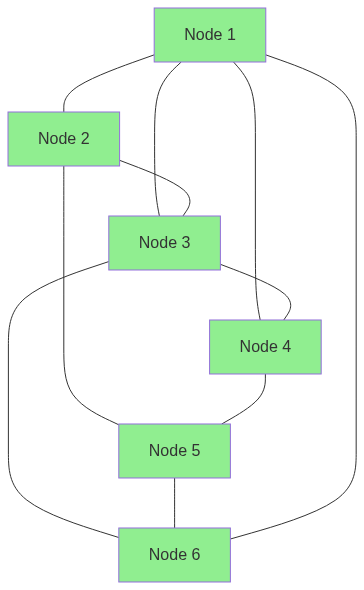
Characteristics:
- No central server; all nodes are equal peers
- Each node independently stores a copy of the blockchain
- Nodes communicate directly with each other
- No single point of failure or control
- Network remains functional even if nodes join or leave
Computational Distribution:
- Transaction validation distributed across all nodes
- Each node independently verifies transactions
- No reliance on a single processing unit
- Parallel processing by thousands of nodes
2. Distributed Ledger Technology (DLT)
How It Works:
- Every participating node maintains a complete copy of the blockchain
- All nodes have the same information (eventually consistent)
- When a new transaction occurs:
- Broadcast to all nodes
- Each node independently validates
- Each node updates its local copy
Benefits:
- Redundancy: Data survives even if majority of nodes fail
- Transparency: Everyone can verify the ledger
- No Central Database: No single entity controls the data
- Fault Tolerance: System continues operating with failed nodes
Processing Distribution:
- Read operations: Any node can serve data (distributed load)
- Write operations: Distributed through consensus mechanism
- Validation: All nodes participate in verification
3. Consensus Mechanisms (Decentralized Agreement)
Blockchain uses consensus protocols to achieve agreement on blockchain state without central coordinator:
Proof of Work (PoW):
-
Distribution Method:
- Thousands of miners compete to solve cryptographic puzzles
- Mining power distributed globally
- Any miner can win the right to add next block
- Processing power comes from independent miners
-
Decentralization Achieved:
- No single miner controls more than 50% of hash power (in healthy network)
- Geographic distribution across continents
- Economic incentives prevent centralization
- Anyone can join as a miner
Proof of Stake (PoS):
-
Distribution Method:
- Validators selected based on staked cryptocurrency
- Multiple validators participate in each consensus round
- Random selection prevents predictability
- Slashing mechanisms punish malicious behavior
-
Decentralization Achieved:
- Lower barriers to entry (no expensive mining equipment)
- Thousands of independent validators
- Delegated staking distributes power further
Other Mechanisms:
- PBFT: Multiple validators in committee
- DPoS: Delegated validators elected by token holders
- Raft/Paxos: Multiple nodes participate in voting
4. Distributed Transaction Processing
Transaction Lifecycle Distribution:
a) Transaction Creation:
- Users create transactions on their local wallets
- No central server processes user requests
b) Transaction Validation:
- Every node validates:
- Digital signatures
- Account balances
- Transaction format
- Anti-double-spending checks
- Validation distributed across thousands of nodes
c) Transaction Inclusion:
- Miners/validators compete to include transactions in blocks
- No single entity decides which transactions are processed
- Market-based fee system determines priority
d) State Updates:
- All nodes independently update their state
- Deterministic execution ensures consistency
- No central database to update
5. Distributed Mining/Validation Power
Mining Distribution (PoW):
-
Geographic Distribution:
- Miners located across different countries
- Different time zones ensure 24/7 operation
- Regulatory diversity prevents single-jurisdiction control
-
Economic Distribution:
- Multiple mining pools compete
- Individual miners can join different pools
- Pool hopping prevents single pool dominance
-
Hardware Distribution:
- ASICs, GPUs distributed among participants
- Total hash rate = sum of all individual miners
- No single supercomputer; distributed computing power
Validation Distribution (PoS):
- Stake distributed among many holders
- Validator selection algorithms ensure randomness
- Minimum stake requirements prevent centralization
- Maximum validator limits prevent concentration
6. Data Storage and Redundancy
Full Nodes:
- Store complete blockchain history
- Independently verify all blocks and transactions
- Thousands of full nodes globally
- Each node = independent copy of entire database
Storage Distribution:
- Blockchain size distributed across all full nodes
- No central storage facility
- Data loss requires all nodes to fail simultaneously
- Geographic distribution protects against regional failures
Access Pattern:
- Read access from nearest node
- No central database bottleneck
- Distributed query processing
7. Network Resilience Through Decentralization
Fault Tolerance:
- Byzantine fault tolerance: System tolerates up to 1/3 malicious nodes (PBFT)
- PoW: Tolerates < 50% malicious hash power
- Node failures don't affect network operation
- Self-healing network automatically routes around failures
Censorship Resistance:
- No single entity can block transactions
- Miners/validators are independent
- Alternative nodes always available
- Global distribution prevents government censorship
Attack Resistance:
- 51% attack requires majority of computing power
- Cost of attack exceeds potential gain (economic security)
- Distributed nature makes coordination difficult
- Detection and response distributed across network
8. Governance Decentralization
Decision Making:
- Protocol changes require community consensus
- No central authority dictates rules
- Different stakeholders participate:
- Developers propose improvements
- Miners/validators signal support
- Users choose which version to run
- Fork-based governance (soft forks, hard forks)
Examples:
- Bitcoin Improvement Proposals (BIPs)
- Ethereum Improvement Proposals (EIPs)
- Community voting on DAOs
Real-World Example: Bitcoin Network
Current Decentralization:
- ~15,000+ full nodes worldwide
- Mining pools across multiple countries
- Hash rate: ~400 EH/s distributed globally
- No single entity controls >20% hash rate
- Processing capacity: Collective power of all miners
- Anyone can become a node or miner
Processing Distribution:
- Transaction validation: All full nodes
- Block creation: Competitive mining
- Network propagation: P2P gossip protocol
- Storage: Thousands of independent nodes
Benefits of Decentralized Computing:
- Reliability: No downtime from single server failure
- Security: Attack requires compromising majority of network
- Trust: No need to trust central authority
- Transparency: All processing verifiable by anyone
- Scalability: Can add more nodes to increase capacity
- Censorship Resistance: No central control point
- Democratic: Equal participation opportunity
(b) What is consensus mechanism in blockchain? List and explain any four types of consensus mechanisms. (7 marks)
Consensus Mechanism in Blockchain:
A consensus mechanism is a fault-tolerant protocol used in blockchain networks to achieve agreement on a single data value or a single state of the network among distributed nodes or processes. In a distributed system where multiple computers (nodes) work together, it's important that all nodes agree on the current state - this agreement is what we call "consensus."
The problem has been studied extensively in distributed systems research since the late 1970s, resulting in a rapid evolution of blockchain technology and conversion of traditional (classical) distributed consensus mechanisms into their blockchain variants.
Classification (per slides):
Since the invention of Bitcoin, which introduced lottery-based consensus algorithms, there are two main types:
- Traditional: Paxos, BFT algorithms - typically used in closed/permissioned systems where participants are known
- Lottery-based: Modern PoW algorithms - used in permissionless/open systems where participants are anonymous
Consensus Correctness Properties:
- Safety: Agreement, Validity, Integrity
- Liveness: Termination
Fault Tolerance Bounds (per slides):
- CFT (Crash Fault Tolerance): At least 2F + 1 nodes required (where F = number of faults)
- BFT (Byzantine Fault Tolerance): At least 3F + 1 nodes required
Four Major Types of Consensus Mechanisms:
1. Proof of Work (PoW)
Concept:
Miners compete to solve complex computational puzzles to earn the right to add the next block. A node that proposes a block has to find a nonce such that:
H(nonce || previous hash || Tx || Tx || ... || Tx) < Threshold value
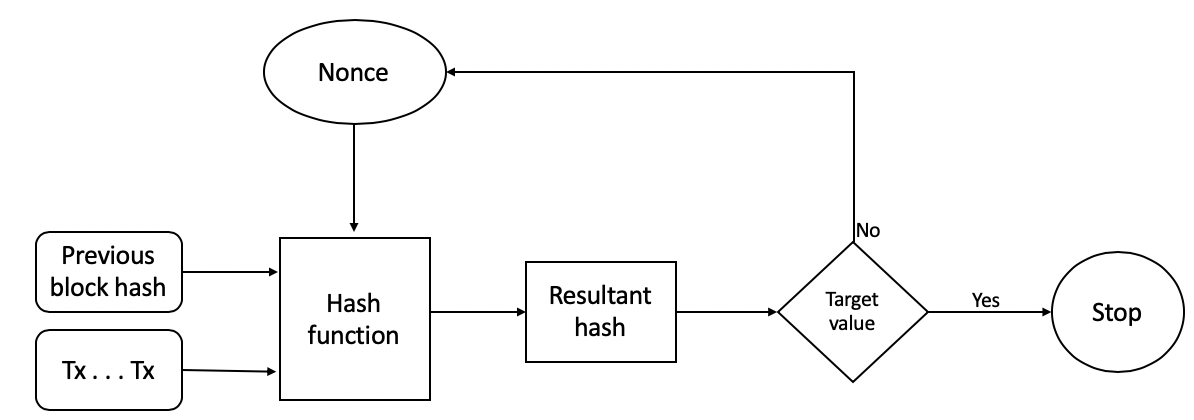
How It Works:
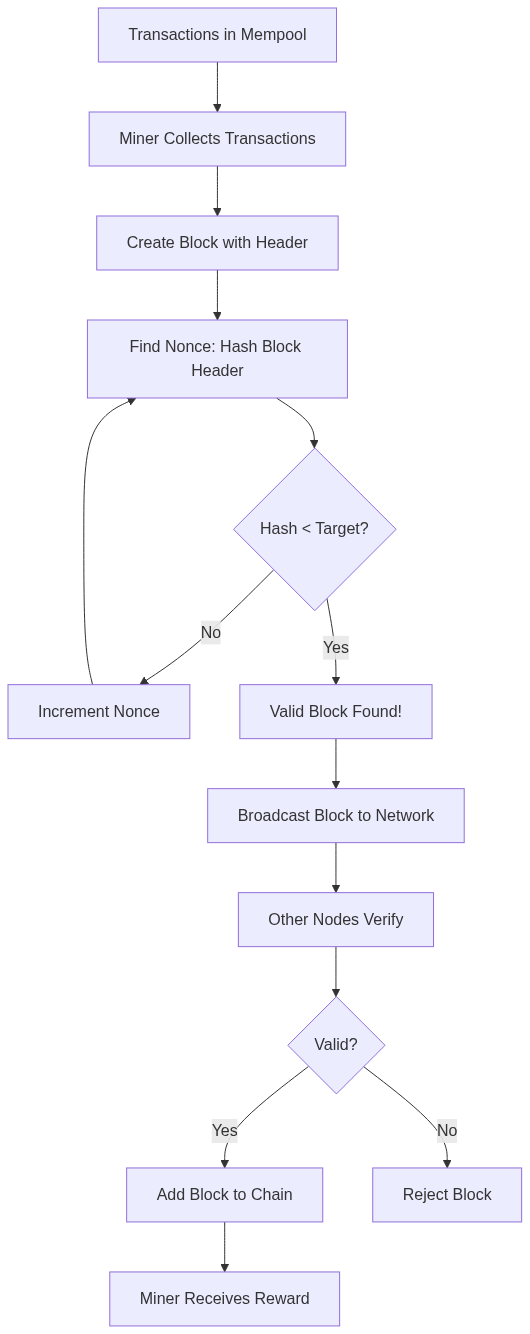
Process:
- Miners gather transactions from mempool
- Create candidate block with block header
- Search for nonce value such that:
SHA-256(SHA-256(Block Header)) < Target - Requires trying billions of nonce values
- First miner to find valid nonce wins
- Broadcasts block to network
- Other nodes verify and add to their chain
- Winner receives block reward + transaction fees
Key Parameters:
- Difficulty: Adjusted periodically to maintain average block time
- Hash Rate: Total computational power in network
- Block Time: Bitcoin ~10 minutes, Ethereum ~12-14 seconds
Advantages:
- Proven security (Bitcoin since 2009)
- Highly decentralized
- Simple to verify
- Attack requires >50% of network hash power (very expensive)
Disadvantages:
- Extremely energy-intensive
- Slow transaction finality
- Requires specialized hardware (ASICs)
- Scalability limitations
- Environmental concerns
Examples: Bitcoin, Ethereum (before merge), Litecoin, Bitcoin Cash
2. Proof of Stake (PoS)
Concept:
Validators are selected to create new blocks based on the amount of cryptocurrency they hold and are willing to “stake” (lock up) as collateral. Selection is typically random but weighted by stake size.
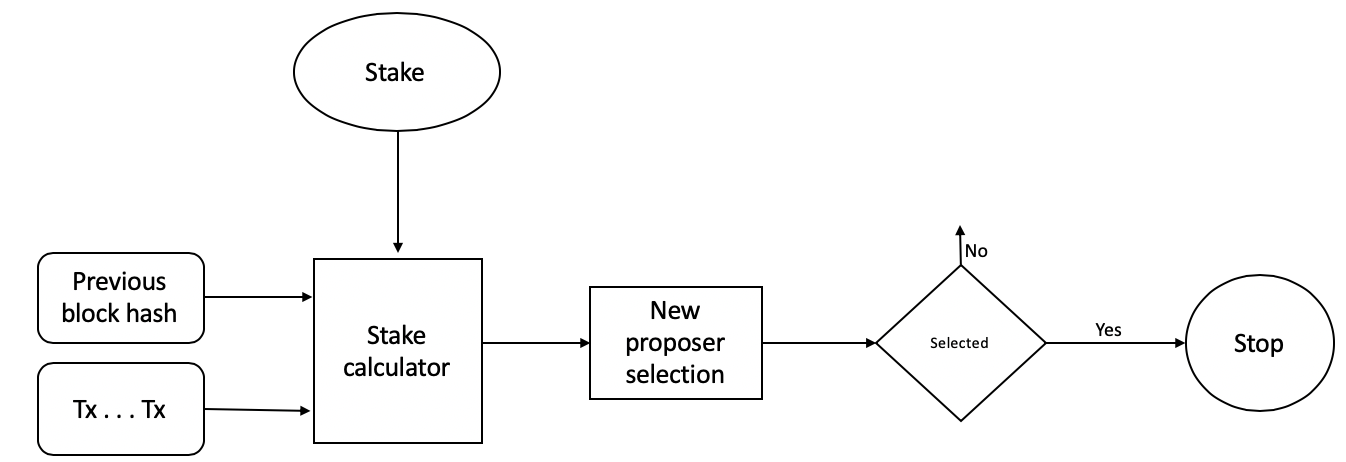
Types of PoS (per slides):
- Chain-based PoS: Validator selected based on stake, proposes blocks in sequence
- Committee-based PoS: Committee of validators selected to agree on blocks
- Delegated PoS (DPoS): Token holders vote for delegates who validate on their behalf
A stake calculator function is used to calculate the amount of staked funds and, based on that, select a new proposer.
How It Works:
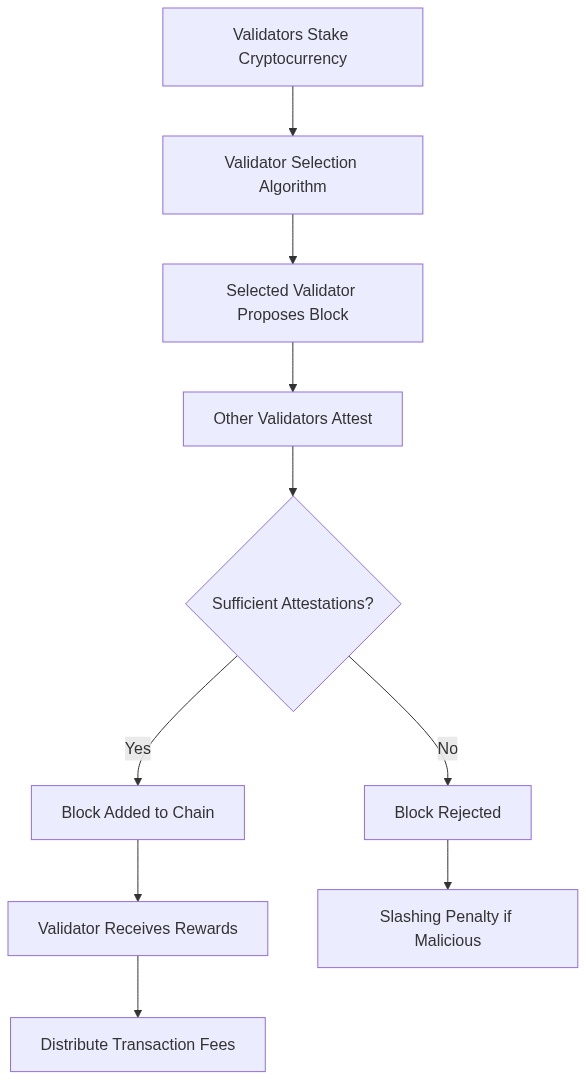
Process:
- Staking: Validators lock up cryptocurrency as stake
- Selection: Algorithm selects validator based on:
- Stake amount
- Coin age (how long coins have been staked)
- Randomization factor
- Block Proposal: Selected validator creates and proposes block
- Attestation: Other validators verify and attest to block
- Finalization: Block added after sufficient attestations
- Rewards: Validator receives transaction fees and possibly new coins
- Slashing: Malicious validators lose staked funds
Selection Methods:
- Random Selection: Weighted by stake size
- Coin Age: Longer staking period = higher chance
- Hybrid: Combination of factors
Security:
- Malicious behavior results in slashed stake (economic penalty)
- Must own significant portion of total supply to attack (expensive)
- "Nothing at Stake" problem solved through slashing and checkpoints
Advantages:
- Energy-efficient (99.95% less energy than PoW)
- Faster block confirmation
- Lower barriers to entry (no expensive hardware)
- Economic incentives align with network security
- More scalable than PoW
Disadvantages:
- "Rich get richer" (large stakeholders earn more)
- Initial distribution challenge
- Less battle-tested than PoW
- Requires solution to "nothing at stake" problem
- Potential centralization if stake concentrates
Variants:
- Pure PoS: Simple stake-based selection
- Delegated PoS (DPoS): Token holders vote for delegates
- Leased PoS: Users can lease their stake to validators
Examples: Ethereum 2.0, Cardano, Polkadot, Tezos
3. Practical Byzantine Fault Tolerance (PBFT)
Concept:
A consensus algorithm designed to work in asynchronous systems and tolerate Byzantine faults (malicious nodes). It uses a voting mechanism among a fixed set of validators to reach consensus through multiple rounds of communication.
How It Works:
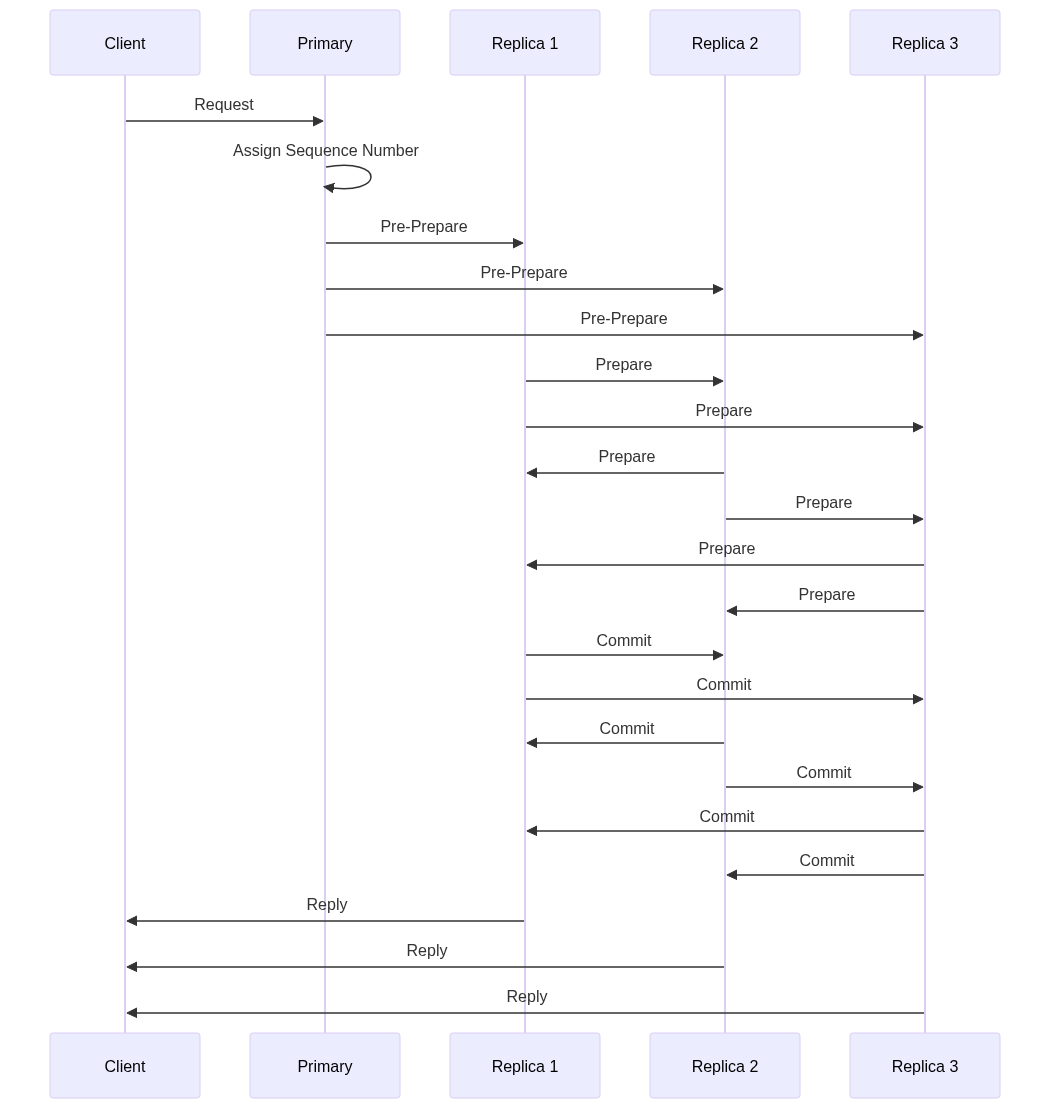
Process Phases:
Phase 1: Pre-Prepare
- Client sends request to primary node
- Primary assigns sequence number
- Primary broadcasts PRE-PREPARE message to all replicas
- Message contains: view number, sequence number, request
Phase 2: Prepare
- Each replica validates PRE-PREPARE
- If valid, broadcasts PREPARE message to all other replicas
- Replica waits for 2f+1 matching PREPARE messages (f = max faulty nodes)
- This ensures agreement on request ordering
Phase 3: Commit
- After receiving 2f+1 PREPARE messages, replica broadcasts COMMIT
- Replica waits for 2f+1 COMMIT messages
- This ensures all honest nodes will execute the request
Phase 4: Reply
- Replica executes the request
- Sends REPLY to client
- Client waits for f+1 matching replies
- Ensures at least one honest node confirmed
Byzantine Fault Tolerance:
- Can tolerate up to f Byzantine (malicious) nodes
- Total nodes required: n ≥ 3f + 1
- Example: To tolerate 1 faulty node, need 4 total nodes
- To tolerate 10 faulty nodes, need 31 total nodes
Key Properties:
- Safety: All honest nodes agree on the same order
- Liveness: Clients eventually receive replies
- Deterministic: No randomness involved
- View Changes: Primary can be replaced if unresponsive
Advantages:
- Low latency (milliseconds)
- High throughput
- Finality is deterministic (no probabilistic confirmation)
- Energy-efficient
- No mining or staking required
Disadvantages:
- Limited scalability (communication overhead O(n2))
- Requires known set of validators
- Not suitable for open, permissionless networks
- View-change protocol can be complex
- Poor performance with large numbers of nodes
Examples: Hyperledger Fabric, Zilliqa, NEO
4. Delegated Proof of Stake (DPoS)
Concept:
Token holders vote to elect a limited number of delegates (also called witnesses or block producers) who are responsible for validating transactions and creating blocks. It's a democratic approach to consensus with elected representatives.
How It Works:
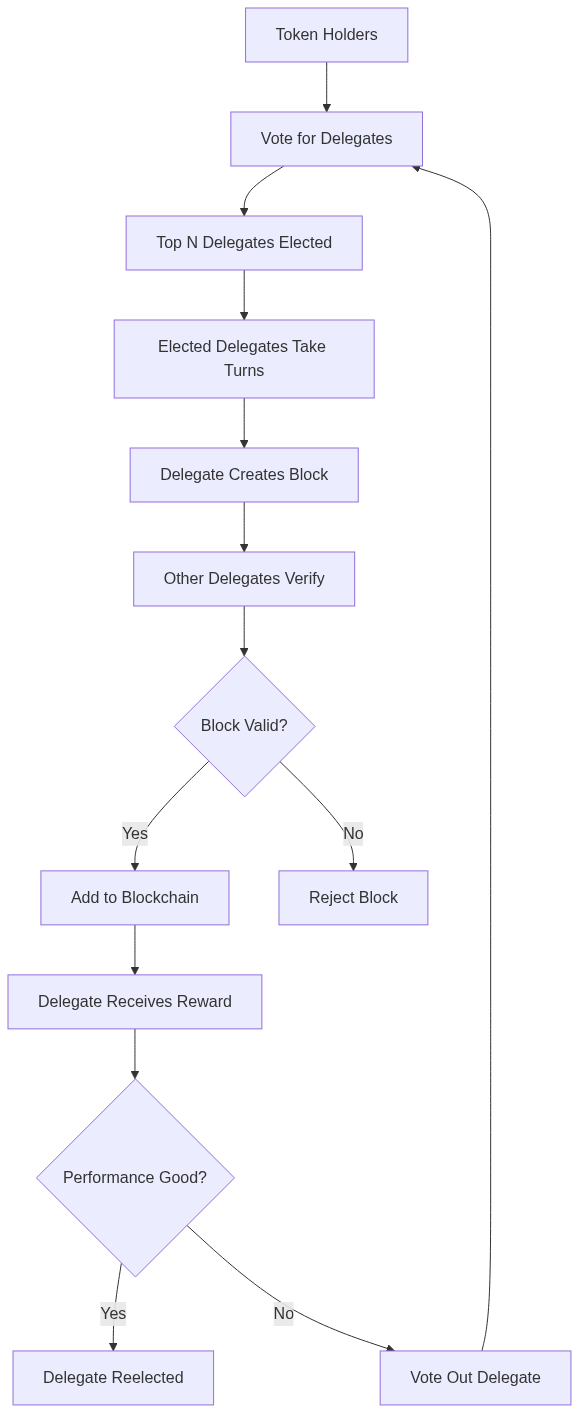
Process:
Phase 1: Voting
- Token holders use their tokens to vote for delegates
- Voting power proportional to token holdings
- Can vote for multiple delegates
- Can change votes at any time
Phase 2: Delegate Selection
- Top N delegates with most votes are elected (typically 21-101)
- Example: EOS has 21 block producers
- Standby delegates wait as backups
Phase 3: Block Production
- Elected delegates take turns producing blocks in a round-robin fashion
- Each delegate gets a time slot (e.g., 3 seconds)
- If delegate misses their slot, skipped
- Predictable block production schedule
Phase 4: Validation
- Other delegates validate the block
- Requires majority approval (typically >2/3)
- Quick finality due to small validator set
Phase 5: Rewards and Accountability
- Block producers receive transaction fees and block rewards
- Rewards often shared with voters
- Poor-performing delegates voted out
- Continuous monitoring by community
Delegation Features:
- Stake-weighted voting: More tokens = more voting power
- Liquid democracy: Can change vote anytime
- Proxy voting: Can delegate voting power to others
- Transparency: All votes publicly visible
Security Model:
- Delegates have reputation at stake
- Economic incentives align with network health
- Quick replacement of malicious delegates
- Token holders act as continuous audit
Advantages:
- Very high throughput (thousands of TPS)
- Fast block confirmation (~1-3 seconds)
- Energy efficient
- Democratic governance
- Scalable
- Low transaction fees
Disadvantages:
- More centralized (limited number of delegates)
- Whales can dominate voting
- Potential for collusion among delegates
- Voter apathy
- Less Byzantine fault tolerant than PBFT
- Trust required in elected delegates
Variants:
- Leased Proof of Stake (LPoS): Similar but different terminology
- Bonded Proof of Stake: Delegates must bond tokens
Examples: EOS, TRON, Lisk, BitShares, Steem
Comparison Table:
| Feature | PoW | PoS | PBFT | DPoS |
|---|---|---|---|---|
| Energy Use | Very High | Low | Very Low | Very Low |
| Speed | Slow (minutes) | Moderate (seconds) | Fast (milliseconds) | Very Fast (seconds) |
| Scalability | Limited | Moderate | Limited | High |
| Decentralization | High | Moderate | Low | Moderate |
| Security Model | Computational | Economic | Voting | Delegated Economic |
| Entry Barrier | High (hardware) | Moderate (stake) | Permission required | Moderate (voting) |
| Finality | Probabilistic | Probabilistic/Absolute | Absolute | Near-absolute |
| Best For | Public, permissionless | Public blockchains | Consortium | Scalable public chains |
Module III - Consensus Algorithms and Bitcoin — #### Question 15
Question 15
(a) Explain how Paxos protocol can be used to achieve consensus in crash fault tolerance. (7 marks)
Paxos Protocol:
Paxos is a family of consensus protocols designed for achieving agreement among distributed processes in a crash fault-tolerant (CFT) system. It handles node crashes and message delays but assumes nodes are honest (non-Byzantine). Developed by Leslie Lamport.
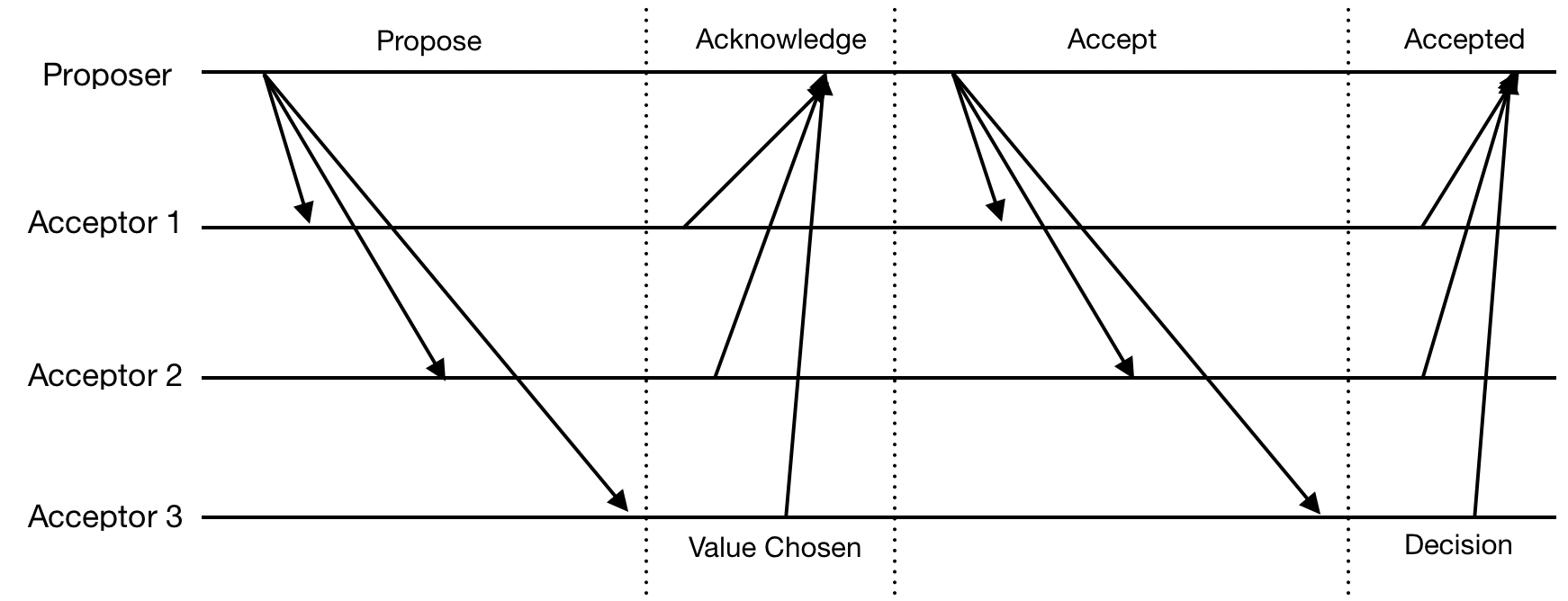
Paxos Algorithm (per slides):
The Paxos protocol operates in four phases: Propose, Acknowledge, Accept, and Accepted.
Types of Nodes in Paxos:
- Proposers: Suggest values to be agreed upon
- Acceptors: Vote on proposed values
- Learners: Learn which value was chosen
- Client: Initiates requests
(Note: A single process can play multiple roles)
Paxos Basic Algorithm (Single Decree):
sequenceDiagram
    participant P as Proposer
    participant A1 as Acceptor 1
    participant A2 as Acceptor 2
    participant A3 as Acceptor 3
    participant L as Learner

    Note over P,A3: Phase 1a: Prepare
    P->>A1: Prepare(n)
    P->>A2: Prepare(n)
    P->>A3: Prepare(n)

    Note over P,A3: Phase 1b: Promise
    A1->>P: Promise(n, null)
    A2->>P: Promise(n, null)
    A3->>P: Promise(n, null)

    Note over P,A3: Phase 2a: Accept Request
    P->>A1: Accept(n, value)
    P->>A2: Accept(n, value)
    P->>A3: Accept(n, value)

    Note over P,A3: Phase 2b: Accepted
    A1->>L: Accepted(n, value)
    A2->>L: Accepted(n, value)
    A3->>L: Accepted(n, value)

    Note over L: Value Chosen!
Paxos Algorithm Phases:
Phase 1: Prepare Phase (Leader Election)
Step 1a - Prepare (Propose):
- Proposer sends a proposal with a unique identifier to a quorum of Acceptors
- This is a suggestion of what the value should be
Step 1b - Promise (Acknowledge):
- Acceptors respond to the Proposer
- If the proposal's identifier is the highest they've seen, they promise not to accept any earlier proposals (with lower identifier)
- They also inform the Proposer about any previous votes they've made
- If n is lower than a previously promised number: rejects the request
Proposer's Action after Phase 1:
- Wait for responses from a majority of acceptors
- If majority responds with promises:
- If any acceptor returned a previously accepted value, proposer must use the value from the promise with the highest n_accepted
- If no acceptor has accepted a value, proposer can choose any value
- Proceed to Phase 2
Phase 2: Accept Phase (Value Agreement)
Step 2a - Accept Request:
- Proposer sends ACCEPT(n, v) to acceptors where:
- n: proposal number from phase 1
- v: value selected based on phase 1 responses
- Sends to same or larger quorum
Step 2b - Accepted Response:
- Each acceptor receives ACCEPT(n, v)
- If acceptor has not promised to a higher-numbered proposal:
- Accepts the proposal
- Records (n, v) as accepted value
- Responds with ACCEPTED(n, v)
- Otherwise:
- Rejects (or ignores) the request
Learner Phase:
- Learners receive ACCEPTED messages
- When a learner observes that a majority of acceptors have accepted the same (n, v):
- The value v is considered chosen
- Consensus achieved!
- Learners can use this value
Example Execution:
Scenario: Three acceptors (A1, A2, A3) need to agree on a value
Phase 1:
Proposer chooses n=1, sends PREPARE(1) to A1, A2, A3
A1 responds: PROMISE(1, null, null) [never accepted anything]
A2 responds: PROMISE(1, null, null)
A3 responds: PROMISE(1, null, null)
Majority received (3/3) ✓
Phase 2:
Proposer selects value = "X", sends ACCEPT(1, "X") to all
A1 accepts: ACCEPTED(1, "X")
A2 accepts: ACCEPTED(1, "X")
A3 accepts: ACCEPTED(1, "X")
Majority accepted (3/3) ✓
Value "X" is chosen!
Crash Fault Tolerance in Paxos:
Handling Node Crashes:
-
Acceptor Crashes:
- Paxos requires only a majority (quorum) to proceed
- With N acceptors, can tolerate up to ⌊N/2⌋ crashes
- Example: 5 acceptors can tolerate 2 failures (need 3 for majority)
- System continues to function as long as majority is alive
-
Proposer Crashes:
- Another proposer can take over
- New proposer starts with higher proposal number
- Phase 1 will discover any previously accepted values
- Ensures safety even if original proposer crashed mid-protocol
-
Learner Crashes:
- Doesn't affect consensus
- When learner recovers, it can query acceptors for chosen value
Message Loss/Delay:
- Proposer uses timeouts
- If no response within timeout, retry with higher proposal number
- Eventually, a proposal will succeed if enough nodes are alive
Safety Guarantees:
- Agreement: All non-faulty nodes agree on the same value
- Validity: Only proposed values can be chosen
- Termination: Eventually a value is chosen (if majority remains operational)
- Consistency: Once a value is chosen, it cannot change
Liveness Considerations:
- Paxos guarantees safety always
- Liveness (progress) guaranteed only if:
- Majority of acceptors are non-faulty
- Network eventually becomes reliable
- No dueling proposers (can be solved with leader election)
Multi-Paxos (For Multiple Decisions):
For practical systems requiring multiple consensus rounds:
- Elect a leader (using Paxos phase 1)
- Leader proposes all subsequent values (skip phase 1)
- More efficient for sequences of decisions
- Used in systems like Google Chubby, Apache ZooKeeper
Advantages of Paxos:
- Provably correct consensus algorithm
- Tolerates crash failures effectively
- No reliance on timing assumptions (works in asynchronous networks)
- Forms basis for many production systems
Disadvantages:
- Complex to understand and implement correctly
- Requires 2 rounds of messages (prepare + accept)
- Does not handle Byzantine (malicious) faults
- Can have liveness issues with competing proposers
Applications:
- Distributed databases (leader election, log replication)
- Coordination services (ZooKeeper, Chubby)
- Replicated state machines
- Blockchain consortium networks (adapted versions)
(b) What is a blockchain wallet? Describe any four types of wallets. (7 marks)
Blockchain Wallet:
A blockchain wallet is a software program or hardware device that stores cryptographic keys (private and public keys) used to interact with a blockchain. It allows users to send, receive, and manage cryptocurrencies and digital assets.
Important Note: Wallets don't actually store cryptocurrencies. The cryptocurrency exists on the blockchain. Wallets store the private keys that prove ownership and provide access to these assets on the blockchain.
Key Components:
- Private Key: Secret key that proves ownership; used to sign transactions
- Public Key: Derived from private key; used to generate addresses
- Address: Public identifier where others can send cryptocurrency (like an account number)
- Backup/Recovery Phrase: 12-24 word mnemonic phrase to recover wallet
Functions of a Wallet:
- Generate and store private/public key pairs
- Create and sign transactions
- Display balance and transaction history
- Receive cryptocurrency (provide address)
- Send cryptocurrency (create and broadcast transactions)
Four Types of Blockchain Wallets:
1. Hardware Wallets (Cold Storage)
Description:
Physical devices specifically designed to store private keys offline. They look like USB drives and provide the highest level of security for long-term storage of cryptocurrencies.
How It Works:
- Private keys are generated and stored on the hardware device
- Keys never leave the device, even when signing transactions
- Device has a secure element (tamper-proof chip)
- Transactions are signed inside the device
- User confirms transactions using physical buttons on the device
Features:
- Offline Storage: Private keys never exposed to internet-connected devices
- Secure Chip: Military-grade security
- Backup: Recovery seed phrase provided during setup
- Multi-currency Support: Support for multiple cryptocurrencies
- PIN Protection: Requires PIN to access
- Physical Confirmation: Button press required to confirm transactions
Security Level: ⭐⭐⭐⭐⭐ (Highest)
Advantages:
- Most secure option for storing large amounts
- Protected from online hacks and malware
- Immune to computer viruses
- Can be used on compromised computers safely
- Recovery possible with seed phrase
Disadvantages:
- Costs money ($50-$200+)
- Can be physically lost or damaged
- Less convenient for frequent transactions
- Requires safe physical storage
- Learning curve for non-technical users
Examples:
- Ledger Nano S/X
- Trezor One/Model T
- KeepKey
- BitBox02
Best For: Long-term storage of significant cryptocurrency holdings, investors prioritizing security
2. Software Wallets (Hot Wallets)
Description:
Applications or programs installed on computers or smartphones. They provide convenience for daily transactions while maintaining reasonable security.
Subtypes:
a) Desktop Wallets:
- Installed on personal computers
- Private keys stored on computer hard drive
- Examples: Electrum, Exodus, Bitcoin Core
b) Mobile Wallets:
- Smartphone apps
- Convenient for everyday transactions and in-store payments
- Examples: Trust Wallet, Coinbase Wallet, MetaMask Mobile
c) Web Wallets:
- Accessed through web browsers
- Keys may be stored on user's device or provider's servers
- Examples: MetaMask (browser extension), MyEtherWallet
How It Works:
- Software generates and stores private keys
- Keys encrypted with user password
- Connected to internet for transaction broadcasting
- Can scan QR codes for easy payments
- Syncs with blockchain to show balance
Features:
- Accessibility: Easy access from device
- User Interface: Friendly GUI for managing assets
- Transaction Speed: Quick sending and receiving
- Multi-currency: Many support multiple blockchains
- Integration: Can connect to DApps and DeFi protocols
- Backup: Seed phrase or file backup
Security Level: ⭐⭐⭐ (Moderate)
Advantages:
- Free to use
- Convenient for frequent transactions
- Easy to set up and use
- Good for smaller amounts
- Quick access to funds
- Feature-rich (exchange integration, DApp browsing)
Disadvantages:
- Vulnerable to malware and hacking (if device compromised)
- Private keys on internet-connected device
- Depends on device security
- Risk of loss if device fails (without backup)
Best For: Daily transactions, smaller amounts, DApp interactions, beginners
3. Paper Wallets (Cold Storage)
Description:
Physical documents containing printed or written private and public keys, often as QR codes. Represents the most basic form of cold storage.
How It Works:
- Private and public keys generated offline
- Printed on paper (usually with QR codes)
- Stored physically in safe location
- To spend: Import private key into software wallet
- Funds sent by scanning public key QR code
Structure:
┌──────────────────────────────┐
│      PAPER WALLET            │
├──────────────────────────────┤
│  Public Address (Receive):   │
│  [QR CODE]                   │
│  1A1zP1eP5QGefi2DMPTfTL...   │
├──────────────────────────────┤
│  Private Key (Spend):        │
│  [QR CODE]                   │
│  5Kb8kLf9zgWQnogidDA76MzP... │
└──────────────────────────────┘
Features:
- Completely Offline: No electronic storage
- Simple: No technology required
- Permanent: Physical document
- One-time Use: Best practice to sweep entire balance when spending
Security Level: ⭐⭐⭐⭐ (High, if stored properly)
Advantages:
- Completely immune to online hacking
- No hardware or software needed
- Free to create
- Can be created offline
- Perfect for gifting cryptocurrency
Disadvantages:
- Can be physically damaged (water, fire, fading)
- Can be lost or stolen
- Difficult to spend from (must import to software wallet)
- Not suitable for frequent transactions
- Quality of print matters (ink can fade)
- Must be created securely (offline computer)
- Risk if printer has memory or network connection
Creation Best Practices:
- Use offline computer
- Generate keys using trusted software
- Use high-quality paper and ink
- Make multiple copies
- Store in waterproof, fireproof location
- Consider lamination
Best For: Long-term storage, gifts, cold storage, backup
4. Custodial Wallets (Exchange Wallets)
Description:
Wallets where a third-party service (like a cryptocurrency exchange) controls and manages the private keys on behalf of the user. User accesses via username/password.
How It Works:
- Exchange or service holds private keys
- User logs in with credentials (username/password/2FA)
- Transactions initiated through exchange interface
- Exchange manages blockchain interactions
- Similar to traditional banking model
Examples:
- Coinbase
- Binance
- Kraken
- Gemini
- Crypto.com
Features:
- Account-Based: Access via login credentials
- Recovery: Password reset options
- Integrated Trading: Buy/sell/trade directly
- Fiat On-ramps: Purchase crypto with fiat currency
- Insurance: Some exchanges insure deposits
- Customer Support: Help desk available
Security Level: ⭐⭐ (Depends on provider)
Advantages:
- User-friendly for beginners
- No need to manage private keys
- Account recovery options (forgot password)
- Integrated trading and exchange features
- Customer support available
- Often insured (depending on exchange)
- Convenient for trading
Disadvantages:
- Not your keys, not your coins: User doesn't control funds
- Exchange can freeze or restrict account
- Centralization risk (exchange can be hacked)
- Privacy concerns (KYC/AML requirements)
- Counterparty risk (exchange bankruptcy)
- Must trust third party
- Transaction fees can be higher
Major Risk Example:
- Mt. Gox collapse (2014): $450M lost
- QuadrigaCX scandal (2019): $190M inaccessible
- FTX collapse (2022): Billions lost
Best For: Beginners, active traders, those prioritizing convenience over control, users comfortable with third-party trust
Comparison Table:
| Feature | Hardware Wallet | Software Wallet | Paper Wallet | Custodial Wallet |
|---|---|---|---|---|
| Private Key Control | User | User | User | Exchange |
| Security | Highest | Moderate | High | Depends on provider |
| Cost | $50-200+ | Free | Free | Free |
| Convenience | Moderate | High | Low | Highest |
| Internet Connection | Offline | Online | Offline | Online |
| Ease of Use | Moderate | High | Low | Very High |
| Best For | Long-term storage | Daily use | Long-term backup | Trading, beginners |
| Recovery | Seed phrase | Seed phrase | Physical copy | Password reset |
Wallet Selection Guide:
Choose Hardware Wallet if:
- Storing large amounts long-term
- Security is top priority
- Can afford the device cost
Choose Software Wallet if:
- Need frequent access
- Interacting with DApps/DeFi
- Comfortable managing own keys
- Storing moderate amounts
Choose Paper Wallet if:
- Want simple cold storage
- Long-term holding (years)
- Gifting cryptocurrency
- Backup solution
Choose Custodial Wallet if:
- Complete beginner
- Active trader
- Prioritize convenience
- Storing small amounts
Best Practice: Use a combination - hardware wallet for long-term savings, software wallet for daily use, paper wallet for backup.
Question 16
(a) Explain various steps in transaction validation with respect to Bitcoin. (7 marks)
Bitcoin Transaction Validation:
Transaction validation in Bitcoin is a critical process that ensures the integrity and security of the network. When a transaction is broadcast, it undergoes rigorous validation at multiple stages by different participants.
Bitcoin Transaction Structure (Simplified):
Transaction {
  Version: 1
  Input Count: N
  Inputs: [
    {
      Previous TX Hash: abc123...
      Output Index: 0
      ScriptSig: (signature + public key)
      Sequence: 0xffffffff
    }
  ]
  Output Count: M
  Outputs: [
    {
      Value: 0.5 BTC
      ScriptPubKey: (locking script)
    }
  ]
  Locktime: 0
}
Transaction Validation Process:
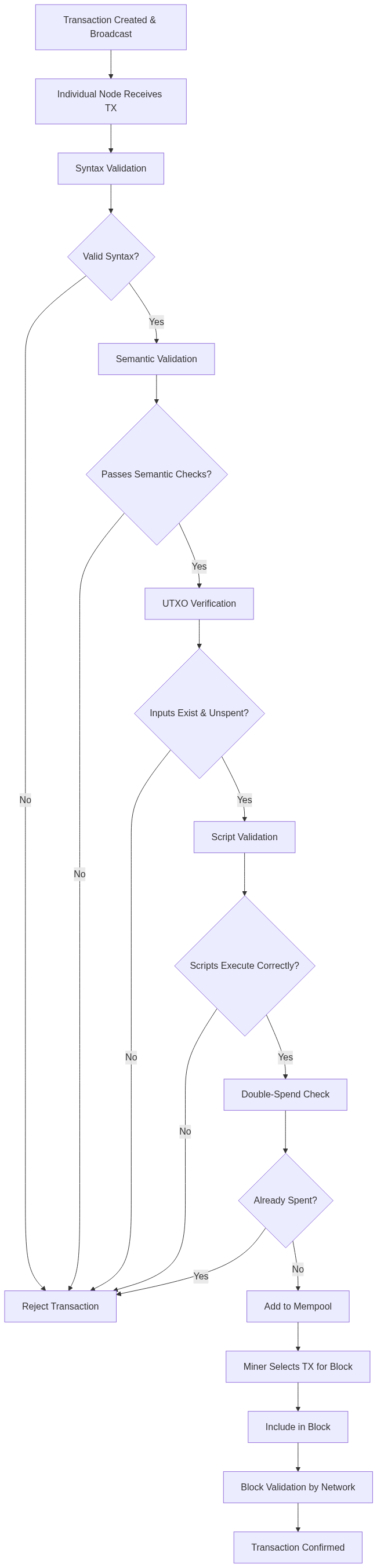
Validation Steps:
Step 1: Initial Syntax Validation
When a node receives a transaction, it first checks the basic structure:
Checks:
- Valid Format: Transaction follows Bitcoin protocol format
- Size Limits: Transaction size ≤ maximum block size
- Output Values: No negative amounts, values within valid range (0 < value ≤ 21M BTC)
- No Null Inputs: At least one input and one output
- Input Count: Number of inputs matches declared count
- Output Count: Number of outputs matches declared count
Validation Code (Conceptual):
if transaction_size > MAX_BLOCK_SIZE:
    return INVALID
if any_output_value < 0 or any_output_value > 21000000 * 100000000:
    return INVALID
if input_count == 0 or output_count == 0:
    return INVALID
Result: Transaction with invalid syntax is immediately rejected
Step 2: Semantic Validation
Validates the transaction's semantic properties:
Checks:
a) Coinbase Transaction Special Rules:
- If coinbase (first TX in block): exactly one input
- Coinbase input's previous output must be null
- Coinbase scriptSig must be 2-100 bytes
- Coinbase maturity: cannot be spent for 100 blocks
b) Transaction Amount Validation:
- Sum of output values ≤ Sum of input values
- Difference = transaction fee (given to miner)
- Fee must be reasonable (prevent dust attacks)
c) Lock Time Validation:
- Check if transaction can be included based on locktime
- If locktime = 0: can be included immediately
- If locktime > 0: compare with current block height or timestamp
Example:
Inputs:  0.8 BTC + 0.3 BTC = 1.1 BTC
Outputs: 0.5 BTC + 0.55 BTC = 1.05 BTC
Fee:     1.1 - 1.05 = 0.05 BTC ✓ (valid, fee goes to miner)
Step 3: UTXO (Unspent Transaction Output) Verification
Bitcoin uses the UTXO model. Each input must reference a valid unspent output.
Checks:
a) Input Existence:
- Each input references a previous transaction output
- Referenced transaction must exist in blockchain or mempool
- Referenced output index must exist in that transaction
b) UTXO Status:
- Referenced output must be unspent (not already consumed by another transaction)
- Node checks its UTXO set (database of all unspent outputs)
c) Availability:
- UTXO must not be spent in any transaction in the mempool
- UTXO must not be spent in the blockchain
UTXO Set Lookup:
for each input in transaction:
    utxo_key = (previous_tx_hash, output_index)
    if utxo_key not in UTXO_set:
        return INVALID ("Input already spent or doesn't exist")
    utxo = UTXO_set[utxo_key]
Example:
Input references:
  TX: abc123..., Output Index: 0

Check UTXO set:
  TX abc123, Output 0: 0.8 BTC (status: unspent) ✓

Valid input!
Step 4: Cryptographic Signature Verification (Script Validation)
Bitcoin uses scripts for transaction authorization. The most critical validation step.
Script Execution:
Bitcoin uses a stack-based scripting language. Each transaction has:
- ScriptSig (Unlocking Script): In transaction input, provides signature and public key
- ScriptPubKey (Locking Script): In previous output, specifies spending conditions
Validation Process:
1. Combine ScriptSig (from new TX input) + ScriptPubKey (from referenced output)
2. Execute combined script
3. If final stack value = TRUE, input is authorized
Standard Transaction (P2PKH - Pay to Public Key Hash):
ScriptPubKey (Locking - in previous output):
OP_DUP OP_HASH160 <PubKeyHash> OP_EQUALVERIFY OP_CHECKSIG
ScriptSig (Unlocking - in new transaction):
<Signature> <PublicKey>
Combined Script Execution:
<Signature> <PublicKey> OP_DUP OP_HASH160 <PubKeyHash> OP_EQUALVERIFY OP_CHECKSIG
Step-by-Step Execution:
- Push Signature onto stack:
[Signature] - Push Public Key onto stack:
[Signature, PublicKey] - OP_DUP: Duplicate top item:
[Signature, PublicKey, PublicKey] - OP_HASH160: Hash top item:
[Signature, PublicKey, Hash(PublicKey)] - Push PubKeyHash:
[Signature, PublicKey, Hash(PublicKey), PubKeyHash] - OP_EQUALVERIFY: Verify top two items equal:
[Signature, PublicKey](if equal, continue; else fail) - OP_CHECKSIG: Verify signature against public key and transaction data
- If signature valid: Stack =
[TRUE]✓ - If signature invalid: Stack =
[FALSE]✗
- If signature valid: Stack =
What OP_CHECKSIG Verifies:
- Signature was created by private key corresponding to public key
- Signature signs the transaction data (prevents modification)
- Uses ECDSA (Elliptic Curve Digital Signature Algorithm)
Security Checks:
- Signature Validity: Cryptographically valid
- Ownership Proof: Only owner of private key can create valid signature
- Transaction Integrity: Signature covers transaction details (prevents tampering)
- Signature Hash Type: Specifies which parts of transaction are signed (SIGHASH_ALL, SIGHASH_SINGLE, etc.)
Step 5: Double-Spend Prevention
Critical check to prevent spending the same UTXO twice:
Checks:
a) Blockchain Check:
- Verify referenced UTXO hasn't been spent in any confirmed transaction
- Check blockchain history for the UTXO
b) Mempool Check:
- Verify no other transaction in mempool spends the same UTXO
- If conflicting transaction exists:
- Both cannot be valid
- Higher fee transaction usually prioritized
- First-seen rule may apply
Double-Spend Detection:
UTXO: TX abc123, Output 0

Transaction A: Spends abc123:0 → Sends to Alice
Transaction B: Spends abc123:0 → Sends to Bob (different output)

These are conflicting! Only one can be included in blockchain.
Nodes will accept first-seen, or miner chooses based on fees.
Result: Only one transaction spending a UTXO can be confirmed
Step 6: Transaction Fee Validation
Fee Calculation:
Fee = Sum(Input Values) - Sum(Output Values)
Checks:
- Fee ≥ 0 (implicit check - outputs can't exceed inputs)
- Fee is reasonable (not absurdly high - warning to user)
- Fee meets minimum relay threshold (very small fees may not be relayed)
- Fee rate (satoshis per byte) determines priority
Example:
Inputs:  1.0 BTC
Outputs: 0.995 BTC
Fee:     0.005 BTC (500,000 satoshis)
Transaction Size: 250 bytes
Fee Rate: 500,000 / 250 = 2,000 sat/byte ✓ (very high priority)
Step 7: Mempool Addition
If transaction passes all validation steps:
Actions:
- Add transaction to node's mempool (memory pool of unconfirmed transactions)
- Relay transaction to connected peers (gossip protocol)
- Mark referenced UTXOs as "pending spend" in local memory
- Transaction awaits inclusion in a block
Mempool Management:
- Transactions ordered by fee rate (priority)
- Miners select highest-fee transactions for blocks
- Conflicting transactions: Keep higher-fee version
- Mempool size limits: Drop lowest-fee transactions if full
Step 8: Mining and Block Inclusion (Miner Validation)
Miner's Perspective:
-
Select Transactions:
- Choose transactions from mempool
- Optimize for maximum fees within block size limit
- Re-validate all transactions
-
Create Block:
- Include selected transactions
- Add coinbase transaction (block reward + fees)
- Calculate Merkle root of all transactions
-
Validate Block:
- Ensure total transaction size ≤ block limit
- Verify all transactions are valid
- No double-spends within the block
Step 9: Network Block Validation
When a block containing the transaction is mined:
Full Node Validation:
- Block Syntax: Valid block structure
- Proof of Work: Block hash meets difficulty target
- Block Size: Within limits
- First Transaction: Valid coinbase
- All Transactions: Re-validate every transaction in block
- Merkle Root: Matches calculated Merkle root
- Previous Block Hash: Valid chain link
Transaction Re-validation in Block:
- All previous validation steps repeated
- Must pass even if passed in mempool stage
- Ensures no double-spend across mempool → block transition
Step 10: Confirmation
Confirmation Process:
- 1 Confirmation: Transaction included in a block
- 2-6 Confirmations: Subsequent blocks added on top
- 6+ Confirmations: Generally considered final (standard for large amounts)
Why Multiple Confirmations:
- Each additional block makes reorganization exponentially harder
- 6 blocks ≈ 1 hour ≈ very high confidence
- Small transactions: 1-3 confirmations sufficient
- Large transactions: 6+ confirmations recommended
Finality:
- After 6 confirmations, reversing transaction requires:
- Recomputing 6 blocks worth of PoW
- Having >50% of network hash power
- Economically infeasible for honest miners
Summary of Validation Criteria:
| Check | Purpose |
|---|---|
| Syntax | Valid format and structure |
| Semantic | Logical correctness (amounts, locktime) |
| UTXO Existence | Inputs reference real outputs |
| Unspent Status | Inputs haven't been spent |
| Signatures | Authorization to spend (ownership proof) |
| Double-Spend | No conflicting transactions |
| Fees | Reasonable transaction fee |
| Block Inclusion | Miner validates before including |
| Network Consensus | All nodes agree on validity |
| Confirmations | Sufficient block depth for finality |
Rejection Reasons:
A transaction can be rejected if:
- Malformed structure
- Negative or excessive output values
- Inputs already spent (double-spend)
- Invalid signatures
- Non-existent inputs
- Insufficient fee (may not be relayed)
- Locktime not yet met
Result: Only valid, authorized, and non-conflicting transactions become part of the Bitcoin blockchain.
(b) Illustrate the working of Practical Byzantine Fault Tolerance (PBFT). (7 marks)
Practical Byzantine Fault Tolerance (PBFT):
PBFT is a consensus algorithm designed by Miguel Castro and Barbara Liskov in 1999 to provide Byzantine fault tolerance in asynchronous distributed systems. It enables a system to reach consensus even when some nodes are malicious or faulty (Byzantine faults).
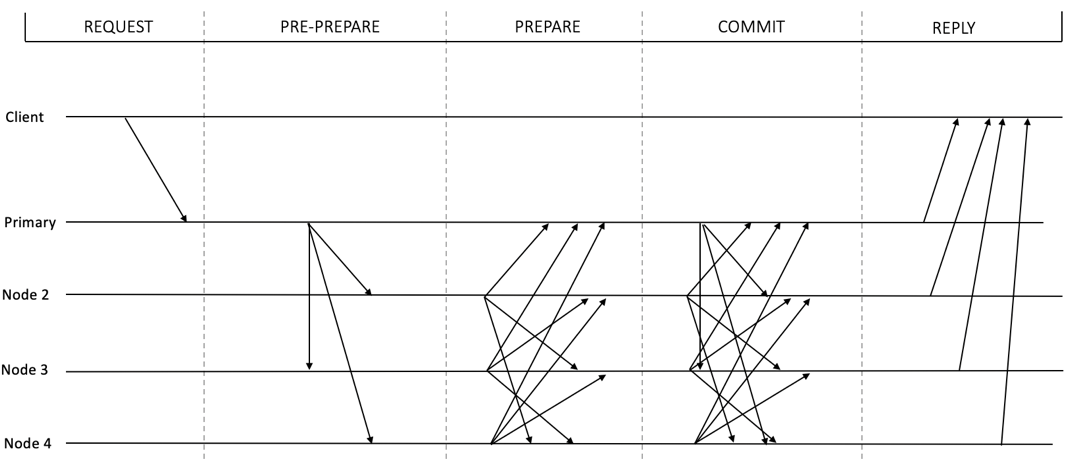
Byzantine Fault: A condition where components of a system fail and give misleading information to other parts of the system, potentially leading to system errors or failure. BFT ensures a group of computers can reliably work together to make decisions, even when some computers are lying or trying to sabotage the process.
PBFT Fault Tolerance Guarantee:
To tolerate f Byzantine (faulty) nodes, the system requires:
Total Nodes (n) ≥ 3f + 1
Examples:
- To tolerate 1 faulty node: need 4 total nodes
- To tolerate 2 faulty nodes: need 7 total nodes
- To tolerate 10 faulty nodes: need 31 total nodes
Why 3f+1?
- Need f+1 nodes to respond (at least one honest)
- Need 2f+1 nodes for majority (quorum)
- Total: f (faulty) + 2f+1 (honest majority) = 3f+1
PBFT System Architecture:
Participants:
- Client: Initiates requests to the system
- Primary (Leader): Coordinates consensus for current view
- Replicas (Backups): Participate in consensus, backup the primary
- View: Configuration with a designated primary; changes if primary suspected faulty
System Properties:
- State machine replication
- All replicas start in the same state
- Deterministic operations
- All honest replicas execute operations in the same order
PBFT Consensus Protocol:
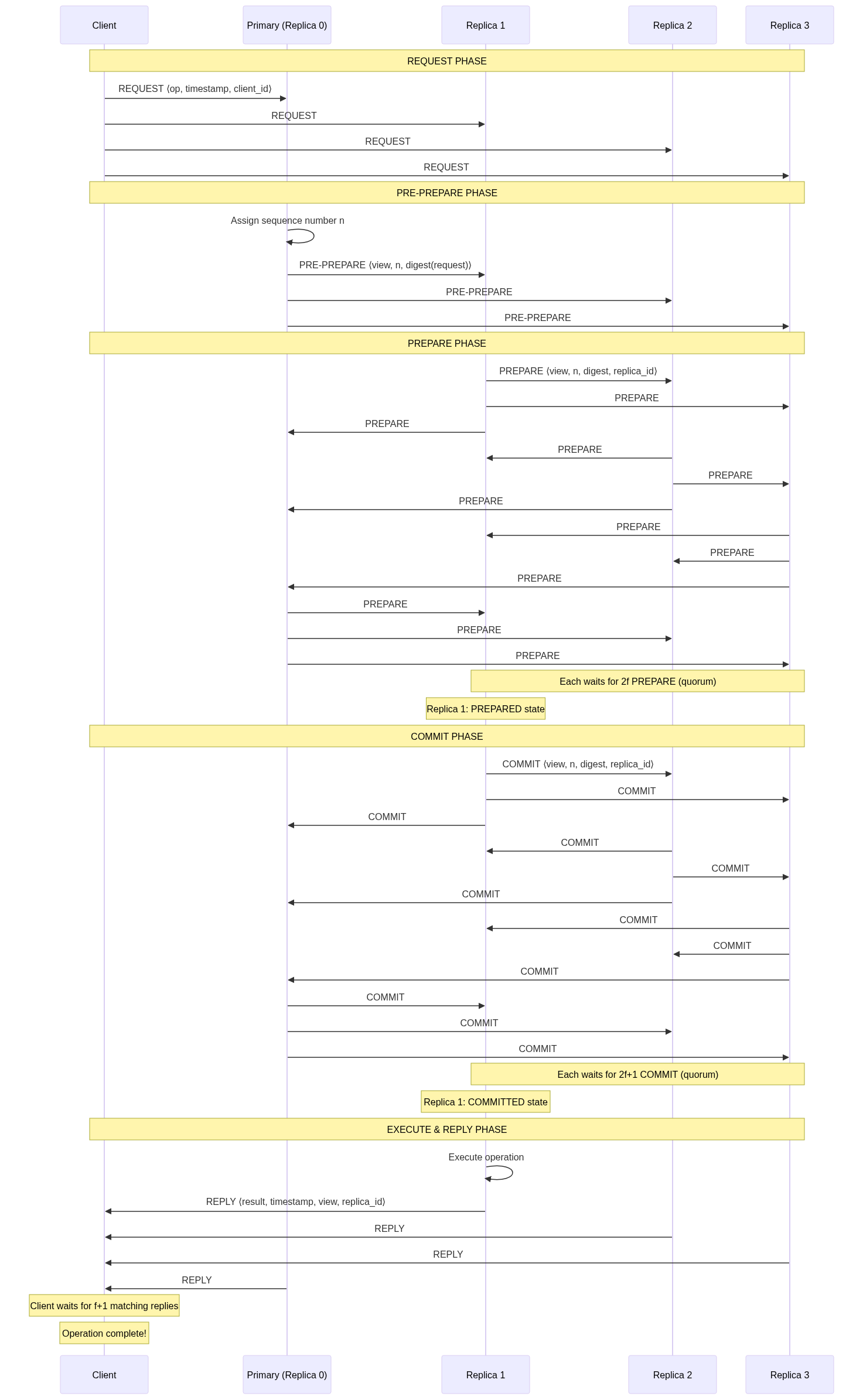
PBFT Protocol Phases (Detailed):
Phase 0: REQUEST
Client Action:
- Client sends request to primary and all replicas
- Request:
⟨REQUEST, operation, timestamp, client_id⟩_σc- operation: The operation to execute
- timestamp: Client's timestamp (prevents replay attacks)
- σc: Client's signature
Why broadcast to all?
- If primary is faulty, replicas can detect it didn't forward request
- Ensures liveness even with faulty primary
Phase 1: PRE-PREPARE
Primary's Role:
- Receives REQUEST from client
- Assigns a sequence number
nto the request - Broadcasts PRE-PREPARE message to all replicas
PRE-PREPARE Message:
⟨PRE-PREPARE, v, n, d⟩_σp
- v: Current view number
- n: Sequence number assigned to request
- d: Digest (hash) of client's request
- σp: Primary's signature
Replica's Validation:
Each replica accepts PRE-PREPARE if:
- Signature is valid
- Current view is v
- Hasn't accepted PRE-PREPARE for same view v and sequence n with different digest
- Sequence number n is within valid range [h, H] (watermark window)
- Digest d matches the request
If valid, replica enters PRE-PREPARED state and multicasts PREPARE.
Phase 2: PREPARE
Purpose: Ensure all non-faulty replicas agree on the order of requests within a view.
Replica Action:
- After accepting PRE-PREPARE, multicasts PREPARE to all replicas
PREPARE Message:
⟨PREPARE, v, n, d, i⟩_σi
- v: View number
- n: Sequence number
- d: Request digest
- i: Replica ID
- σi: Replica's signature
Collecting PREPARE Messages:
Each replica collects PREPARE messages. A replica is in PREPARED state for request when:
- Received valid PRE-PREPARE for (v, n, d)
- Received 2f matching PREPARE messages from different replicas (including itself)
- All with same view v, sequence n, digest d
- Total: 1 PRE-PREPARE + 2f PREPARE = 2f+1 messages (quorum)
Why 2f+1?
- In a system with 3f+1 nodes and f faulty nodes
- 2f+1 ensures at least f+1 honest nodes agree
- Majority agreement achieved
- Even if f faulty nodes send conflicting messages
PREPARED state means: The replica knows this request will be ordered as sequence number n in view v across all honest replicas.
Phase 3: COMMIT
Purpose: Ensure requests are committed in the same order across view changes.
Replica Action:
- After reaching PREPARED state, multicasts COMMIT to all replicas
COMMIT Message:
⟨COMMIT, v, n, d, i⟩_σi
- Similar structure to PREPARE
- Indicates replica commits to executing request at sequence n
Collecting COMMIT Messages:
Each replica collects COMMIT messages. A replica is in COMMITTED state when:
- Is in PREPARED state for (v, n, d)
- Receives 2f+1 matching COMMIT messages from different replicas (including itself)
- All with same view v, sequence n, digest d
Why another round?
- Ensures agreement persists across view changes
- If view changes (primary fails), new primary knows which requests were committed
- Prevents conflicting commits in different views
COMMITTED state means: The replica is certain that:
- At least f+1 honest replicas have reached PREPARED state
- The request will be executed in the same order by all honest replicas
- Safe to execute the operation
Phase 4: EXECUTE & REPLY
Replica Action:
- After reaching COMMITTED state
- Executes the operation (if all previous sequence numbers executed)
- Updates state
- Sends REPLY to client
REPLY Message:
⟨REPLY, v, t, c, i, result⟩_σi
- v: Current view
- t: Timestamp from request
- c: Client ID
- i: Replica ID
- result: Result of executing operation
- σi: Replica's signature
Client Action:
- Waits for f+1 matching REPLY messages
- Same timestamp t
- Same result
- Why f+1? Ensures at least one reply from an honest replica
- Operation complete!
Example Execution (n=4, f=1):
Setup:
- 4 replicas: Primary (R0), R1, R2, R3
- Can tolerate 1 faulty node
Scenario: Client wants to execute operation "TRANSFER $100"
Step 1: REQUEST
Client → All: REQUEST(op="TRANSFER $100", t=1234, client=Alice)
Step 2: PRE-PREPARE
Primary assigns n=5
Primary → R1, R2, R3: PRE-PREPARE(v=0, n=5, d=hash("TRANSFER $100"))
Step 3: PREPARE
R1 → All: PREPARE(v=0, n=5, d=hash(...), i=1)
R2 → All: PREPARE(v=0, n=5, d=hash(...), i=2)
R3 → All: PREPARE(v=0, n=5, d=hash(...), i=3)
Primary → All: PREPARE(v=0, n=5, d=hash(...), i=0)
Each replica receives 2f=2 matching PREPARE messages → PREPARED state ✓
Step 4: COMMIT
All replicas → All: COMMIT(v=0, n=5, d=hash(...), i=...)
Each replica receives 2f+1=3 matching COMMIT messages → COMMITTED state ✓
Step 5: EXECUTE
All replicas execute "TRANSFER $100"
R1 → Client: REPLY(result="Success")
R2 → Client: REPLY(result="Success")
R3 → Client: REPLY(result="Success")
Primary → Client: REPLY(result="Success")
Client receives f+1=2 matching replies → Operation complete! ✓
Handling Faulty Primary (View Change):
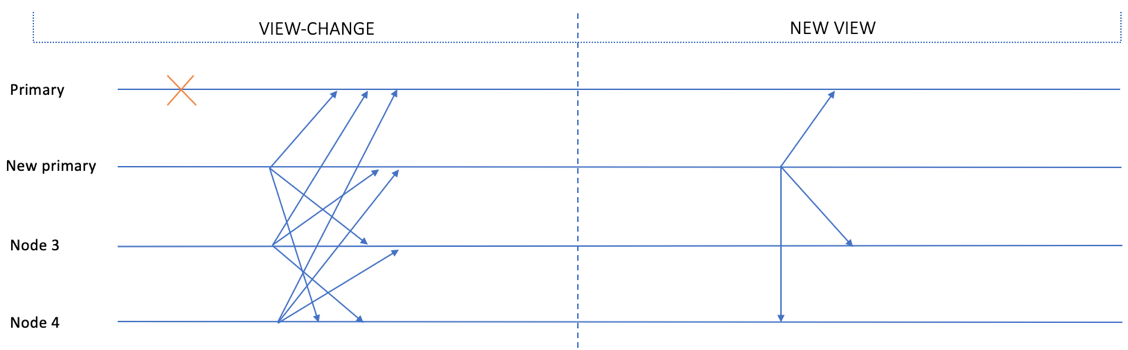
The View Change occurs when the primary node is suspected of being faulty (per slides):
View Change Protocol:
- Primary Failure Detected: Backup nodes detect that the primary is not performing its duties correctly (perhaps due to a timeout)
- View Change: Backup nodes enter view-change mode and broadcast VIEW-CHANGE messages to other nodes, indicating they agree to change the current primary
- New View: Backup nodes select a new primary based on a deterministic function of the view number (e.g., round-robin)
- Resume Operation: The new primary initializes the new view by sending a NEW-VIEW message along with state information to synchronize any nodes that may have missed messages during the view change. Normal operation resumes under the new primary.
View Change ensures:
- Continuous operation even when nodes fail or act maliciously
- The system can recover from primary failures
- A faulty primary cannot indefinitely halt progress or corrupt the system's state
- All committed operations are preserved
- Safety maintained across view changes
Byzantine Fault Scenarios:
Faulty Primary Examples:
- Doesn't send PRE-PREPARE: Timeout triggers view change
- Sends conflicting PRE-PREPARE: Replicas detect and reject
- Assigns wrong sequence number: Violates sequence rules, rejected
- Delays messages: Timeout triggers view change
Faulty Replica Examples:
- Sends conflicting PREPARE/COMMIT: Other replicas ignore inconsistent messages
- Doesn't send messages: Quorum requirements tolerate up to f silent nodes
- Sends wrong results: Client waits for f+1 matching replies, ignores outliers
System Resilience:
- As long as ≥ 2f+1 nodes are honest, consensus achieved
- Faulty nodes cannot prevent progress
- Safety always guaranteed
PBFT Properties:
Safety:
- If an honest replica commits request at sequence n, all honest replicas eventually commit same request at n
- No two conflicting operations committed at same sequence number
Liveness:
- System eventually processes all client requests
- View changes ensure progress despite faulty primary
Complexity:
- Message complexity: O(n2) - Each node sends message to all others
- Communication rounds: 5 (Request, Pre-Prepare, Prepare, Commit, Reply)
Advantages of PBFT:
- Byzantine Fault Tolerance: Handles malicious nodes
- Deterministic Finality: No probabilistic confirmation
- Low Latency: Milliseconds to seconds
- Energy Efficient: No mining or PoW
- Proven Correctness: Mathematically proven safe
Disadvantages:
- Scalability: O(n2) communication limits to ~100 nodes
- Known Validator Set: Requires permissioned network
- View Change Complexity: Complex protocol
- High Communication Overhead: Many message rounds
Applications:
- Hyperledger Fabric (permissioned blockchain)
- Zilliqa (hybrid approach)
- Consortium blockchains
- Distributed databases requiring BFT
Module IV - Smart Contracts and Use Cases — #### Question 17
Question 17
(a) Give the significance of oracle in smart contracts. Elaborate different type of oracles deployed in blockchain. (7 marks)
Oracles in Smart Contracts:
An oracle is a third-party service or agent that provides smart contracts with external information from the outside world. Smart contracts on blockchain are isolated and deterministic - they can only access data stored on the blockchain. Oracles bridge this gap by feeding real-world data to smart contracts.
The Oracle Problem:
Blockchains are designed to be deterministic and isolated:
- Cannot make HTTP requests
- Cannot access external APIs
- Cannot read data from outside the blockchain
- Need consensus on external data
However, many smart contracts require external data:
- Price feeds (ETH/USD for DeFi)
- Weather data (for insurance contracts)
- Sports scores (for betting contracts)
- Random numbers (for gaming/NFTs)
- IoT sensor readings
Oracles solve this by:
- Fetching data from external sources
- Verifying and validating the data
- Submitting data to the blockchain
- Making data available to smart contracts
Significance and Importance of Oracles:
1. Enable Real-World Interactions:
- Smart contracts can react to real-world events
- Bridges on-chain and off-chain worlds
- Expands use cases beyond pure on-chain data
2. Data Feed for DeFi:
- Price oracles critical for DeFi protocols
- Lending platforms need accurate asset prices
- DEXs use oracles for price discovery
- Example: Chainlink provides price feeds for hundreds of assets
3. Trigger Contract Execution:
- Automated execution based on external conditions
- Insurance payouts triggered by flight delays
- Agricultural insurance based on weather data
4. Random Number Generation:
- Secure randomness for games, NFTs, lotteries
- Blockchain is deterministic, can't generate true randomness
- Oracles provide verifiable random functions (VRF)
5. Cross-Chain Communication:
- Enable interoperability between blockchains
- Verify events on other chains
- Bridge protocols rely heavily on oracles
6. Computation Outsourcing:
- Heavy computations done off-chain
- Results fed back via oracles
- Saves gas costs
7. IoT Integration:
- Connect blockchain to IoT devices
- Supply chain tracking with RFID/sensors
- Real-time data from physical devices
Types of Oracles:
1. Software Oracles
Description:
Software oracles interact with online information sources and provide data to smart contracts. They fetch data from websites, servers, databases, and APIs.
Data Sources:
- Exchange rates and prices
- Flight information
- Weather data
- Public records
- Sports scores
- Social media data
How They Work:
External API → Oracle Node → Blockchain Smart Contract
Example Use Cases:
- DeFi Price Feeds: Fetch ETH/USD price from exchanges
- Insurance: Get flight delay information from airline APIs
- Prediction Markets: Fetch event outcomes
Examples:
- Chainlink nodes fetching price data
- Band Protocol aggregating API data
- API3 first-party oracles
Characteristics:
- Most common type
- Real-time or near-real-time data
- Can be centralized (single source) or decentralized (multiple sources)
- Trust model depends on oracle design
2. Hardware Oracles
Description:
Hardware oracles obtain data from the physical world using sensors and IoT devices. They convert real-world events into digital data that smart contracts can understand.
Data Sources:
- IoT sensors (temperature, humidity, pressure)
- RFID tags
- Barcode scanners
- GPS trackers
- Biometric readers
- Environmental monitors
How They Work:
Physical Sensor → Hardware Oracle → Blockchain → Smart Contract
Example Use Cases:
- Supply Chain: RFID tags track product location and temperature
- Pharmaceutical cold chain monitoring
- Food safety compliance
- Insurance: Temperature sensors for crop insurance
- Asset Tracking: GPS trackers for logistics
- Smart Cities: Environmental sensors for pollution monitoring
Examples:
- Automotive telematics for car insurance
- Weather stations for agricultural contracts
- Smart meters for energy trading
Characteristics:
- Bridges physical and digital worlds
- Requires tamper-proof hardware
- Often used with software oracles for verification
- Critical for IoT + blockchain integration
Challenges:
- Hardware can be compromised
- Need for trusted execution environments (TEE)
- Maintenance and calibration
3. Inbound Oracles
Description:
Inbound oracles bring external data INTO the blockchain. They fetch off-chain information and deliver it to smart contracts.
Data Flow:
External World → Inbound Oracle → Smart Contract
Functionality:
- Queries external APIs
- Aggregates data from multiple sources
- Validates and formats data
- Submits data on-chain via transactions
Example Scenarios:
- Price oracle fetching cryptocurrency prices
- Weather oracle getting temperature data
- Sports oracle retrieving game scores
- Random number oracle generating randomness
Use Cases:
- DeFi: Price feeds for lending/borrowing
- Example: Aave uses Chainlink to get asset prices
- Insurance: Parametric insurance payouts
- Example: Flight delay insurance checks flight status
- Gaming: Random number generation for NFT minting
- Prediction Markets: Final outcome determination
Most Common Type:
- Majority of oracles are inbound
- Enables smart contracts to consume external data
- Essential for conditional logic based on real-world events
4. Outbound Oracles
Description:
Outbound oracles send data FROM the blockchain to the external world. They allow smart contracts to trigger actions in external systems.
Data Flow:
Smart Contract → Outbound Oracle → External System
Functionality:
- Monitor blockchain for specific events
- Listen to smart contract emissions
- Trigger actions in off-chain systems
- Send HTTP requests, emails, notifications
Example Scenarios:
- Smart contract triggers bank payment
- Contract completion sends notification to user
- Blockchain event updates traditional database
- Automated email/SMS based on contract state
Use Cases:
- Payment Systems: Trigger fiat payment after on-chain event
- Example: Bank transfer initiated by smart contract
- Notifications: Alert users about contract execution
- Email/SMS when payment received
- Database Updates: Update enterprise systems with blockchain data
- IoT Control: Smart contract unlocks physical door
- Example: Rental payment triggers smart lock
Examples:
- Banking integration for cross-border payments
- Supply chain system updates
- Enterprise resource planning (ERP) integration
Characteristics:
- Less common than inbound oracles
- Critical for blockchain-enterprise integration
- Bridges Web3 to Web2
- Enables smart contracts to affect real world
5. Centralized Oracles
Description:
Centralized oracles are controlled and operated by a single entity. One organization provides the data and operates the oracle infrastructure.
Architecture:
- Single point of data provision
- One entity responsible for accuracy
- Direct control by operator
Characteristics:
- Simple to implement
- Fast data delivery
- Low operational cost
- Complete control by one party
Advantages:
- Efficiency: Quick deployment and updates
- Cost-effective: No need for consensus mechanism
- Simplicity: Easy to integrate
- Accountability: Clear responsibility
Disadvantages:
- Single Point of Failure: If oracle fails, smart contract fails
- Trust Required: Must trust the oracle operator
- Manipulation Risk: Operator can provide false data
- Centralization: Defeats blockchain's decentralization
Example:
- Company A operates oracle feeding its own data
- Provable (formerly Oraclize) early centralized oracle
Risk:
- Oracle can become corrupt
- Data can be manipulated
- Creates dependency on third party
When to Use:
- Low-stakes applications
- When oracle operator is highly trusted
- Internal/private blockchain applications
- MVP/prototype development
6. Decentralized Oracles
Description:
Decentralized oracles aggregate data from multiple independent sources to provide consensus on external information. No single entity controls the data.
Architecture:
- Multiple independent oracle nodes
- Data aggregation from various sources
- Consensus mechanism to determine final value
- Byzantine fault tolerance
How They Work:
- Multiple nodes fetch data independently
- Each node reports data to smart contract
- Aggregation function determines consensus value (median, average, weighted)
- Outliers are filtered out
- Final value made available to contracts
Data Flow:
API 1 → Oracle Node 1 ↘
API 2 → Oracle Node 2 → Aggregation Contract → Smart Contract
API 3 → Oracle Node 3 ↗
Characteristics:
- Multiple data sources
- No single point of failure
- Resistant to manipulation
- More expensive (multiple transactions)
Advantages:
- Reliability: Continues functioning if some nodes fail
- Security: Difficult to manipulate (need to corrupt many nodes)
- Trust-minimized: Don't need to trust single entity
- Accuracy: Consensus filtering removes outliers
Disadvantages:
- Cost: More expensive (multiple node fees)
- Complexity: Harder to implement
- Latency: Takes longer to reach consensus
Examples:
- Chainlink: Leading decentralized oracle network
- Multiple node operators
- Reputation system
- Off-chain aggregation
- Band Protocol: Decentralized data oracle
- DIA: Open-source oracle platform
- UMA: Optimistic oracle with dispute resolution
Security Mechanisms:
- Reputation Systems: Track node performance
- Staking: Nodes stake collateral, slashed if dishonest
- Aggregation: Statistical methods filter bad data
- Crypto-Economic Security: Cost to attack > potential gain
Use Cases:
- High-value DeFi protocols
- Mission-critical applications
- Public blockchain applications
- Any application requiring trust-minimization
7. Contract-Specific vs. General-Purpose Oracles
Contract-Specific Oracles:
- Custom-built for specific contract/application
- Tailored data and format
- Optimized for single use case
- Example: Custom oracle for specific derivatives contract
General-Purpose Oracles:
- Serve multiple contracts and applications
- Standard data formats
- Reusable infrastructure
- Example: Chainlink price feeds used by hundreds of protocols
Comparison Table:
| Type | Data Flow | Use Case | Trust Model | Examples |
|---|---|---|---|---|
| Software | API → Contract | Price feeds, data | Varies | Chainlink, Band |
| Hardware | Sensor → Contract | IoT, supply chain | TEE/Trust | RFID, GPS |
| Inbound | External → Contract | Most common | Varies | Price oracles |
| Outbound | Contract → External | Trigger actions | Varies | Payment systems |
| Centralized | Single source | Low stakes | Trust operator | Company oracles |
| Decentralized | Multiple sources | High stakes | Distributed | Chainlink |
Oracle Security Considerations:
- Data Source Quality: Ensure reliable data sources
- Decentralization: Avoid single point of failure
- Cryptographic Verification: Verify data authenticity
- Reputation Systems: Track oracle node performance
- Economic Incentives: Align incentives with honest behavior
- Timeliness: Ensure data is fresh and up-to-date
Future of Oracles:
- Cross-chain oracles for interoperability
- AI-powered oracles
- Decentralized compute oracles
- Privacy-preserving oracles with zero-knowledge proofs
(b) Explain how blockchain can be applied in health sector. (7 marks)
Blockchain in Healthcare:
The healthcare industry faces significant challenges with data management, privacy, interoperability, and trust. Blockchain technology offers solutions to these problems through decentralization, transparency, security, and immutability.
Key Healthcare Challenges Addressed by Blockchain:
- Fragmented patient data across providers
- Lack of interoperability between systems
- Data breaches and privacy violations
- Drug counterfeiting and supply chain issues
- Inefficient claims processing
- Limited patient control over health data
- Research data integrity issues
Applications of Blockchain in Healthcare:
1. Electronic Health Records (EHR) Management
Problem:
- Patient records scattered across multiple providers
- Lack of unified patient health history
- Difficult to share records between hospitals
- Privacy concerns with centralized databases
- Patients lack control over their data
Blockchain Solution:
Architecture:
Patient → Blockchain (Access Control) → Hospital A
                                      → Hospital B
                                      → Clinic C
                                      → Pharmacy D
How It Works:
- Decentralized Storage: Patient records stored on distributed ledger
- Patient-Centric Model: Patient owns and controls access to their data
- Permissioned Access: Smart contracts manage who can view/update records
- Immutable Audit Trail: All access and changes logged permanently
- Interoperability: Standardized data format accessible across providers
Implementation:
- Patient's identity on blockchain (self-sovereign identity)
- Medical records hash stored on-chain
- Actual records stored off-chain (IPFS or encrypted cloud)
- Smart contracts control access permissions
- Patients grant/revoke access via private keys
Benefits:
- Unified Health History: Complete view of patient's medical history
- Patient Empowerment: Patients control who accesses their data
- Interoperability: Seamless data sharing between providers
- Privacy: Encrypted data with granular access control
- Audit Trail: Complete history of who accessed/modified records
- Emergency Access: Critical info accessible during emergencies
Example Projects:
- MedRec: MIT project for EHR management
- Healthchain: Patient-controlled health records
- Medicalchain: Secure health data exchange platform
Technical Components:
- IPFS for distributed file storage
- Ethereum or Hyperledger for permissioned blockchain
- Smart contracts for access control logic
- Encryption for data privacy
2. Drug Supply Chain and Anti-Counterfeiting
Problem:
- Counterfeit drugs: $200B+ global problem
- Lack of supply chain transparency
- Difficulty tracking drug provenance
- Expired/recalled drug circulation
- Inefficient recalls
Blockchain Solution:
Drug Tracking Process:
Manufacturer → Distributor → Wholesaler → Pharmacy → Patient
     |              |             |            |
     └──────────────┴─────────────┴────────────┴───→ Blockchain Ledger
How It Works:
- Drug Registration: Manufacturer registers drug on blockchain with unique ID
- Batch Tracking: Each batch gets blockchain identifier
- Chain of Custody: Every transfer recorded on blockchain
- Verification: QR code/RFID scan at each stage
- Patient Verification: Patient can verify drug authenticity before consumption
Smart Contract Logic:
contract DrugSupplyChain {
    struct Drug {
        bytes32 drugId;
        string name;
        address manufacturer;
        uint256 manufactureDate;
        uint256 expiryDate;
        address currentOwner;
        DrugState state;
    }

    enum DrugState { Manufactured, InTransit, AtDistributor, AtPharmacy, Sold }

    mapping(bytes32 => Drug) public drugs;
    mapping(bytes32 => address[]) public drugHistory;

    function registerDrug(...) public onlyManufacturer { }
    function transferDrug(...) public { }
    function verifyDrug(...) public view returns (bool) { }
}
Benefits:
- Authenticity Verification: Customers verify genuine products
- Supply Chain Transparency: Complete drug journey visible
- Recall Efficiency: Rapid identification of affected batches
- Counterfeit Prevention: Impossible to add fake drugs to chain
- Regulatory Compliance: Automated compliance verification
- Temperature Monitoring: IoT sensors record storage conditions
Example Projects:
- MediLedger: Pharmaceutical supply chain on blockchain
- Modum.io: Temperature monitoring for pharma logistics
- Chronicled: FDA compliance for drug tracking
3. Clinical Trials and Research Data Management
Problem:
- Data manipulation in clinical trials
- Lack of transparency in trial results
- Patient recruitment challenges
- Difficult to verify research integrity
- Selective publication bias
Blockchain Solution:
How It Works:
- Trial Registration: Trial protocols registered on blockchain (immutable)
- Data Collection: Patient data encrypted and hashed on blockchain
- Timestamping: All data entries timestamped and linked
- Smart Contracts: Automated patient consent management
- Results Publication: Trial results committed to blockchain
Benefits:
- Data Integrity: Immutable record prevents tampering
- Transparency: All trial data and changes visible
- Patient Consent: Smart contracts enforce consent rules
- Research Reproducibility: Complete data provenance
- Participant Recruitment: Blockchain-based patient matching
- IP Protection: Timestamp proof for research discoveries
Example Use Cases:
- COVID-19 vaccine trial data on blockchain
- Decentralized clinical trial platforms
- Research data sharing among institutions
4. Insurance Claims Processing
Problem:
- Lengthy claim verification process
- High administrative costs
- Fraud and duplicate claims
- Lack of transparency
- Inefficient communication between parties
Blockchain Solution:
Claim Processing Flow:
Patient → Treatment → Healthcare Provider
                           ↓
                   Submit Claim to Blockchain
                           ↓
              Smart Contract Verification
                           ↓
        Automated Payout to Provider (if valid)
Smart Contract Automation:
- Eligibility verification automated
- Claims validated against policy terms
- Payments triggered automatically
- Fraud detection through pattern analysis
- Real-time settlement
Benefits:
- Speed: Instant/near-instant claim processing
- Cost Reduction: Eliminate intermediaries
- Fraud Prevention: Immutable record prevents duplicate claims
- Transparency: All parties see claim status
- Automated Adjudication: Smart contracts enforce policy terms
Example:
- Health insurance claim:
- Patient treatment recorded on blockchain
- Insurance smart contract verifies coverage
- If conditions met, automatic payment to provider
- No manual paperwork needed
5. Patient Identity and Credential Verification
Problem:
- Identity theft in healthcare
- Fraudulent insurance claims
- Difficulty verifying medical credentials
- Fragmented identity systems
Blockchain Solution:
Self-Sovereign Identity (SSI):
- Patients control digital identity
- Decentralized identifiers (DIDs)
- Verifiable credentials for certifications
- Privacy-preserving authentication
For Medical Professionals:
- Credential Verification:
- Medical degrees on blockchain
- License verification
- Continuing education credits
- Work history
- Benefits:
- Instant verification by employers
- Prevents fake credentials
- Portable professional identity
For Patients:
- Unique patient identifier across systems
- Prevents medical identity theft
- Emergency access to critical info
- Insurance verification simplified
6. Telemedicine and Remote Patient Monitoring
Blockchain Application:
- Secure storage of remote consultation records
- IoT medical device data verification
- Automated prescription generation
- Cross-border telemedicine compliance
How It Works:
- Patient health data from wearables → Blockchain
- Smart contracts analyze data
- Automatic alerts to doctors if thresholds exceeded
- Immutable record of all consultations
7. Medical Equipment and Asset Management
Use Cases:
- Track medical equipment utilization
- Maintenance scheduling via smart contracts
- Equipment sharing between hospitals
- Preventive maintenance automation
Benefits:
- Reduced equipment downtime
- Optimized asset utilization
- Cost savings through sharing economy
- Compliance with maintenance regulations
8. Healthcare Payments and Billing
Blockchain Applications:
- Automated billing based on services rendered
- Real-time payment settlement
- Transparent pricing
- Reduction in billing errors
Smart Contract Example:
IF patient receives service X
AND insurance covers service X
THEN auto-pay provider Y amount
AND update patient's deductible
Technical Architecture for Healthcare Blockchain:
Blockchain Choice:
-
Permissioned Blockchains: Hyperledger Fabric, R3 Corda
- HIPAA compliance easier
- Controlled access
- Better performance
- Privacy features
-
Public Blockchains: Ethereum (with privacy layers)
- Greater decentralization
- More transparent
- Requires additional privacy solutions
Privacy Solutions:
- Zero-knowledge proofs for data privacy
- Off-chain storage with on-chain hashes
- Encryption layers
- Permissioned data access
Interoperability Standards:
- FHIR (Fast Healthcare Interoperability Resources)
- HL7 standards compliance
- Standardized data formats
Benefits Summary:
| Aspect | Benefit |
|---|---|
| Data Security | Encrypted, distributed storage resistant to breaches |
| Patient Privacy | Granular control, consent management |
| Interoperability | Standardized data sharing across systems |
| Data Integrity | Immutable records prevent tampering |
| Transparency | Audit trails for accountability |
| Cost Efficiency | Reduced administrative overhead |
| Patient Empowerment | Ownership of health data |
Challenges and Considerations:
- Scalability: Large medical datasets require significant storage
- Regulatory Compliance: HIPAA, GDPR compliance critical
- Adoption: Requires industry-wide coordination
- Legacy Systems: Integration with existing infrastructure
- Cost: Initial implementation expensive
- Technical Expertise: Shortage of blockchain healthcare specialists
- Standardization: Need for industry-wide standards
Real-World Examples:
- Estonia: National health records on blockchain
- FDA: Tracking pharmaceutical supply chain
- IBM Watson Health: Healthcare data exchange
- Guardtime: Health record security
Future Outlook:
- Integration with AI for predictive healthcare
- Genomic data management on blockchain
- Global health data marketplaces
- Decentralized medical research collaborations
Question 18
(a) What are DApps? Explain the design aspects of DApps. (7 marks)
Decentralized Applications (DApps):
A Decentralized Application (DApp) is an application that runs on a decentralized network (typically blockchain) rather than on centralized servers. DApps combine smart contracts (backend logic) with a user interface (frontend), operating without central control or ownership.
DApps can be categorized (per slides):
- Type 1: Run on their own dedicated blockchain (e.g., Bitcoin)
- Type 2: Use an existing public blockchain (e.g., ERC-20 tokens on Ethereum)
- Type 3: Use the protocols of Type 2 DApps
Requirements of a DApp (per slides):
- Fully Open Source: Code is publicly available
- Operations must be cryptographically secured
- Stored on a public ledger
- Tokens generated under a consensus mechanism
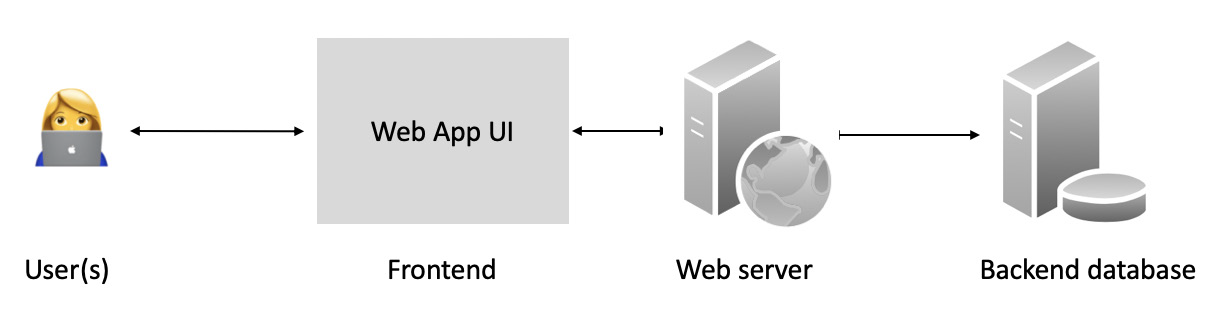
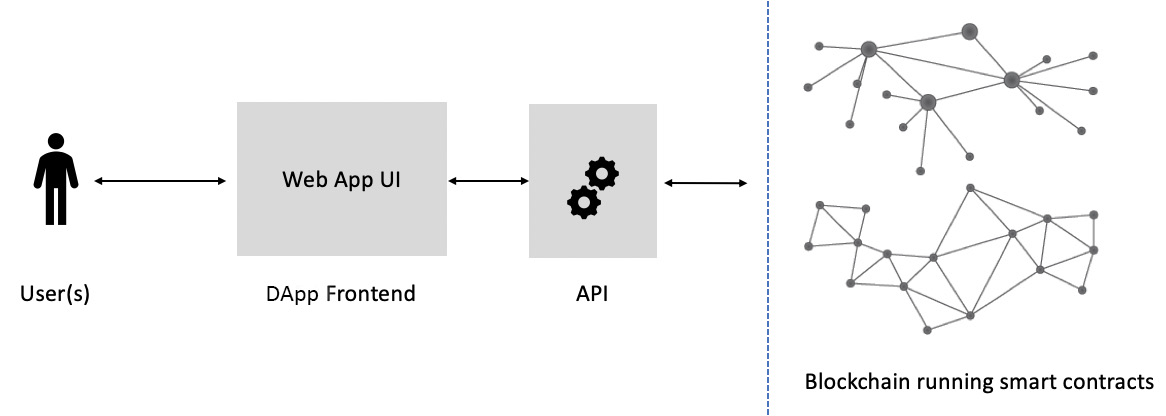
DApp vs Traditional App:
| Feature | Traditional App | DApp |
|---|---|---|
| Backend | Centralized server | Blockchain (smart contracts) |
| Frontend | Web/mobile interface | Web/mobile interface |
| Data Storage | Centralized database | Distributed ledger + decentralized storage |
| Control | Company/organization | No single entity |
| Downtime | Possible (server failure) | Virtually zero (distributed) |
| Censorship | Possible | Resistant |
| Trust | Required (in operator) | Trustless (code is law) |
| Updates | Centralized control | Community consensus |
Design Aspects of DApps:
1. Architecture Design
Three-Tier DApp Architecture:
┌─────────────────────────────────────┐
│      FRONTEND (Presentation)        │
│   HTML/CSS/JS, React, Vue, etc.     │
│   Connects via Web3.js/Ethers.js    │
└──────────────┬──────────────────────┘
               │
┌──────────────▼──────────────────────┐
│    BLOCKCHAIN LAYER (Backend)       │
│   Smart Contracts (Business Logic)  │
│   Deployed on Ethereum/other chain  │
└──────────────┬──────────────────────┘
               │
┌──────────────▼──────────────────────┐
│    STORAGE LAYER (Data)             │
│   On-chain: State variables         │
│   Off-chain: IPFS, Swarm, Arweave   │
└─────────────────────────────────────┘
Component Breakdown:
a) Frontend (User Interface):
- Built with traditional web technologies (HTML, CSS, JavaScript)
- Frameworks: React, Vue.js, Angular
- Communicates with blockchain via Web3 libraries
- User-friendly interface for complex blockchain operations
b) Backend (Smart Contracts):
- Business logic written in Solidity, Vyper, Rust
- Deployed on blockchain (Ethereum, Solana, etc.)
- Executes deterministically
- State stored on blockchain
c) Storage:
- On-Chain Storage:
- Critical data and state
- Expensive (gas costs)
- Used for essential data only
- Off-Chain Storage:
- Large files, media, documents
- IPFS (InterPlanetary File System)
- Swarm, Arweave, Filecoin
- Hash/reference stored on-chain
2. Smart Contract Design
Principles:
a) Modularity:
- Separate contracts for different functions
- Library contracts for reusable code
- Upgradeable contract patterns
b) Security-First:
- Reentrancy guards
- Access control mechanisms
- Input validation
- Safe math operations (prevent overflow)
c) Gas Optimization:
- Minimize storage operations
- Use events for logging
- Optimize loops and data structures
- Batch operations where possible
d) Upgradeability:
- Proxy patterns for contract upgrades
- Migration strategies
- Version management
Example Smart Contract Structure:
// SPDX-License-Identifier: MIT
pragma solidity ^0.8.0;

contract DAppBackend {
    // State variables
    address public owner;
    mapping(address => uint256) public balances;

    // Events for frontend listening
    event BalanceUpdated(address indexed user, uint256 newBalance);

    // Modifiers for access control
    modifier onlyOwner() {
        require(msg.sender == owner, "Not authorized");
        _;
    }

    // Constructor
    constructor() {
        owner = msg.sender;
    }

    // Core functions
    function updateBalance(uint256 amount) public {
        balances[msg.sender] += amount;
        emit BalanceUpdated(msg.sender, balances[msg.sender]);
    }
}
3. Frontend Design
Web3 Integration:
Wallet Connection:
// Connect to MetaMask
async function connectWallet() {
    if (window.ethereum) {
        try {
            const accounts = await window.ethereum.request({
                method: 'eth_requestAccounts'
            });
            console.log('Connected:', accounts[0]);
        } catch (error) {
            console.error('User rejected connection');
        }
    } else {
        alert('Please install MetaMask!');
    }
}
Smart Contract Interaction:
// Using ethers.js
const provider = new ethers.providers.Web3Provider(window.ethereum);
const signer = provider.getSigner();
const contract = new ethers.Contract(contractAddress, abi, signer);

// Read from contract
const balance = await contract.balances(userAddress);

// Write to contract
const tx = await contract.updateBalance(100);
await tx.wait(); // Wait for confirmation
Design Considerations:
- Responsive UI for mobile/desktop
- Loading states for blockchain transactions
- Transaction confirmation feedback
- Error handling for failed transactions
- Gas estimation display
- Network switching support (mainnet/testnet)
4. Data Management Design
On-Chain vs Off-Chain Storage:
On-Chain (Blockchain):
- Store:
- Critical state (balances, ownership)
- References/hashes to off-chain data
- Transaction history
- Smart contract logic
- Expensive: Costs gas for every write
- Permanent: Immutable once written
Off-Chain (IPFS/Swarm/Arweave):
- Store:
- Large files (images, videos)
- Metadata (JSON files)
- Documents
- NFT content
- Cheap: No gas costs
- Reference: Hash stored on-chain
Hybrid Approach:
1. Upload file to IPFS
2. Receive IPFS hash: QmX...abc
3. Store hash on blockchain
4. Frontend retrieves file using hash
Example:
contract NFT {
    mapping(uint256 => string) public tokenURIs; // IPFS hashes

    function mint(uint256 tokenId, string memory ipfsHash) public {
        tokenURIs[tokenId] = ipfsHash;
        // Actual image stored on IPFS, hash stored on-chain
    }
}
5. User Experience (UX) Design
Challenges:
- Transaction delays (block confirmation)
- Gas fees complexity
- Wallet management
- Technical blockchain concepts
Solutions:
a) Transaction Feedback:
- Show transaction status (pending/confirmed/failed)
- Estimate confirmation time
- Provide transaction hash for tracking
- Fallback options if transaction fails
b) Gas Management:
- Display estimated gas costs in USD
- Allow users to adjust gas price
- Show transaction priority options (slow/medium/fast)
- Batch transactions to reduce costs
c) Simplified Wallet Integration:
- One-click wallet connection
- Support multiple wallets (MetaMask, WalletConnect, Coinbase Wallet)
- Social recovery options
- Abstraction of technical details
d) Progressive Disclosure:
- Hide complex blockchain details
- Show advanced options for power users
- Helpful tooltips and guides
- Onboarding tutorials
6. Security Design
Smart Contract Security:
- Formal verification
- Comprehensive testing (unit tests, integration tests)
- Security audits by third parties
- Bug bounty programs
- Gradual rollout with limits
Frontend Security:
- Verify contract addresses
- Validate user inputs
- Protect against phishing
- Secure key management guidance
- HTTPS for all communications
Access Control Patterns:
// Role-based access control
contract AccessControlled {
    mapping(address => bool) public admins;

    modifier onlyAdmin() {
        require(admins[msg.sender], "Not admin");
        _;
    }

    function sensitiveFunction() public onlyAdmin {
        // Only admins can call
    }
}
7. Scalability Design
Layer 1 Optimizations:
- Efficient data structures
- Minimize storage writes
- Use events instead of storage where possible
- Optimize contract size
Layer 2 Solutions:
- State channels (payment channels)
- Sidechains (Polygon, Optimism)
- Rollups (Optimistic, ZK-rollups)
- Plasma chains
Example Architecture:
Main Chain (Ethereum)
    ↓ Periodic settlements
Layer 2 (Polygon)
    ↓ Faster, cheaper transactions
DApp Frontend
8. Economic Design (Tokenomics)
Token Utility:
- Governance (voting on proposals)
- Access (pay to use features)
- Rewards (incentivize participation)
- Staking (lock tokens for benefits)
Token Distribution:
- Team allocation
- Community rewards
- Liquidity mining
- Public sale
- Treasury reserve
Sustainability:
- Transaction fees generate revenue
- Token burning mechanisms
- Staking rewards balance
9. Governance Design
On-Chain Governance:
- Proposal system
- Voting mechanisms
- Execution of approved changes
- Transparent decision-making
Example Flow:
1. Community member creates proposal
2. Token holders vote (voting power = tokens held)
3. Proposal passes if >50% vote yes
4. Smart contract automatically executes change
Governance Models:
- Token-based: 1 token = 1 vote
- Quadratic voting: Prevents whale dominance
- Delegated voting: Delegate votes to experts
- Time-locked voting: Longer locks = more weight
10. Interoperability Design
Cross-Chain Communication:
- Bridge contracts
- Oracle integration (Chainlink)
- Multi-chain deployment
- Chain-agnostic design
API Integration:
- The Graph (indexing blockchain data)
- Moralis (backend infrastructure)
- Infura/Alchemy (node providers)
Complete DApp Design Workflow:
1. Planning Phase:
- Define use case and requirements
- Choose blockchain platform
- Plan smart contract architecture
- Design token economics
2. Development Phase:
- Write and test smart contracts
- Deploy to testnet
- Develop frontend
- Integrate Web3 libraries
3. Testing Phase:
- Unit tests for contracts
- Integration testing
- Security audit
- User acceptance testing
4. Deployment Phase:
- Deploy contracts to mainnet
- Deploy frontend to IPFS/traditional hosting
- Set up monitoring and analytics
5. Maintenance Phase:
- Monitor contract interactions
- Community management
- Iterative improvements
- Bug fixes and updates
Example DApp Categories:
1. DeFi:
- Uniswap (DEX)
- Aave (Lending)
- Compound (Borrowing)
2. Gaming:
- Axie Infinity
- Decentraland
- Gods Unchained
3. Social:
- Steemit (Blogging)
- Lens Protocol (Social graph)
4. Marketplaces:
- OpenSea (NFTs)
- Rarible (NFT marketplace)
Best Practices Summary:
- Security First: Audit contracts, test extensively
- User-Centric Design: Abstract blockchain complexity
- Gas Optimization: Minimize costs for users
- Decentralization: Avoid single points of failure
- Transparency: Open-source code, clear documentation
- Scalability: Plan for growth, use Layer 2
- Community: Build engaged user base
- Compliance: Consider regulatory requirements
(b) Illustrate with a use case, the application of blockchain technology in finance sector. (7 marks)
Blockchain in Finance: Comprehensive Use Case
Use Case: Cross-Border Remittances and Payments
Problem Statement:
Traditional cross-border money transfers face significant challenges:
- High fees (5-10% average, $30B+ annually in fees globally)
- Slow processing (3-5 business days)
- Multiple intermediaries (correspondent banks)
- Lack of transparency (hidden fees, exchange rates)
- Limited access (1.7B unbanked globally)
- Fraud and errors
- Settlement risk
- Currency exchange complexity
Example Traditional Flow:
Sender (USA)
   → Sending Bank
      → Correspondent Bank 1
         → Correspondent Bank 2
            → Receiving Bank
               → Recipient (Philippines)

Time: 3-5 days
Cost: $25-50 + 3-5% exchange rate markup
Fees split among all intermediaries
Blockchain Solution: Decentralized Remittance Platform
Architecture:

Components:
- User Interface (Web/Mobile App)
- Smart Contracts (Transfer Logic)
- Stablecoins (Value Transfer)
- Blockchain Network (Settlement Layer)
- Liquidity Pools (Currency Exchange)
- Fiat On/Off Ramps (Local Partners)
Step-by-Step Process:
Phase 1: Sender Initiates Transfer
Step 1: Account Creation and KYC
- User registers on platform
- Completes digital KYC verification
- Identity verified using blockchain-based credentials
- Wallet automatically created
Step 2: Deposit Funds
- Sender deposits $100 USD
- Bank transfer or card payment
- Funds converted to stablecoin (USDC)
- Smart contract interaction:
contract RemittancePlatform {
    event FundsDeposited(
        address indexed sender,
        uint256 amount,
        string currency
    );

    function depositFunds(uint256 usdAmount) public {
        // Convert USD to USDC stablecoin
        uint256 usdcAmount = usdAmount * 1e6; // USDC has 6 decimals
        usdc.transferFrom(msg.sender, address(this), usdcAmount);

        emit FundsDeposited(msg.sender, usdcAmount, "USDC");
    }
}
Phase 2: Cross-Border Transfer on Blockchain
Step 3: Initiate Transfer
- Sender enters recipient details:
- Recipient wallet address OR phone number
- Amount to send: $100
- Destination currency: PHP (Philippine Peso)
- Platform calculates:
- Exchange rate: 1 USD = 56 PHP (real-time from oracle)
- Network fee: $0.50
- Platform fee: 1% = $1
- Recipient receives: 5,488 PHP
Step 4: Smart Contract Execution
contract CrossBorderTransfer {
    using Chainlink for AggregatedProxy; // Price oracle

    struct Transfer {
        address sender;
        address recipient;
        uint256 amount;
        string sourceCurrency;
        string destinationCurrency;
        uint256 exchangeRate;
        uint256 timestamp;
        TransferStatus status;
    }

    enum TransferStatus { Pending, Completed, Failed }

    mapping(bytes32 => Transfer) public transfers;

    event TransferInitiated(
        bytes32 indexed transferId,
        address indexed sender,
        address indexed recipient,
        uint256 amount
    );

    event TransferCompleted(
        bytes32 indexed transferId,
        uint256 finalAmount
    );

    function initiateTransfer(
        address recipient,
        uint256 usdcAmount,
        string memory destCurrency
    ) public returns (bytes32) {
        // Generate unique transfer ID
        bytes32 transferId = keccak256(
            abi.encodePacked(msg.sender, recipient, block.timestamp)
        );

        // Get current exchange rate from oracle
        uint256 exchangeRate = getExchangeRate("USD", destCurrency);

        // Calculate fees
        uint256 networkFee = 0.5 * 1e6; // $0.50 in USDC
        uint256 platformFee = (usdcAmount * 100) / 10000; // 1%
        uint256 totalFees = networkFee + platformFee;

        // Amount after fees
        uint256 netAmount = usdcAmount - totalFees;

        // Create transfer record
        transfers[transferId] = Transfer({
            sender: msg.sender,
            recipient: recipient,
            amount: netAmount,
            sourceCurrency: "USDC",
            destinationCurrency: destCurrency,
            exchangeRate: exchangeRate,
            timestamp: block.timestamp,
            status: TransferStatus.Pending
        });

        // Transfer USDC to escrow
        usdc.transferFrom(msg.sender, address(this), usdcAmount);

        emit TransferInitiated(transferId, msg.sender, recipient, netAmount);

        return transferId;
    }

    function completeTransfer(bytes32 transferId) internal {
        Transfer storage t = transfers[transferId];
        require(t.status == TransferStatus.Pending, "Already processed");

        // Convert to destination currency amount
        uint256 finalAmount = (t.amount * t.exchangeRate) / 1e6;

        // Transfer to recipient
        usdc.transfer(t.recipient, t.amount);

        t.status = TransferStatus.Completed;

        emit TransferCompleted(transferId, finalAmount);
    }
}
Step 5: Blockchain Transaction
- Smart contract executed on Ethereum or Layer 2 (Polygon)
- Transaction confirmed in ~2 seconds (Polygon) or ~15 seconds (Ethereum)
- Immutable record created on blockchain
- Transfer status: Pending → Completed
Phase 3: Recipient Receives Funds
Step 6: Notification
- Recipient receives instant SMS/app notification
- Transfer details visible in recipient's app
- Blockchain explorer link for verification
Step 7: Currency Conversion (if needed)
- If recipient wants local currency (PHP):
- Stablecoin converted to PHP via local partner
- Uses decentralized exchange (DEX) or liquidity pool
- Smart contract handles conversion
- If recipient wants USDC:
- Keeps as stablecoin in wallet
- Can use for other crypto transactions
Step 8: Withdrawal to Bank Account
- Recipient chooses withdrawal option
- Options:
- Direct bank deposit: Partner bank transfers PHP
- Cash pickup: Local agent location
- Mobile money: Transfer to mobile wallet (GCash, PayMaya)
- Keep as crypto: Hold in wallet for future use
Withdrawal Smart Contract:
function requestWithdrawal(
    bytes32 transferId,
    WithdrawalMethod method,
    string memory bankAccount
) public {
    Transfer storage t = transfers[transferId];
    require(msg.sender == t.recipient, "Not recipient");
    require(t.status == TransferStatus.Completed, "Not ready");

    // Record withdrawal request
    withdrawalRequests[transferId] = WithdrawalRequest({
        method: method,
        bankAccount: bankAccount,
        requestTime: block.timestamp,
        status: WithdrawalStatus.Pending
    });

    // Trigger off-chain process via oracle
    emit WithdrawalRequested(transferId, method);
}
Benefits Demonstrated:
1. Cost Savings:
- Traditional: $100 send → $90-95 received (5-10% fees)
- Blockchain: $100 send → $98.50 received (1.5% fees)
- Savings: $6.50 per $100 (65% cost reduction)
2. Speed:
- Traditional: 3-5 business days
- Blockchain: 2 minutes to 1 hour
- Improvement: 99% faster
3. Transparency:
- Real-time tracking on blockchain
- Clear fee breakdown upfront
- No hidden charges
- Exchange rate locked at initiation
4. Accessibility:
- 24/7/365 availability
- Mobile-first design
- Serves unbanked (crypto wallet only)
- Lower minimum amounts ($1 vs $100)
5. Security:
- Cryptographic security (private keys)
- Immutable transaction records
- No intermediary custody risk
- Smart contract automation (reduces human error)
6. Financial Inclusion:
- Access for unbanked/underbanked
- Lower barriers to entry
- Smartphone = full banking capability
- Micro-remittances economically viable
Technical Implementation Details:
Blockchain Platform: Polygon (Ethereum Layer 2)
- Low fees (~$0.01 per transaction)
- Fast confirmation (2 seconds)
- Ethereum security
- EVM compatible
Stablecoin: USDC (USD Coin)
- Pegged 1:1 to USD
- Regulated and audited
- Wide acceptance
- Low volatility
Price Oracle: Chainlink
- Reliable exchange rate feeds
- Decentralized data aggregation
- Tamper-proof
- Real-time updates
Storage:
- Transaction metadata: On-chain (Polygon)
- User KYC data: Off-chain encrypted database
- Compliance logs: On-chain hashes
Regulatory Compliance:
KYC/AML:
- Identity verification at onboarding
- Transaction monitoring
- Suspicious activity reporting
- Sanctions screening
Licensing:
- Money transmitter licenses
- Partnership with licensed entities
- Regulatory compliance per jurisdiction
Data Protection:
- GDPR compliance
- Encrypted personal data
- User consent management
Real-World Example: Stellar (XLM) Remittances
Case Study:
- Platform: Stellar Network
- Partners: MoneyGram, Circle
- Route: USA → Mexico remittances
- Volume: $1B+ annual
- Speed: 5 seconds average
- Cost: <1% fees
Results:
- 90% cost reduction vs traditional
- Instant settlement
- Millions of users served
- 99.99% uptime
Other Finance Use Cases:
1. Trade Finance:
- Letter of credit on blockchain
- Smart contracts automate payment upon delivery
- Reduces fraud, paperwork
- Example: we.trade platform
2. Securities Settlement:
- T+0 settlement (instant vs T+2 traditional)
- Reduced counterparty risk
- Example: ASX blockchain settlement system
3. Syndicated Lending:
- Blockchain-based loan distribution
- Transparent terms and ownership
- Automated interest payments
- Example: HSBC blockchain loan platform
4. Supply Chain Finance:
- Invoice financing on blockchain
- Supplier payment acceleration
- Reduced factoring costs
- Example: IBM Food Trust
5. Central Bank Digital Currencies (CBDC):
- Digital versions of fiat currency
- Programmable money
- Financial inclusion
- Example: China's Digital Yuan, Bahamas Sand Dollar
Challenges and Solutions:
| Challenge | Solution |
|---|---|
| Regulatory uncertainty | Partnership with licensed institutions |
| Volatility | Use stablecoins |
| User adoption | Simple UI, education |
| Liquidity | Deep liquidity pools, market makers |
| Scalability | Layer 2 solutions (Polygon, Optimism) |
| Interoperability | Cross-chain bridges |
Future Evolution:
- Integration with CBDCs
- AI-powered fraud detection
- Zero-knowledge privacy
- Quantum-resistant cryptography
- Complete automation (no manual steps)
Impact Summary:
Financial Inclusion:
- 1.7B unbanked gain access
- Micro-remittances viable
- Self-custodial wallets
Economic Impact:
- $30B+ annual fee savings globally
- Faster access to funds
- More money reaches recipients
- Stimulates local economies
Innovation:
- Programmable money
- Instant settlement
- 24/7 global payments
- Financial innovation unlocked
This use case demonstrates how blockchain transforms finance from a slow, expensive, opaque system to a fast, cheap, transparent ecosystem accessible to everyone globally.
Module V - Ethereum and Solidity — #### Question 19
Question 19
(a) Explain the architecture and components of Ethereum ecosystem. (7 marks)
Ethereum Ecosystem Architecture:
Ethereum is a decentralized, open-source blockchain platform that enables the creation and execution of smart contracts and decentralized applications (DApps). It extends beyond simple cryptocurrency transactions to programmable blockchain functionality.
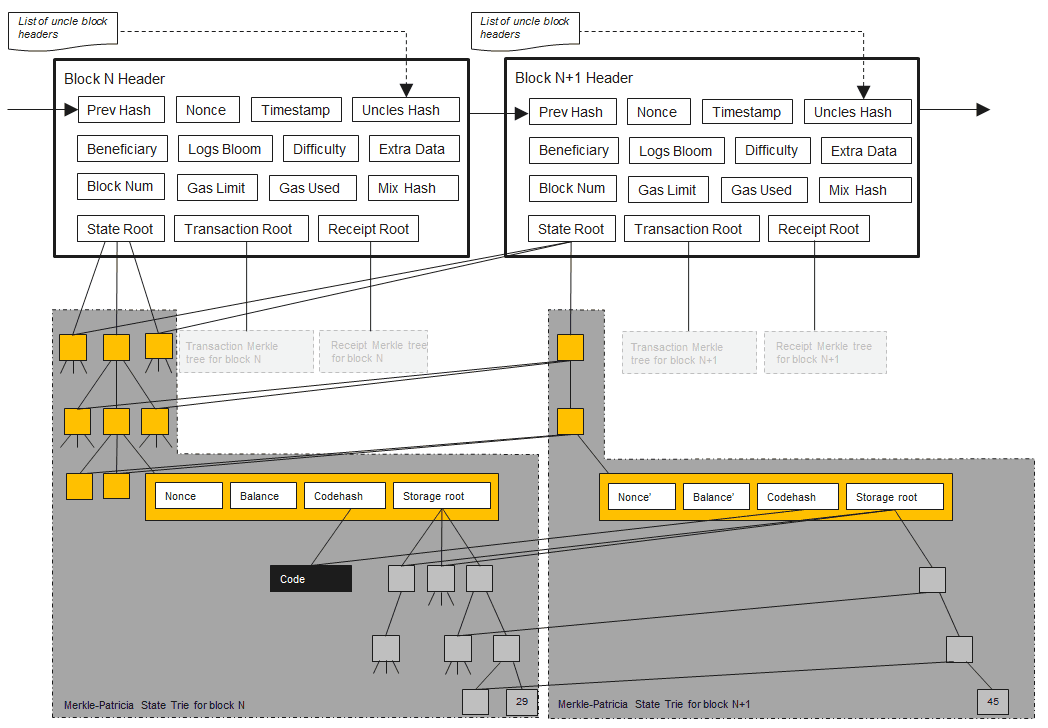
Overview:
Ethereum can be understood as:
- World Computer: Globally distributed computing platform
- Smart Contract Platform: Execute code in decentralized manner
- Decentralized State Machine: Maintains global state across network
- Cryptocurrency: ETH as native currency
Ethereum Architecture Layers:
┌────────────────────────────────────────────────┐
│         APPLICATION LAYER                      │
│   DApps, Wallets, DeFi Protocols              │
└────────────────┬───────────────────────────────┘
                 │
┌────────────────▼───────────────────────────────┐
│         EXECUTION LAYER (EVM)                  │
│   Smart Contracts, Accounts, Transactions     │
└────────────────┬───────────────────────────────┘
                 │
┌────────────────▼───────────────────────────────┐
│         CONSENSUS LAYER                        │
│   PoS Validators, Block Production            │
└────────────────┬───────────────────────────────┘
                 │
┌────────────────▼───────────────────────────────┐
│         NETWORK LAYER                          │
│   P2P Communication, Node Discovery           │
└────────────────────────────────────────────────┘
Core Components of Ethereum Ecosystem:
1. Ethereum Virtual Machine (EVM)
Description:
The EVM is the runtime environment for smart contracts in Ethereum. It's a quasi-Turing-complete state machine that executes bytecode.
Characteristics:
- Deterministic: Same input always produces same output
- Isolated: Sandboxed environment, no access to network/filesystem
- Stack-based: 256-bit word size
- Bytecode execution: Compiles Solidity to bytecode
Function:
- Executes smart contract code
- Maintains global state
- Processes transactions
- Computes state transitions
EVM Architecture:
┌──────────────────────────────────┐
│   Smart Contract (Solidity)      │
└───────────┬──────────────────────┘
            │ Compile
┌───────────▼──────────────────────┐
│   Bytecode (0x6060604052...)     │
└───────────┬──────────────────────┘
            │ Execute
┌───────────▼──────────────────────┐
│   Ethereum Virtual Machine       │
│   - Stack (1024 depth)           │
│   - Memory (volatile)            │
│   - Storage (persistent)         │
└──────────────────────────────────┘
EVM Components:
- Stack: 1024-element stack for computation
- Memory: Volatile byte-array, cleared between transactions
- Storage: Persistent key-value store (expensive)
- Program Counter: Tracks execution position
- Gas: Computational resource metering
2. Accounts
Ethereum has two types of accounts:
A) Externally Owned Accounts (EOA):
Structure:
EOA {
    Address: 20 bytes (0x742d35Cc6634C0532925a...)
    Balance: ETH amount in Wei
    Nonce: Transaction count
}
Characteristics:
- Controlled by private keys
- Can initiate transactions
- No associated code
- Created by generating key pair
- Costs nothing to create
Functions:
- Send ETH to other accounts
- Deploy smart contracts
- Call smart contract functions
- Sign transactions
Example:
Address: 0x742d35Cc6634C0532925a3b844Bc9e7595f0bEb
Balance: 2.5 ETH
Nonce: 47 (sent 47 transactions)
B) Contract Accounts:
Structure:
Contract Account {
    Address: 20 bytes
    Balance: ETH amount
    Code: Smart contract bytecode
    Storage: Persistent data (key-value pairs)
    Nonce: Deployed contract count
}
Characteristics:
- Controlled by code (smart contract)
- Cannot initiate transactions (passive)
- Has associated code
- Created by deploying contract
- Costs gas to create
Functions:
- Execute code when called
- Store data persistently
- Call other contracts
- Emit events
- Hold ETH
Example:
Address: 0x742d35Cc6634C0532925a3b844Bc9e7595f0bEb (contract)
Balance: 100 ETH (contract holds funds)
Code Hash: 0xabcdef... (bytecode hash)
Storage: {
    slot[0]: 0x123... (state variable 1)
    slot[1]: 0x456... (state variable 2)
}
3. Transactions
Transaction Structure:
Transaction {
    Nonce: uint64          // Sender's transaction count
    Gas Price: uint256     // Price per gas unit (in Wei)
    Gas Limit: uint256     // Maximum gas allowed
    To: address           // Recipient (20 bytes)
    Value: uint256        // ETH amount (in Wei)
    Data: bytes           // Input data for contract call
    v, r, s: signature    // ECDSA signature components
}
Transaction Types:
1. ETH Transfer:
{
    from: 0xAlice...
    to: 0xBob...
    value: 1 ETH
    data: "" (empty)
}
2. Contract Deployment:
{
    from: 0xAlice...
    to: null (deployment indicator)
    value: 0
    data: <contract bytecode>
}
3. Contract Function Call:
{
    from: 0xAlice...
    to: 0xContract...
    value: 0
    data: <function selector + parameters>
}
Transaction Lifecycle:
1. Create & Sign Transaction
2. Broadcast to Network
3. Enter Mempool
4. Selected by Validator
5. Included in Block
6. Block Validated by Network
7. Transaction Confirmed
8. State Updated
4. Messages (Internal Transactions)
Description:
Messages are internal calls between contracts, not stored directly on blockchain.
Characteristics:
- Created when contract calls another contract
- Not externally signed
- Part of transaction execution
- Can transfer ETH between contracts
Example:
Contract A calls Contract B:
   Transaction (EOA → A) triggers
   Message (A → B) internally
5. Gas System
Purpose:
Gas prevents infinite loops and measures computational cost.
Gas Components:
a) Gas Limit:
- Maximum gas willing to spend
- Set by transaction sender
- Unused gas refunded
b) Gas Price (Before EIP-1559):
- Price per gas unit in Gwei
- Higher price = higher priority
c) Gas Used:
- Actual gas consumed
- Depends on operations executed
EIP-1559 Gas Model (Current):
Total Fee = (Base Fee + Priority Fee) × Gas Used

Base Fee: Algorithmically determined, burned
Priority Fee (Tip): Goes to validator
Max Fee: Maximum willing to pay
Example:
Gas Limit: 21,000 units
Base Fee: 30 Gwei
Priority Fee: 2 Gwei
Gas Used: 21,000 units

Total Cost = (30 + 2) × 21,000 = 672,000 Gwei = 0.000672 ETH
Gas Costs for Operations:
Operation               Gas Cost
- Addition (ADD)        3
- Multiplication (MUL)  5
- Storage write (SSTORE) 20,000 (new) / 5,000 (update)
- Storage read (SLOAD)  800
- SHA3 hash             30 + 6 per word
- Transfer ETH          21,000 (basic)
- Deploy contract       32,000 + code size cost
6. Blocks and Blockchain
Block Structure:
Block {
    Header: {
        Parent Hash: Previous block hash
        State Root: Merkle root of state trie
        Transactions Root: Merkle root of transactions
        Receipts Root: Merkle root of receipts
        Difficulty: Mining/staking difficulty
        Number: Block height
        Gas Limit: Maximum gas for block
        Gas Used: Total gas used
        Timestamp: Block creation time
        Extra Data: Arbitrary data
        Mix Hash: PoW verification
        Nonce: PoW nonce
    }
    Transactions: [tx1, tx2, tx3, ...]
    Ommers: [] (uncle blocks, deprecated in PoS)
}
Blockchain Properties:
- Block time: ~12 seconds (after PoS merge)
- Block size: Variable, limited by gas limit
- Gas limit per block: ~30 million
- Finality: ~15 minutes (2 epochs in PoS)
7. State and State Transitions
Global State:
Ethereum maintains a global state mapping addresses to account states.
State Structure:
State = {
    0xAlice...: {balance: 5 ETH, nonce: 10, code: null, storage: {}}
    0xBob...: {balance: 3 ETH, nonce: 5, code: null, storage: {}}
    0xContract1...: {balance: 100 ETH, nonce: 0, code: 0x60606..., storage: {...}}
}
State Transition:
State_new = Υ(State_old, Transaction)

Υ = State transition function
Executes transaction and produces new state
State Trie (Merkle Patricia Trie):
- Efficiently stores state
- Allows cryptographic proofs
- State root in block header
8. Ethereum Nodes
Node Types:
A) Full Node:
- Stores complete blockchain
- Validates all blocks and transactions
- Can serve data to network
- ~1TB storage (and growing)
B) Archive Node:
- Full node + all historical states
- Can query any historical state
- ~12TB+ storage
- Used by block explorers
C) Light Node:
- Stores only block headers
- Requests data from full nodes
- Minimal storage (~1GB)
- Suitable for mobile devices
D) Validator Node (PoS):
- Full node + staking functionality
- Proposes and attests blocks
- Requires 32 ETH stake
- Earns staking rewards
9. Ethereum Clients
Execution Layer Clients:
- Geth (Go Ethereum): Most popular, Go language
- Nethermind: .NET implementation
- Besu: Java implementation, enterprise-focused
- Erigon: Performance-optimized
Consensus Layer Clients (Post-Merge):
- Prysm: Go implementation
- Lighthouse: Rust implementation
- Teku: Java implementation
- Nimbus: Nim language, resource-efficient
Client Diversity:
Important for network resilience; no single client should dominate.
10. Keys and Addresses
Key Generation:
1. Generate Private Key (256-bit random number)
   Private Key: 0x8f2a55949038a9610f50fb23b5883af3b4ecb3c3bb792cbcefbd1542c692be63

2. Derive Public Key (ECDSA secp256k1)
   Public Key: 0x04bfcab8722991ae774db48f934ca79cfb7dd991229153b9f732ba5334aafcd8e7266e47076996b55a14bf9913ee3145ce0cfc1372ada8ada74bd287450313534a

3. Take Keccak-256 hash of public key
   Hash: 0x2f015c60e0be116b1f0cd534704db9c92118fb6a11f0c530e69c94f32f063aff

4. Take last 20 bytes as address
   Address: 0x742d35Cc6634C0532925a3b844Bc9e7595f0bEb
Address Format:
- 20 bytes (40 hex characters)
- Prefixed with 0x
- Checksum encoding (EIP-55) for error detection
11. Ethereum Network
Network Types:
A) Mainnet:
- Production network
- Real ETH with value
- Chain ID: 1
B) Test Networks:
- Sepolia: Recommended testnet
- Goerli: Being deprecated
- Free test ETH from faucets
- For development and testing
C) Private Networks:
- Local development (Ganache, Hardhat)
- Enterprise consortiums
Network Communication:
- P2P protocol (DevP2P)
- Discovery protocol (Disc v4/v5)
- Gossip protocol for transaction/block propagation
12. Ethereum Consensus (Proof of Stake)
Post-Merge Architecture:
Validators:
- Minimum 32 ETH stake
- Run validator software
- Propose and attest blocks
- Earn rewards
Consensus Process:
1. Slot (12 seconds)
   - One validator proposes block
   - Committee attests

2. Epoch (32 slots = 6.4 minutes)
   - All validators participate once
   - Checkpoint finalization

3. Finality (2 epochs = ~15 minutes)
   - Block becomes finalized
   - Cannot be reverted
Rewards and Penalties:
- Rewards for correct attestations
- Slashing for malicious behavior
- Inactivity penalties for offline
Ethereum Ecosystem Components Diagram:
┌──────────────────────────────────────────┐
│         APPLICATIONS                     │
│  DeFi  │  NFTs  │  Games  │  DAOs       │
└──────────┬───────────────────────────────┘
           │
┌──────────▼───────────────────────────────┐
│         DEVELOPER TOOLS                  │
│  Remix, Hardhat, Truffle, Foundry       │
└──────────┬───────────────────────────────┘
           │
┌──────────▼───────────────────────────────┐
│         WEB3 LIBRARIES                   │
│  web3.js, ethers.js, web3.py            │
└──────────┬───────────────────────────────┘
           │
┌──────────▼───────────────────────────────┐
│         JSON-RPC API                     │
└──────────┬───────────────────────────────┘
           │
┌──────────▼───────────────────────────────┐
│         ETHEREUM NODES                   │
│  Geth, Nethermind, Besu, Erigon         │
└──────────┬───────────────────────────────┘
           │
┌──────────▼───────────────────────────────┐
│         ETHEREUM BLOCKCHAIN              │
│  Blocks, Transactions, State            │
└──────────────────────────────────────────┘
Summary:
Ethereum ecosystem is a complex, layered architecture comprising:
- EVM for smart contract execution
- Two account types (EOA and Contract)
- Robust transaction model
- Efficient gas system
- Decentralized consensus (PoS)
- Diverse client implementations
- Global state management
- P2P network infrastructure
This architecture enables a trustless, decentralized platform for programmable money and applications.
(b) Write a smart contract in solidity for simple voting system. (7 marks)
Simple Voting System Smart Contract in Solidity
Requirements:
- Chairperson can add voters
- Each voter can vote once
- Voters can delegate their vote
- Track proposals and votes
- Determine winning proposal
Complete Solidity Smart Contract:
// SPDX-License-Identifier: MIT
pragma solidity ^0.8.0;

/**
 * @title SimpleVoting
 * @dev Implements voting process with delegation
 */
contract SimpleVoting {

    // ============ State Variables ============

    /// @dev Structure to represent a Voter
    struct Voter {
        uint256 weight;        // Accumulated voting weight (1 + delegated votes)
        bool voted;            // True if person has already voted
        address delegate;      // Person delegated to
        uint256 vote;          // Index of voted proposal
    }

    /// @dev Structure to represent a Proposal
    struct Proposal {
        string name;           // Proposal name (up to 32 bytes)
        uint256 voteCount;     // Number of accumulated votes
    }

    /// @dev Chairperson who deploys the contract
    address public chairperson;

    /// @dev Mapping of voter addresses to Voter struct
    mapping(address => Voter) public voters;

    /// @dev Array of Proposal structs
    Proposal[] public proposals;

    // ============ Events ============

    /// @dev Emitted when a new voter is given right to vote
    event VoterAuthorized(address indexed voter);

    /// @dev Emitted when a vote is cast
    event VoteCast(address indexed voter, uint256 indexed proposalIndex);

    /// @dev Emitted when a vote is delegated
    event VoteDelegated(address indexed from, address indexed to);

    // ============ Modifiers ============

    /// @dev Restrict function to chairperson only
    modifier onlyChairperson() {
        require(
            msg.sender == chairperson,
            "Only chairperson can perform this action"
        );
        _;
    }

    // ============ Constructor ============

    /**
     * @dev Constructor - Creates a new voting contract
     * @param proposalNames Array of proposal names
     */
    constructor(string[] memory proposalNames) {
        chairperson = msg.sender;
        voters[chairperson].weight = 1;

        // Add each proposal to the proposals array
        for (uint256 i = 0; i < proposalNames.length; i++) {
            proposals.push(Proposal({
                name: proposalNames[i],
                voteCount: 0
            }));
        }
    }

    // ============ Functions ============

    /**
     * @dev Give voting right to a voter
     * @param voter Address of the voter
     *
     * Requirements:
     * - Only chairperson can call
     * - Voter must not have voted already
     */
    function giveRightToVote(address voter) public onlyChairperson {
        require(
            !voters[voter].voted,
            "The voter already voted"
        );
        require(
            voters[voter].weight == 0,
            "Voter already has voting rights"
        );

        voters[voter].weight = 1;

        emit VoterAuthorized(voter);
    }

    /**
     * @dev Delegate your vote to another voter
     * @param to Address to delegate vote to
     *
     * Requirements:
     * - Sender must not have voted
     * - Cannot delegate to self
     * - Cannot delegate to someone who already voted
     */
    function delegate(address to) public {
        Voter storage sender = voters[msg.sender];

        require(sender.weight != 0, "You have no right to vote");
        require(!sender.voted, "You already voted");
        require(to != msg.sender, "Self-delegation is not allowed");

        // Forward delegation chain
        // If 'to' also delegated, follow the chain
        while (voters[to].delegate != address(0)) {
            to = voters[to].delegate;

            // Prevent loops in delegation
            require(to != msg.sender, "Found loop in delegation");
        }

        Voter storage delegate_ = voters[to];

        // Delegatee must have voting rights
        require(delegate_.weight >= 1, "Delegate has no voting rights");

        // Mark sender as voted (delegated)
        sender.voted = true;
        sender.delegate = to;

        if (delegate_.voted) {
            // If delegate already voted, directly add to vote count
            proposals[delegate_.vote].voteCount += sender.weight;
        } else {
            // If delegate hasn't voted, add to their weight
            delegate_.weight += sender.weight;
        }

        emit VoteDelegated(msg.sender, to);
    }

    /**
     * @dev Cast your vote to a proposal
     * @param proposalIndex Index of proposal in proposals array
     *
     * Requirements:
     * - Sender must not have voted
     * - Sender must have voting rights
     * - Proposal index must be valid
     */
    function vote(uint256 proposalIndex) public {
        Voter storage sender = voters[msg.sender];

        require(sender.weight != 0, "Has no right to vote");
        require(!sender.voted, "Already voted");
        require(proposalIndex < proposals.length, "Invalid proposal index");

        sender.voted = true;
        sender.vote = proposalIndex;

        // Add voter's weight to proposal's vote count
        proposals[proposalIndex].voteCount += sender.weight;

        emit VoteCast(msg.sender, proposalIndex);
    }

    /**
     * @dev Compute the winning proposal index
     * @return winningProposal_ Index of winning proposal
     *
     * Note: In case of tie, returns first winning proposal
     */
    function winningProposal() public view returns (uint256 winningProposal_) {
        uint256 winningVoteCount = 0;

        for (uint256 p = 0; p < proposals.length; p++) {
            if (proposals[p].voteCount > winningVoteCount) {
                winningVoteCount = proposals[p].voteCount;
                winningProposal_ = p;
            }
        }
    }

    /**
     * @dev Get the name of the winning proposal
     * @return winnerName_ Name of winning proposal
     */
    function winnerName() public view returns (string memory winnerName_) {
        winnerName_ = proposals[winningProposal()].name;
    }

    /**
     * @dev Get total number of proposals
     * @return count Number of proposals
     */
    function getProposalCount() public view returns (uint256 count) {
        return proposals.length;
    }

    /**
     * @dev Get proposal details
     * @param index Index of proposal
     * @return name Proposal name
     * @return voteCount Current vote count
     */
    function getProposal(uint256 index)
        public
        view
        returns (string memory name, uint256 voteCount)
    {
        require(index < proposals.length, "Invalid proposal index");
        Proposal memory proposal = proposals[index];
        return (proposal.name, proposal.voteCount);
    }

    /**
     * @dev Check if an address has voted
     * @param voter Address to check
     * @return hasVoted True if voter has voted
     */
    function hasVoted(address voter) public view returns (bool hasVoted) {
        return voters[voter].voted;
    }

    /**
     * @dev Get voter details
     * @param voter Address of voter
     * @return weight Voting weight
     * @return voted Whether voted
     * @return delegate_ Delegate address
     * @return vote Voted proposal index
     */
    function getVoter(address voter)
        public
        view
        returns (
            uint256 weight,
            bool voted,
            address delegate_,
            uint256 vote
        )
    {
        Voter memory v = voters[voter];
        return (v.weight, v.voted, v.delegate, v.vote);
    }
}
Usage Example:
1. Deployment:
// Deploy with proposal names
const proposals = ["Proposal A", "Proposal B", "Proposal C"];
const voting = await SimpleVoting.deploy(proposals);
2. Chairperson gives voting rights:
await voting.giveRightToVote("0xVoter1Address");
await voting.giveRightToVote("0xVoter2Address");
await voting.giveRightToVote("0xVoter3Address");
3. Voters cast votes:
// Voter 1 votes for Proposal A (index 0)
await voting.connect(voter1).vote(0);

// Voter 2 delegates to Voter 3
await voting.connect(voter2).delegate("0xVoter3Address");

// Voter 3 votes for Proposal B (index 1)
// This vote counts for both Voter 3 and Voter 2 (delegated)
await voting.connect(voter3).vote(1);
4. Check results:
const winnerIndex = await voting.winningProposal();
const winnerName = await voting.winnerName();
console.log(`Winner: ${winnerName} (Index: ${winnerIndex})`);
Key Features Explained:
1. Structs:
Voter: Stores voter information (weight, voted status, delegate, vote choice)Proposal: Stores proposal information (name, vote count)
2. State Variables:
chairperson: Address of contract deployer (only one who can authorize voters)voters: Mapping from address to Voter structproposals: Dynamic array of proposals
3. Access Control:
onlyChairpersonmodifier restricts certain functions- Only chairperson can give voting rights
4. Vote Delegation:
- Voters can delegate their vote to others
- Delegation chains are supported (A→B→C)
- Loop prevention ensures no circular delegation
- Delegated weight accumulates
5. Events:
VoterAuthorized: Logs when voter gets rightsVoteCast: Logs when vote is castVoteDelegated: Logs when vote is delegated
6. View Functions:
winningProposal(): Returns index of winning proposalwinnerName(): Returns name of winning proposalgetProposal(): Get details of specific proposalhasVoted(): Check if address has voted
Security Considerations:
- Reentrancy: Not applicable (no external calls)
- Integer Overflow: Solidity 0.8.0+ has built-in overflow checks
- Access Control: Only chairperson can authorize voters
- Input Validation: Checks for valid proposal index
- Delegation Loops: Prevented by loop detection
- Double Voting: Prevented by
votedflag
Gas Optimization:
- Storage vs Memory: Uses storage for state, memory for temporary
- View Functions: Pure/view functions cost no gas when called externally
- Events: Cheaper than storing data on-chain
- Batch Operations: Consider adding batch authorization
Possible Enhancements:
- Time-based Voting:
uint256 public votingDeadline;

modifier beforeDeadline() {
    require(block.timestamp < votingDeadline, "Voting ended");
    _;
}
- Weighted Voting:
function giveRightToVote(address voter, uint256 weight) public onlyChairperson {
    voters[voter].weight = weight;
}
- Vote Withdrawal:
function withdrawVote() public {
    Voter storage sender = voters[msg.sender];
    require(sender.voted, "Haven't voted yet");
    require(sender.delegate == address(0), "Cannot withdraw delegated vote");

    proposals[sender.vote].voteCount -= sender.weight;
    sender.voted = false;
}
- Quorum Requirement:
uint256 public quorum = 50; // 50% minimum participation

function isQuorumReached() public view returns (bool) {
    uint256 totalVotes = 0;
    for (uint256 i = 0; i < proposals.length; i++) {
        totalVotes += proposals[i].voteCount;
    }
    return totalVotes >= (totalVoterWeight * quorum) / 100;
}
This smart contract provides a complete, functional voting system with delegation capabilities, demonstrating core Solidity concepts and blockchain voting mechanisms.
Question 20
(a) Explain the data types and functions used in solidity language. (7 marks)
Data Types in Solidity:
Solidity is a statically-typed language, meaning variable types must be specified at compile-time.
1. Value Types
A) Boolean (bool):
Represents true or false values.
bool public isActive = true;
bool public hasVoted = false;

// Operators: !, &&, ||, ==, !=
if (!hasVoted && isActive) {
    // Execute code
}
B) Integers:
Unsigned Integers (uint):
- Range: 0 to 2^n - 1
- Sizes:
uint8,uint16,uint32, ...,uint256 uintis alias foruint256
uint256 public totalSupply = 1000000;
uint8 public decimals = 18;
uint public count; // defaults to uint256

// Arithmetic operators: +, -, *, /, %, **
uint result = 10 + 5;  // 15
uint power = 2 ** 8;   // 256
Signed Integers (int):
- Range: -2^(n-1) to 2^(n-1) - 1
- Sizes:
int8,int16, ...,int256
int256 public temperature = -10;
int public balance; // defaults to int256
C) Address:
Holds 20-byte Ethereum address.
address public owner = 0x742d35Cc6634C0532925a3b844Bc9e7595f0bEb;
address payable public wallet; // Can receive ETH

// Address members:
owner.balance;           // Get ETH balance (uint256)
wallet.transfer(1 ether); // Send ETH
wallet.send(1 ether);    // Send ETH (returns bool)
wallet.call{value: 1 ether}(""); // Low-level call
D) Fixed-size Byte Arrays:
bytes1 public b1 = 0xFF;
bytes2 public b2 = 0xFFFF;
bytes32 public hash;

// bytes1 to bytes32 available
// Operators: comparisons (==, !=, <, >, <=, >=), &, |, ^, ~
E) Enums:
User-defined types with finite set of values.
enum Status { Pending, Active, Completed, Cancelled }

Status public currentStatus = Status.Pending;

function setStatus(Status _status) public {
    currentStatus = _status;
}

function isCompleted() public view returns (bool) {
    return currentStatus == Status.Completed;
}
F) Fixed Point Numbers:
Currently experimental and not fully supported.
// fixed / ufixed (planned, not yet available)
// fixed128x18 public price; // 128 bits, 18 decimal places
2. Reference Types
A) Arrays:
Fixed-size Arrays:
uint[5] public fixedArray = [1, 2, 3, 4, 5];
address[10] public addresses;
Dynamic Arrays:
uint[] public dynamicArray;
string[] public names;

function addElement(uint value) public {
    dynamicArray.push(value);  // Add element
}

function removeLastElement() public {
    dynamicArray.pop();  // Remove last element
}

function getLength() public view returns (uint) {
    return dynamicArray.length;
}

function getElement(uint index) public view returns (uint) {
    return dynamicArray[index];
}
Bytes (Dynamic):
bytes public data;

function setData(bytes memory _data) public {
    data = _data;
}
Array Members:
length: Number of elementspush(): Add element to endpop(): Remove last element
B) Strings:
string public name = "Token Name";
string public symbol = "TKN";

// Strings are expensive to manipulate
// No built-in string manipulation
// Use bytes for manipulation
function compareStrings(string memory a, string memory b)
    public
    pure
    returns (bool)
{
    return keccak256(abi.encodePacked(a)) == keccak256(abi.encodePacked(b));
}
C) Structs:
Custom data structures grouping multiple variables.
struct User {
    string name;
    uint256 age;
    address wallet;
    bool isActive;
}

User public admin;
User[] public users; // Array of structs

function addUser(string memory _name, uint256 _age, address _wallet) public {
    User memory newUser = User({
        name: _name,
        age: _age,
        wallet: _wallet,
        isActive: true
    });

    users.push(newUser);
}

// Alternative syntax:
function addUserAlt(string memory _name, uint256 _age, address _wallet) public {
    users.push(User(_name, _age, _wallet, true));
}
D) Mappings:
Hash tables / dictionaries for key-value pairs.
mapping(address => uint256) public balances;
mapping(address => mapping(address => uint256)) public allowances;

// Nested mapping
mapping(uint => mapping(address => bool)) public voted;

function setBalance(address user, uint256 amount) public {
    balances[user] = amount;
}

function getBalance(address user) public view returns (uint256) {
    return balances[user]; // Returns 0 if not set
}

// Mapping characteristics:
// - All keys exist by default (return default value)
// - Cannot iterate over mappings
// - Cannot get length of mapping
// - Keys are not stored, only hash
3. Special Data Locations
A) Storage:
- Persistent data stored on blockchain
- Expensive (costs gas)
- State variables
uint256 public storageVar; // Stored permanently

function updateStorage(uint256 value) public {
    storageVar = value; // Writes to blockchain
}
B) Memory:
- Temporary data during function execution
- Cleared after function returns
- Cheaper than storage
function processData() public pure {
    uint256 memory tempVar = 100; // Exists only in function
    uint[] memory tempArray = new uint[](10);
}
C) Calldata:
- Read-only, temporary data for function parameters
- Cheaper than memory
- Available for external functions
function processArray(uint[] calldata data) external {
    // data is read-only
    // Cannot modify data
}
Storage vs Memory vs Calldata:
contract DataLocations {
    uint[] public storageArray; // Storage

    function example(uint[] calldata calldataArray) external {
        uint[] memory memoryArray = new uint[](5); // Memory

        storageArray = calldataArray; // Copies calldata to storage
        memoryArray = storageArray; // Copies storage to memory
    }
}
Functions in Solidity:
1. Function Visibility:
A) Public:
- Callable internally and externally
- Creates getter for state variables
function publicFunction() public returns (uint) {
    return 42;
}
B) External:
- Only callable from outside contract
- More gas-efficient for large data
function externalFunction() external returns (uint) {
    return 42;
}

// Can be called internally using this:
function callExternal() public {
    this.externalFunction();
}
C) Internal:
- Only callable within contract and derived contracts
- Default for state variables
function internalFunction() internal returns (uint) {
    return 42;
}
D) Private:
- Only callable within current contract
- Not visible to derived contracts
function privateFunction() private returns (uint) {
    return 42;
}
2. Function State Mutability:
A) View:
- Reads state but doesn't modify
- No gas cost when called externally
function getBalance(address user) public view returns (uint256) {
    return balances[user]; // Only reads state
}
B) Pure:
- Doesn't read or modify state
- Only uses function parameters
function add(uint a, uint b) public pure returns (uint) {
    return a + b; // No state access
}
C) Payable:
- Can receive ETH
function deposit() public payable {
    balances[msg.sender] += msg.value;
}

function getContractBalance() public view returns (uint) {
    return address(this).balance;
}
D) Non-payable (default):
- Cannot receive ETH
- Will revert if ETH sent
function regularFunction() public {
    // Cannot receive ETH
}
3. Function Modifiers:
Custom requirements for functions.
address public owner;

modifier onlyOwner() {
    require(msg.sender == owner, "Not authorized");
    _; // Execute function body here
}

modifier validAmount(uint amount) {
    require(amount > 0, "Amount must be positive");
    _;
}

function restrictedFunction() public onlyOwner validAmount(msg.value) {
    // Only owner can call
    // msg.value must be > 0
}
4. Function Return Values:
Single Return:
function getName() public view returns (string memory) {
    return "Alice";
}
Multiple Returns:
function getUser() public view returns (string memory name, uint age, address wallet) {
    return ("Alice", 25, 0x123...);
}

// Named returns (automatically initialized):
function getUserNamed() public view returns (string memory name, uint age) {
    name = "Bob";
    age = 30;
    // Implicit return of name and age
}

// Destructuring returns:
(string memory userName, uint userAge) = getUser();
5. Function Overloading:
Same function name, different parameters.
function add(uint a, uint b) public pure returns (uint) {
    return a + b;
}

function add(uint a, uint b, uint c) public pure returns (uint) {
    return a + b + c;
}
6. Special Functions:
A) Constructor:
- Executed once during deployment
- Initializes contract state
constructor(uint256 initialSupply) {
    totalSupply = initialSupply;
    balances[msg.sender] = initialSupply;
}
B) Receive:
- Handles plain ETH transfers (no data)
receive() external payable {
    // Called when ETH sent without function call
}
C) Fallback:
- Called when no function matches
- Can receive ETH if payable
fallback() external payable {
    // Called when function doesn't exist
}
7. Global Variables and Functions:
Block/Transaction Properties:
block.timestamp;     // Current block timestamp
block.number;        // Current block number
block.difficulty;    // Current block difficulty
block.gaslimit;      // Current block gas limit

msg.sender;          // Address of caller
msg.value;           // ETH sent (in wei)
msg.data;            // Complete calldata
msg.sig;             // Function signature (first 4 bytes)

tx.gasprice;         // Transaction gas price
tx.origin;           // Original sender (entire call chain)
Address Methods:
address.balance;                    // ETH balance
address.code;                       // Contract code
address.codehash;                   // Hash of contract code

payableAddress.transfer(amount);    // Send ETH (reverts on failure)
payableAddress.send(amount);        // Send ETH (returns bool)
address.call{value: amount}(data);  // Low-level call
address.delegatecall(data);         // Delegatecall
address.staticcall(data);           // Static call
Cryptographic Functions:
keccak256(abi.encodePacked(data));  // Hash function
sha256(data);                        // SHA-256 hash
ripemd160(data);                     // RIPEMD-160 hash
ecrecover(hash, v, r, s);           // Recover signer address
Contract-related:
address(this);               // Current contract address
address(this).balance;       // Contract ETH balance
selfdestruct(payable(addr)); // Destroy contract, send ETH
Complete Example Demonstrating All Concepts:
// SPDX-License-Identifier: MIT
pragma solidity ^0.8.0;

contract DataTypesAndFunctions {

    // === Value Types ===
    bool public isActive = true;
    uint256 public count = 0;
    int256 public balance = -100;
    address public owner;
    bytes32 public hash;

    enum Status { Pending, Active, Completed }
    Status public status = Status.Pending;

    // === Reference Types ===
    uint[] public numbers;
    string public name = "Example";

    struct User {
        string name;
        uint256 age;
    }

    User[] public users;
    mapping(address => uint256) public balances;

    // === Constructor ===
    constructor() {
        owner = msg.sender;
    }

    // === Modifiers ===
    modifier onlyOwner() {
        require(msg.sender == owner, "Not owner");
        _;
    }

    // === Pure Function ===
    function add(uint a, uint b) public pure returns (uint) {
        return a + b;
    }

    // === View Function ===
    function getCount() public view returns (uint) {
        return count;
    }

    // === State-changing Function ===
    function incrementCount() public {
        count++;
    }

    // === Payable Function ===
    function deposit() public payable {
        balances[msg.sender] += msg.value;
    }

    // === External Function with Calldata ===
    function processData(uint[] calldata data) external pure returns (uint) {
        uint sum = 0;
        for (uint i = 0; i < data.length; i++) {
            sum += data[i];
        }
        return sum;
    }

    // === Internal Function ===
    function _internalHelper() internal pure returns (uint) {
        return 42;
    }

    // === Function with Multiple Returns ===
    function getUserInfo() public view returns (string memory, uint) {
        return (name, count);
    }

    // === Receive ETH ===
    receive() external payable {
        balances[msg.sender] += msg.value;
    }

    // === Fallback ===
    fallback() external payable {
        // Handle unknown function calls
    }
}
This comprehensive overview covers all major data types and function types in Solidity, providing a solid foundation for smart contract development.
(b) Explain how transactions are processed in Ethereum. Also explain the concept of gas and how does it affect the transaction processing? (7 marks)
Transaction Processing in Ethereum:
Transactions are the fundamental way users interact with the Ethereum blockchain, whether transferring ETH or executing smart contract functions.
Transaction Structure:
Transaction {
    // Core fields
    nonce: uint64              // Sender's transaction count
    gasPrice: uint256          // Price per gas unit (legacy)
    gasLimit: uint256          // Maximum gas allowed
    to: address                // Recipient address
    value: uint256             // ETH amount in Wei
    data: bytes                // Input data for contracts

    // EIP-1559 fields (current)
    maxFeePerGas: uint256      // Maximum total fee per gas
    maxPriorityFeePerGas: uint256  // Max tip for validator

    // Signature (ECDSA)
    v: uint8                   // Recovery ID
    r: uint256                 // Signature component
    s: uint256                 // Signature component
}
Transaction Lifecycle:
1. Transaction Creation
2. Transaction Signing
3. Broadcasting to Network
4. Mempool Entry
5. Validator Selection
6. Block Inclusion
7. Execution
8. State Update
9. Receipt Generation
10. Block Confirmation
Step-by-Step Transaction Processing:
Step 1: Transaction Creation
User creates transaction using wallet or dApp:
// Using ethers.js
const tx = {
    to: "0xRecipientAddress",
    value: ethers.utils.parseEther("1.0"), // 1 ETH
    gasLimit: 21000,
    maxFeePerGas: ethers.utils.parseUnits("50", "gwei"),
    maxPriorityFeePerGas: ethers.utils.parseUnits("2", "gwei"),
    nonce: await provider.getTransactionCount(senderAddress),
    data: "0x" // Empty for ETH transfer
};
Transaction Types:
Type 0 (Legacy):
to: 0x123...
value: 1 ETH
gasPrice: 50 Gwei
gasLimit: 21000
data: 0x
Type 2 (EIP-1559):
to: 0x123...
value: 1 ETH
maxFeePerGas: 50 Gwei
maxPriorityFeePerGas: 2 Gwei
gasLimit: 21000
data: 0x
Step 2: Transaction Signing
// Sign with private key
const signedTx = await wallet.signTransaction(tx);

// Signature components (v, r, s) added
// Creates cryptographic proof of authorization
ECDSA Signature:
- Uses secp256k1 elliptic curve
- Proves transaction authorized by private key owner
- Signature can be verified using public key
Step 3: Broadcasting
const txHash = await provider.sendTransaction(signedTx);
console.log("Transaction Hash:", txHash);
- Transaction broadcast to network via RPC nodes
- Propagated through P2P gossip protocol
- Reaches multiple nodes within seconds
Step 4: Mempool (Memory Pool)
Mempool
├── High Priority Transactions (high fees)
├── Medium Priority Transactions
└── Low Priority Transactions (low fees)
Mempool Characteristics:
- Temporary storage for pending transactions
- Each node maintains own mempool
- Validators select from mempool for blocks
- Transactions ordered by gas price (priority)
Transaction States:
Pending → Included in Block → Confirmed
         ↓
     Dropped (if low fee or nonce conflict)
Step 5: Validator Selection (Proof of Stake)
Validator Process:
1. Validator selected for next slot (~12 seconds)
2. Validator retrieves transactions from mempool
3. Orders by priority fee (tip)
4. Fills block up to gas limit
5. Executes transactions
6. Proposes block to network
Selection Criteria:
- Maximum profit (highest fee transactions)
- Block gas limit constraint
- Transaction validity
Step 6: Transaction Execution
Execution Steps:
a) Validation:
Check:
- Nonce is correct (sequential)
- Sender has sufficient balance (value + gas fees)
- Gas limit >= intrinsic gas
- Signature is valid
- Gas price acceptable
b) Gas Deduction (Intrinsic Gas):
Intrinsic Gas = 21,000 (base) + calldata cost

Calldata Cost:
- Zero bytes: 4 gas each
- Non-zero bytes: 16 gas each
Example:
Transaction with 100 bytes calldata (50 zero, 50 non-zero):
Intrinsic = 21,000 + (50 × 4) + (50 × 16)
          = 21,000 + 200 + 800
          = 22,000 gas
c) Value Transfer:
If to is EOA:
    Balance[to] += value
    Balance[from] -= value
d) Contract Execution (if to is contract):
1. Load contract code
2. Initialize EVM
3. Execute bytecode
4. Update contract storage
5. Emit events
6. Return result
EVM Execution:
EVM {
    Stack: []
    Memory: []
    Storage: Contract's persistent storage
    Program Counter: 0
    Gas Remaining: gasLimit - intrinsicGas
}

Execute operations until:
- STOP/RETURN encountered
- Gas runs out → REVERT
- Error occurs → REVERT
Step 7: State Update
Global State Transition:
State[blockN+1] = EVM(State[blockN], Transaction)

Updates:
- Account balances
- Contract storage
- Nonce increments
Step 8: Receipt Generation
Transaction Receipt {
    status: 1 (success) or 0 (failure)
    blockNumber: uint256
    blockHash: bytes32
    transactionIndex: uint256
    from: address
    to: address
    gasUsed: uint256
    cumulativeGasUsed: uint256
    contractAddress: address (if deployment)
    logs: Event[] (emitted events)
    logsBloom: bytes256
}
Step 9: Block Finalization
Block {
    Header {
        stateRoot: Hash of new state
        transactionsRoot: Hash of all transactions
        receiptsRoot: Hash of all receipts
    }
    Transactions: [tx1, tx2, ...]
}
Step 10: Confirmation
Confirmations:
1st confirmation: Included in block
2nd confirmation: Next block added
...
12+ confirmations: Very low reversion probability
64+ confirmations: Finalized (cannot revert)
Gas Concept and Mechanics:
What is Gas?
Gas is Ethereum's unit of computational work. It serves two purposes:
- Meter computation: Measure work performed
- Prevent spam: Economic cost for operations
Why Gas Exists:
Problem without Gas:
// Infinite loop would halt network
while(true) {
    // This would run forever
}
Solution with Gas:
- Each operation costs gas
- Gas limit caps total computation
- Infinite loops run out of gas and revert
- Network protected from DOS attacks
Gas Components (EIP-1559 Model):
1. Gas Limit:
- Maximum gas willing to spend
- Set by user
- Must be ≥ gas used
- Unused gas refunded
2. Base Fee:
- Minimum fee per gas
- Algorithmically determined by network
- Burned (removed from circulation)
- Adjusts based on block fullness
3. Priority Fee (Tip):
- Extra payment to validator
- Incentivizes inclusion
- Goes directly to validator
- User sets maximum
4. Max Fee Per Gas:
- Maximum total willing to pay
- max Fee = Base Fee + Priority Fee
- User won't pay more than this
Calculation:
Actual Fee Per Gas = min(maxFeePerGas, baseFee + maxPriorityFeePerGas)

If baseFee = 30 Gwei and maxPriorityFeePerGas = 2 Gwei:
    If maxFeePerGas = 50 Gwei:
        Actual = min(50, 30 + 2) = 32 Gwei

Total Cost = gasUsed × actualFeePerGas
Burned = gasUsed × baseFee
Validator Receives = gasUsed × priorityFee
Refund = (gasLimit - gasUsed) × actualFeePerGas
Gas Costs for Operations:
| Operation | Gas Cost | Example |
|---|---|---|
| Addition (ADD) | 3 | a + b |
| Multiplication (MUL) | 5 | a * b |
| Division (DIV) | 5 | a / b |
| Comparison (LT, GT, EQ) | 3 | a < b |
| Jump (JUMP) | 8 | goto label |
| Storage Read (SLOAD) | 800 | Read variable |
| Storage Write (SSTORE) | 20,000 / 5,000 | Write variable |
| SHA3 Hash | 30 + 6/word | keccak256() |
| Create Contract | 32,000 | Deploy |
| CALL (to account) | 700 | Call function |
| Transfer ETH | 9,000 | Send ETH |
| LOG | 375 + data cost | Emit event |
Example Transaction Gas Usage:
Simple ETH Transfer:
Operation                  Gas Cost
--------------------------------
Intrinsic Gas              21,000
Total                      21,000 gas

If gasPrice = 50 Gwei:
Cost = 21,000 × 50 = 1,050,000 Gwei = 0.00105 ETH
Contract Function Call:
Operation                  Gas Cost
--------------------------------
Intrinsic Gas              21,000
Calldata (100 bytes)       1,600
Function execution         5,000
Storage write (SSTORE)     20,000
Event emission (LOG)       1,000
Total                      48,600 gas

Cost = 48,600 × 50 Gwei = 0.00243 ETH
Complex DeFi Transaction:
Swap on Uniswap:          ~150,000 gas
Add liquidity:            ~200,000 gas
NFT mint:                 ~100,000 gas
Contract deployment:      ~500,000+ gas
How Gas Affects Transaction Processing:
1. Transaction Prioritization:
High Gas Price → Higher Priority → Faster Inclusion
Low Gas Price → Lower Priority → Slower (or never included)
Mempool Ordering:
Priority Queue:
1. TX #123: 100 Gwei (included first)
2. TX #456: 75 Gwei
3. TX #789: 50 Gwei
4. TX #012: 25 Gwei (may not be included)
2. Block Space Allocation:
Block Gas Limit: 30,000,000 gas

Validator fills block:
- TX1: 100,000 gas (fee: 50 Gwei)
- TX2: 200,000 gas (fee: 48 Gwei)
- TX3: 150,000 gas (fee: 45 Gwei)
- ...
- Until gas limit reached
3. Transaction Success/Failure:
Gas Too Low:
gasLimit = 20,000
Required = 50,000
Result: Transaction rejected before execution
Out of Gas During Execution:
gasLimit = 40,000
Execution uses 50,000 gas after 40,000 steps
Result:
- Transaction reverted
- State changes rolled back
- Gas fee still charged (40,000 gas)
- User loses gas fee
Successful Execution:
gasLimit = 100,000
gasUsed = 50,000
Result:
- Transaction succeeds
- State updated
- Charged for 50,000 gas
- Refunded 50,000 gas
4. Network Congestion:
Low Congestion:
Base Fee: 10 Gwei
Block Utilization: 40%
Fast confirmation: 1-2 blocks
High Congestion:
Base Fee: 200 Gwei
Block Utilization: 100%
Slow confirmation: 10+ blocks
Many transactions pending
Base Fee Adjustment:
If block > 50% full: Base fee increases
If block < 50% full: Base fee decreases

Max increase: 12.5% per block
Max decrease: 12.5% per block
5. Economic Impact:
User Perspective:
Low gas price → Cheap but slow
High gas price → Expensive but fast

User must balance cost vs urgency
Validator Perspective:
Select transactions maximizing profit:
Total Profit = Σ(gasUsed × priorityFee)

Validators prefer high-fee transactions
6. Gas Optimization:
Unoptimized:
// Expensive: Multiple storage writes
for (uint i = 0; i < 100; i++) {
    myArray.push(i);  // 20,000 gas each
}
// Total: 2,000,000 gas
Optimized:
// Cheaper: Memory operations
uint[] memory tempArray = new uint[](100);
for (uint i = 0; i < 100; i++) {
    tempArray[i] = i;  // Memory is cheap
}
myArray = tempArray;  // One storage write
// Total: ~50,000 gas
Gas Refund Mechanism:
Operations that Refund Gas:
- Delete storage: 15,000 gas refund (was 24,000)
- Set storage to zero: 4,800 gas refund

Maximum Refund = gasUsed / 5 (20%)
Example:
gasUsed = 100,000
Deleted storage: 30,000 refund
Maximum refund allowed: 100,000 / 5 = 20,000
Actual refund: min(30,000, 20,000) = 20,000
Transaction Processing Example:
Scenario: Alice sends 1 ETH to Bob
Transaction:
{
    from: Alice (0xAA...AA)
    to: Bob (0xBB...BB)
    value: 1 ETH
    gasLimit: 21,000
    maxFeePerGas: 50 Gwei
    maxPriorityFeePerGas: 2 Gwei
    baseFee: 30 Gwei (network determined)
}

Processing:
1. Validate: Alice has ≥ 1.00063 ETH (1 ETH + max gas fee)
2. Deduct max possible: 1 + (21,000 × 50 / 10^9) = 1.00105 ETH

3. Execute:
   - Check nonce ✓
   - Transfer 1 ETH: Alice → Bob ✓
   - Gas used: 21,000

4. Calculate actual fee:
   actualFee = min(50, 30 + 2) = 32 Gwei per gas
   totalFee = 21,000 × 32 = 672,000 Gwei = 0.000672 ETH

   Burned: 21,000 × 30 = 630,000 Gwei = 0.00063 ETH
   Tip: 21,000 × 2 = 42,000 Gwei = 0.000042 ETH

5. Final balances:
   Alice: Original - 1.000672 ETH
   Bob: Original + 1 ETH
   Validator: +0.000042 ETH
   Burned: 0.00063 ETH (removed from supply)

6. Refund to Alice:
   Unused gas × actualFee = 0 × 32 = 0 (all gas used)
Gas Optimization Best Practices:
- Use memory instead of storage where possible
- Batch operations to reduce transaction count
- Use events instead of storage for historical data
- Pack storage variables efficiently
- Use short-circuit evaluation
- Avoid loops with dynamic length
- Use libraries for reusable code
- Delete unused storage for refunds
Impact Summary:
Gas directly affects:
- Transaction cost: More gas = higher fees
- Execution limits: Gas limit caps computation
- Inclusion speed: Higher gas price = faster confirmation
- Network efficiency: Prevents spam and DOS
- Economic security: Makes attacks expensive
- User experience: Balance cost vs speed
- Contract design: Must optimize for gas efficiency
End of Answer Key
Summary
This comprehensive answer key covers all questions from the CST428 Blockchain Technologies September 2025 examination:
Part A: 10 questions (3 marks each) covering:
- Merkle roots, hash functions, block structure
- Decentralization, genesis blocks, coinbase transactions
- Hash rate, DAOs, blockchain & AI
- Ethereum networks, gas calculations
Part B: 10 questions (14 marks each) covering:
- Module I: RSA cryptography, digital signatures, AES, SHA-256
- Module II: Blockchain types, block accumulation, decentralization, consensus mechanisms
- Module III: Paxos protocol, blockchain wallets, Bitcoin transaction validation, PBFT
- Module IV: Oracles, DApps, blockchain in healthcare and finance
- Module V: Ethereum architecture, Solidity voting contract, transaction processing, gas mechanics
Total marks: 100
All answers include diagrams, examples, code, and comprehensive explanations scaled to marks allocation.